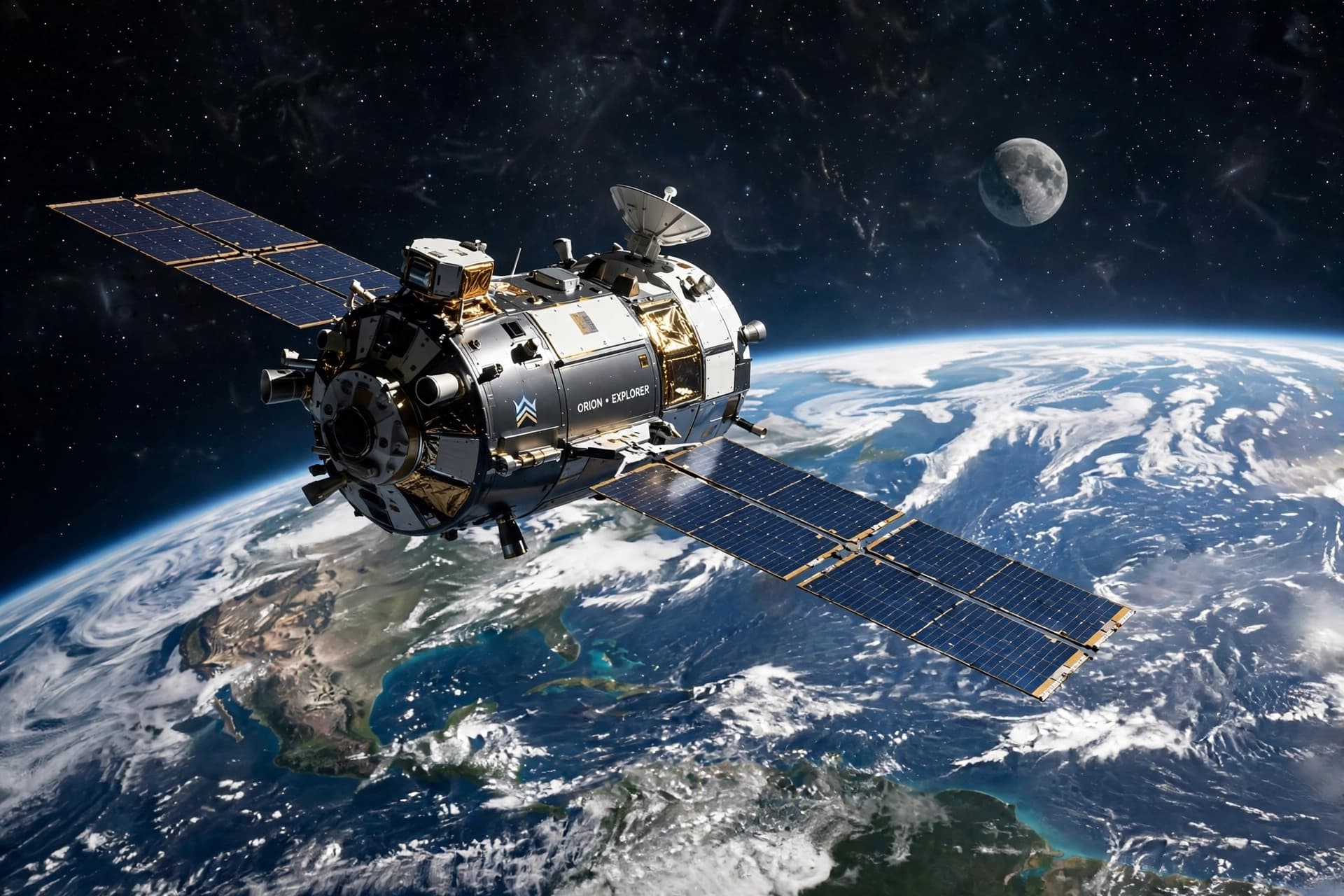
In the vast silence of space, the threat of an asteroid impact looms as a distant but serious concern for humanity. Recent research suggests a novel solution: using diffractive solar sails to propel impactors at speeds reaching 100 kilometers per second. This innovative approach could provide a powerful tool for planetary defense, allowing spacecraft to intercept and deflect hazardous asteroids with unprecedented velocity. It is a testament to human ingenuity, turning the gentle pressure of sunlight into a force capable of protecting our planet.
Traditional solar sails rely on reflection to generate thrust, but diffractive sails use metamaterials to manipulate light more efficiently. By bending and directing photons, these sails can achieve higher acceleration and better control. A recent study published in journals like Acta Astronautica highlights how this technology could enable missions to reach near-Earth objects much faster than conventional propulsion systems. Innovation expands possibility.
The concept involves launching a spacecraft equipped with a diffractive sail that spirals inward toward the Sun. As it gets closer, the intensity of sunlight increases, boosting the sail’s performance. The spacecraft can then use this momentum to slingshot outward at high speeds, intercepting an incoming asteroid from the opposite direction. This "wrong-way" approach maximizes the impact energy, enhancing the deflection effect. Physics offers elegant solutions.
One target for such missions could be Apophis, a well-known near-Earth asteroid. Simulations show that a diffractive sail impactor could reach Apophis in just 200 to 300 days, delivering a kinetic blow sufficient to alter its trajectory. This speed is crucial for late-discovery scenarios where time is short. Speed saves lives. Preparation prevents peril.
Compared to nuclear options or gravity tractors, solar sails offer a non-explosive and continuous propulsion method. They do not require fuel, reducing launch mass and cost. This makes them an attractive option for long-duration missions and multiple targets. Sustainability is key in space exploration. Efficiency drives progress.
Challenges remain, including the development of large, lightweight metamaterials and precise attitude control. Engineers must ensure the sail remains stable under intense solar radiation and thermal stress. Testing and demonstration missions will be essential to validate the technology. Engineering turns theory into practice. Resilience is built through testing.
International space agencies are increasingly interested in planetary defense strategies. Collaborative efforts can pool resources and expertise, accelerating the development of technologies like diffractive sails. Global cooperation ensures security. Unity protects humanity.
In the end, the potential of diffractive solar sails represents a hopeful chapter in space science. It shows that we are not helpless against cosmic threats but can harness the laws of physics to safeguard our future. As research continues, the dream of a safe Earth becomes more attainable. Knowledge is our shield.
AI Image Disclaimer: The images accompanying this article are AI-generated artistic interpretations of solar sails and space concepts, not actual photographs of specific spacecraft or asteroid deflection missions.
Sources: Universe Today Phys.org Acta Astronautica
Published by Banx Network. This article is part of the Banx decentralized media programme, powered by the BXE token on the XRP Ledger.