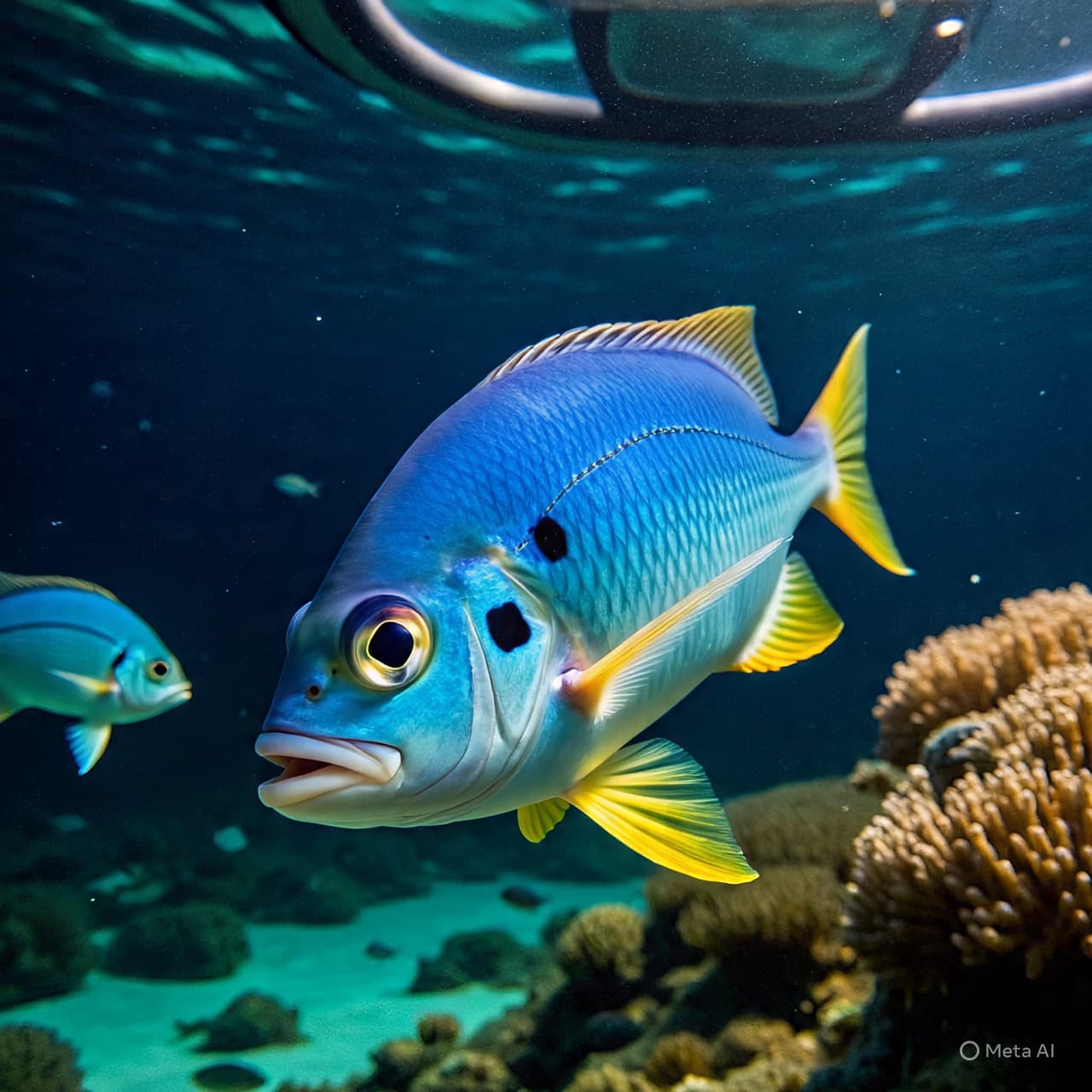
Researchers studying deep-ocean ecosystems have discovered a species of fish with a novel visual system, challenging long-held assumptions about how animals perceive light in the dark ocean depths. The finding provides new insights into evolutionary adaptation and the diversity of sensory mechanisms in extreme environments.
The deep-sea environment is characterized by near-total darkness, high pressure, and limited food availability, conditions that have shaped specialized adaptations in marine life. Eyes in deep-sea fish are typically highly sensitive, allowing them to detect minimal light or bioluminescence from other organisms. However, this newly studied species exhibits an unexpected eye structure, combining features not previously observed in vertebrates.
Researchers note that the fish’s eyes contain specialized photoreceptor arrangements that may allow enhanced contrast detection or a broader range of light sensitivity, potentially improving its ability to locate prey or avoid predators in pitch-black waters. This adaptation suggests that evolution in extreme environments can produce unique solutions to sensory challenges.
The discovery also sheds light on the evolutionary pressures that shape vision across species. By comparing the optical system of this fish to other deep-sea organisms, scientists hope to better understand how sensory organs can diverge significantly even among closely related species.
While the functional advantages of this visual system are still under investigation, the finding highlights the vast unexplored diversity of life in the deep ocean. Each new discovery demonstrates that extreme habitats can drive innovations in biology that differ markedly from terrestrial norms.
Researchers emphasize the importance of continued deep-sea exploration. Studying novel adaptations not only enriches scientific knowledge of evolution and physiology but may also inspire technological innovation, from imaging systems to bio-inspired sensors.
As deep-sea research advances, scientists anticipate that further surprises await, revealing the full scope of adaptations that allow life to thrive in one of the planet’s most challenging environments.
AI Image Disclaimer Some images accompanying this article may be representative file photography or illustrative renderings.
Published by Banx Network. This article is part of the Banx decentralized media programme, powered by the BXE token on the XRP Ledger.