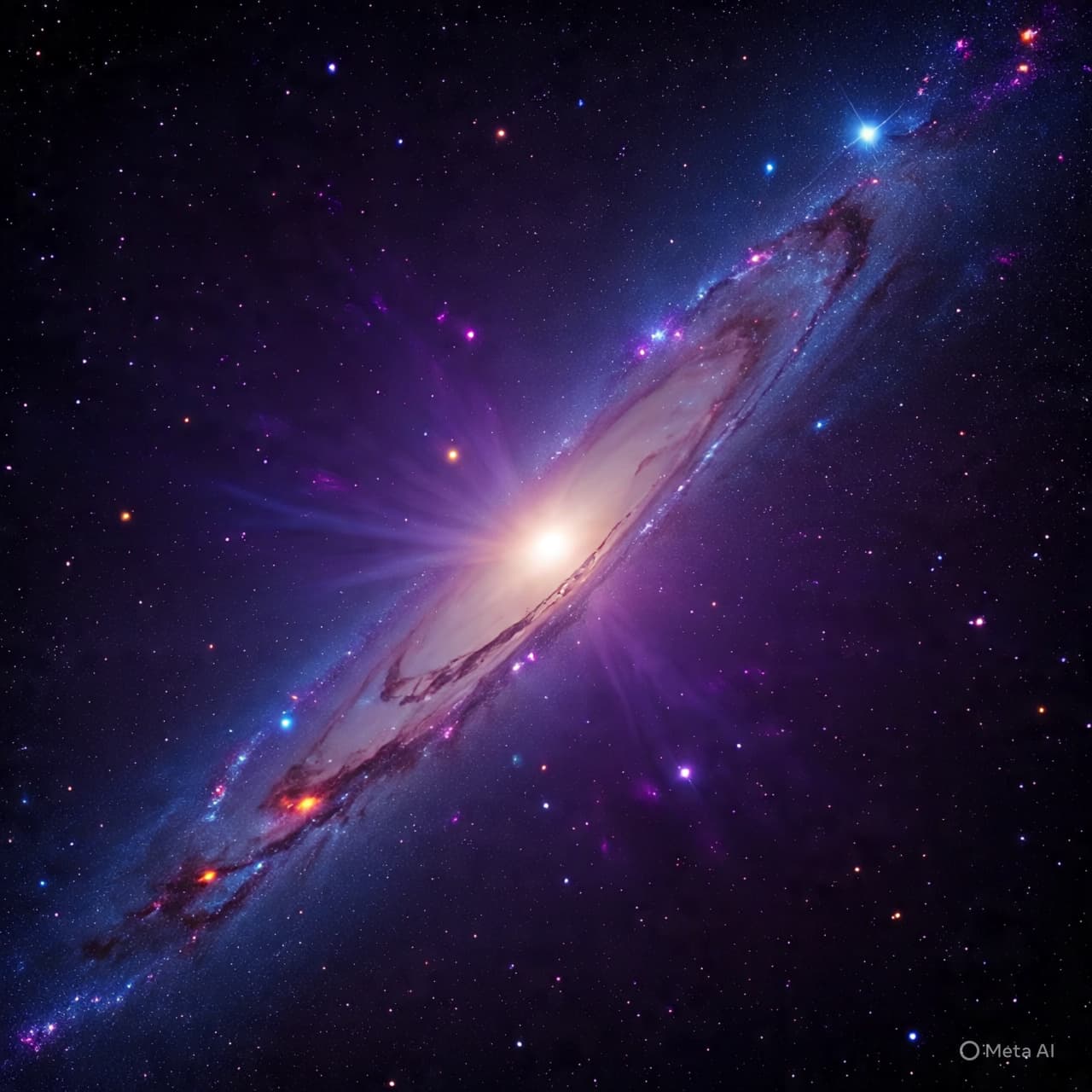
In the vast stillness beyond our solar system, a drama of cosmic proportions is quietly unfolding — one that may soon light up the sky. Astronomers are closely observing a binary star system known as V Sagittae, where a dense white dwarf and its larger stellar companion are locked in a tight orbital waltz, circling every 12.3 hours. This orbit is not serene: the white dwarf is gravitationally pulling matter from its partner, a process that has caused the system to blaze with extraordinary brightness.
This stellar interaction resembles an extreme form of intimacy — but one that’s fatal. As the white dwarf siphons off gas and plasma from the outer layers of its companion, the stolen matter creates an enormous accretion ring of heated debris glowing intensely. Astronomers attribute the system’s superlative brightness to this ongoing cosmic consumption, a phenomenon so energetic that it’s thermonuclear on the surface of the white dwarf itself.
What makes V Sagittae particularly riveting for both scientists and skywatchers is its future promise. Models show that as the mass transfer intensifies, it will trigger a nova — a sudden thermonuclear eruption on the white dwarf’s surface. This would make the system dramatically brighter in our night sky — potentially visible without telescopes or special equipment.
But the true spectacle may be even more astonishing.
Eventually, the stellar duo is expected to culminate their lives in a supernova explosion — a collapse and detonation so energetic that the blast could be visible from Earth in broad daylight. This would occur when the white dwarf accumulates enough mass to trigger a runaway explosion, obliterating both stars in a flash of light comparable to, or even surpassing, the brightness of nearby daytime skies.
This rare kind of supernova — one generated from a binary interaction rather than a single solitary heavyweight star — offers astronomers a unique laboratory for studying how stars die and distribute their matter back into the cosmos. Observatories tracking the event, including the European Southern Observatory’s powerful Very Large Telescope, are already analyzing spectral signatures and brightness changes to learn more about the imminent outburst.
Though the term “soon” in celestial terms might stretch across decades, or even centuries, the potential to witness such a dramatic explosion without special instruments holds a special allure. Most supernovae visible to the naked eye occur either very far away and faint — or so close and bright they dominate the night sky briefly before fading. To have an explosion that could be seen in daylight would be exceptional and historically rare.
scientists continue to watch V Sagittae’s increasing luminosity, tracking its evolution as matter swirls and heats around the white dwarf. Every increment of brightness, every spectroscopic fluctuation, brings humanity closer to understanding the life cycle of stars — from their quiet births to their spectacular ends. And one day, perhaps, this quiet corner of the night might suddenly light up in a blaze of daylight brilliance.
AI Image Disclaimer “Visuals are created with AI tools and are not real photographs.”
Sources This star is being eaten alive… visible in daylight — Gizmodo (news article) Bright star will soon die in a nuclear explosion visible during the day — Live Science related astronomy report Supernova news — Einstein Cross & deep space transients — Gizmodo (context)
Published by Banx Network. This article is part of the Banx decentralized media programme, powered by the BXE token on the XRP Ledger.