Key Highlights
- Study reveals clownfish increase defense of anemones during bleaching.
- Aggression among clownfish rises by 215% in bleached environments.
- Research emphasizes the resilience of mutualistic relationships in marine ecosystems.
[Clownfish Behavior During Bleaching]
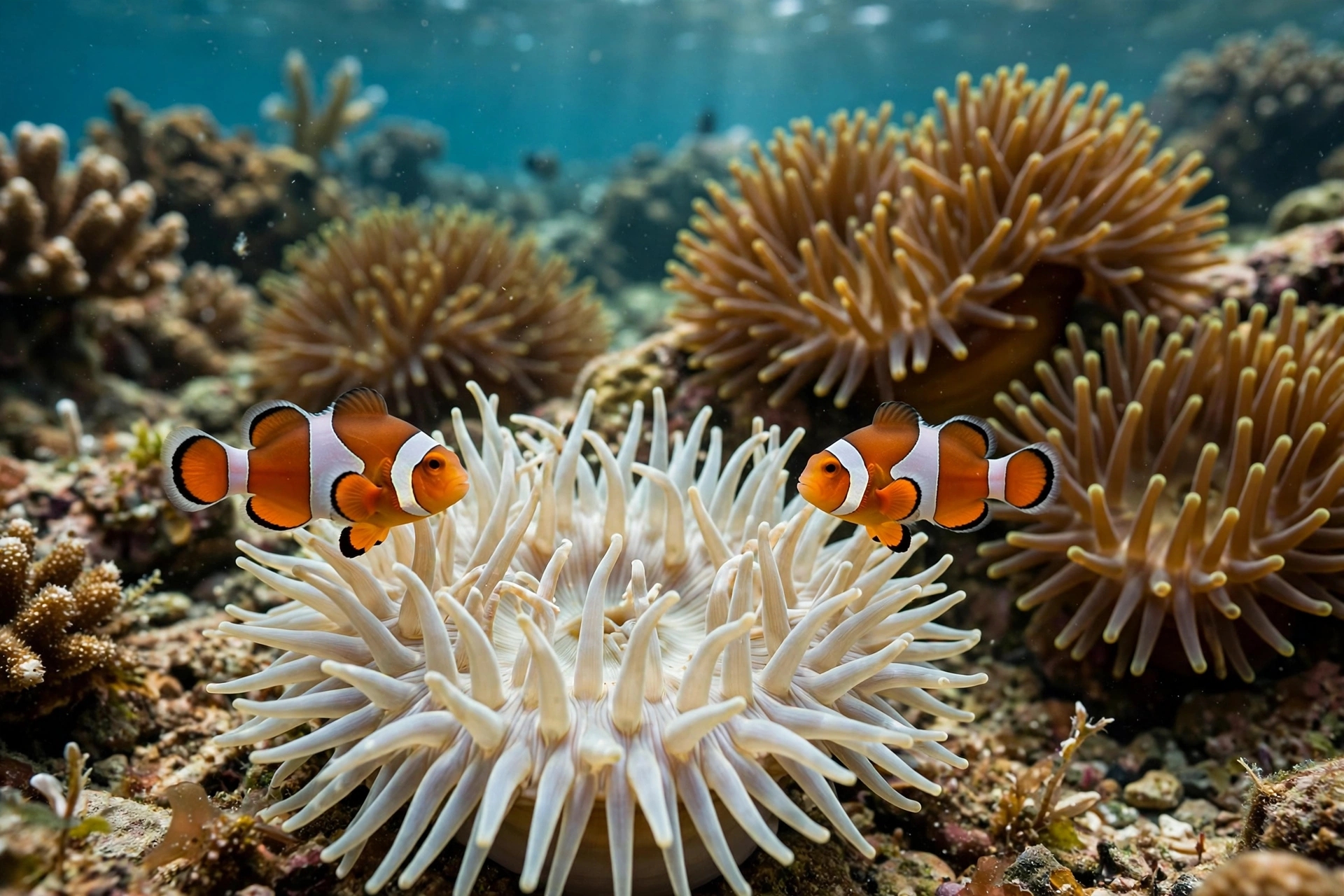
A recent study led by Newcastle University has shed light on the remarkable behavior of clownfish in response to anemone bleaching, a phenomenon increasingly observed due to rising ocean temperatures. The research, published in Royal Society Open Science, highlights how these fish do not abandon their homes during environmental stress but instead intensify their efforts to protect and maintain their anemone partners. This finding is particularly significant as it underscores the complex dynamics of mutualism in marine ecosystems.
The study was conducted in Kimbe Bay, Papua New Guinea, during the 4th Global Coral Bleaching Event, which has raised concerns about the future of coral reefs worldwide. Researchers observed wild clownfish from March to July 2023, analyzing video footage to categorize their behaviors into five distinct types: maintenance and defense of the anemone, as well as aggressive, neutral, and submissive interactions within their social groups. This approach allowed the team to differentiate between the direct effects of heat stress and the indirect consequences of anemone bleaching.
The results were striking. Contrary to expectations, clownfish did not reduce their maintenance activities, such as cleaning and aerating their anemones, during bleaching events. Instead, they exhibited an increase in defensive behaviors, suggesting a heightened commitment to their symbiotic relationship. Notably, aggression among clownfish surged by 215% in bleached anemones compared to those that remained healthy. This increase in aggression indicates that while the clownfish are fiercely defending their homes, the social structure within their groups may be under strain.
What sets this study apart is its focus on the distinction between temperature and bleaching effects. The researchers found that elevated water temperatures alone did not significantly alter clownfish behavior; rather, it was the visible bleaching of their anemone partners that triggered the behavioral changes. This insight emphasizes the importance of the clownfish's response to the health of their habitat rather than the environmental conditions alone.
The implications of these findings extend beyond the immediate behaviors of clownfish. The mutualistic relationship between clownfish and anemones serves as a critical example of how species can depend on one another for survival. The study suggests that clownfish may exhibit resilience in the face of environmental stress by increasing their contributions to their anemone partners. However, the rise in aggression raises concerns about the potential weakening of social cohesion within clownfish groups, which is essential for their survival and the benefits derived from their shared habitat.
Researchers caution against overestimating the long-term implications of these observations. As bleaching events become more frequent due to climate change, the ability of clownfish to adapt and compensate for their anemone partners may diminish. Future research will focus on whether the increased maintenance behaviors observed during bleaching can aid in the recovery of anemones and how repeated stressors affect the social dynamics crucial for clownfish survival.
In summary, this study paints a vivid picture of clownfish loyalty and resilience in the face of environmental challenges. While their anemone homes may bleach and social tensions may rise, the clownfish's commitment to their habitat remains steadfast, showcasing the intricate balance of life in coral reef ecosystems.
The images in this article are AI-generated and are not photographs of the clownfish or anemones studied.
Published by Banx Network. This article is part of the Banx decentralized media programme, powered by the BXE token on the XRP Ledger.