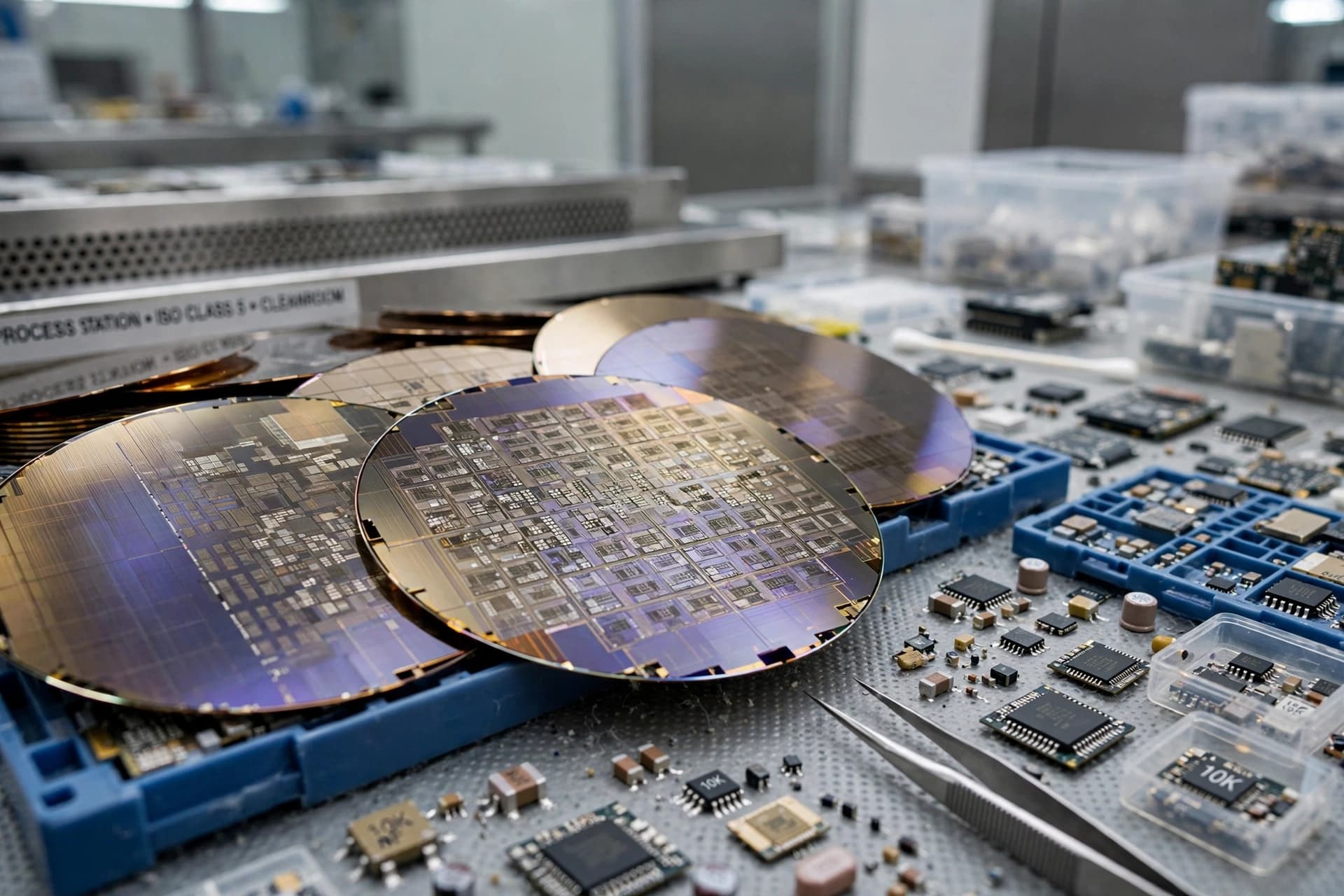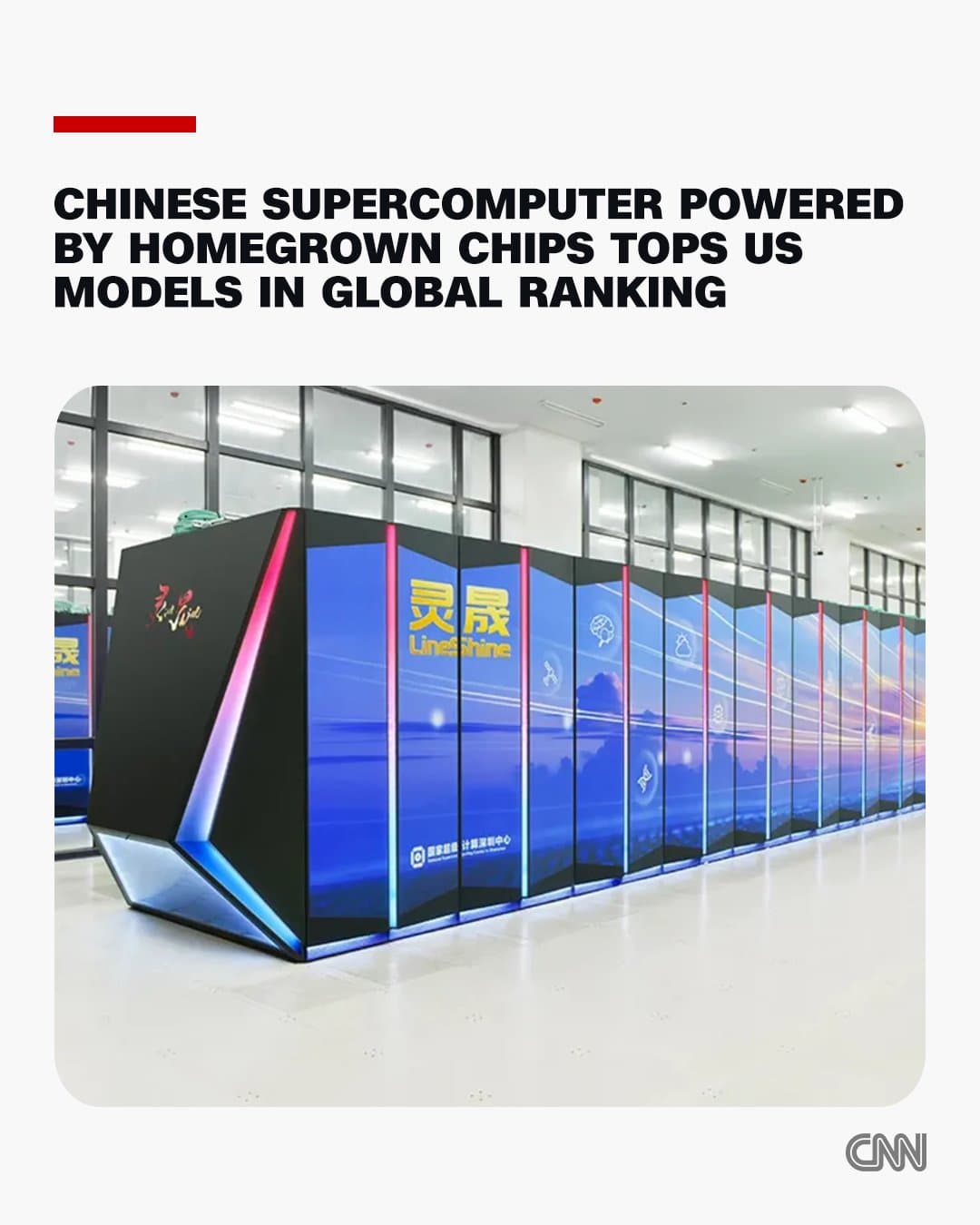
China has reportedly secured the top position in global supercomputing rankings with a system powered primarily by domestically developed semiconductor technology. The achievement represents a significant milestone in Beijing’s efforts to strengthen technological self-sufficiency and reduce dependence on foreign chip suppliers. Supercomputers play critical roles in scientific research, weather forecasting, artificial intelligence development, engineering simulations, pharmaceutical discovery, and national security applications. Their performance often serves as an indicator of a country's technological capabilities and innovation capacity. For years, the United States maintained leadership in many high-performance computing categories. However, escalating competition between the world’s two largest economies has intensified investment in advanced computing infrastructure. Both nations view supercomputing as strategically important for economic and security reasons. China’s reported success is particularly noteworthy because it relies heavily on homegrown chips. International restrictions affecting semiconductor exports have encouraged Chinese firms and research institutions to accelerate domestic development efforts. Achieving top-tier performance using locally produced processors demonstrates progress toward those goals. Experts caution that supercomputing rankings represent only one measure of technological strength. Factors such as software ecosystems, semiconductor manufacturing capacity, research output, and commercial adoption also influence competitiveness. Nevertheless, leadership positions carry symbolic and practical significance. The development is expected to intensify discussions regarding technology policy, export controls, and industrial strategy. Governments worldwide continue investing heavily in advanced computing capabilities as AI adoption accelerates across industries. Analysts believe the global race for computing leadership will remain a defining feature of international competition over the coming decade. Advances in processing power, energy efficiency, and specialized AI hardware could reshape industries ranging from healthcare and transportation to defense and finance.
Published by Banx Network. This article is part of the Banx decentralized media programme, powered by the BXE token on the XRP Ledger.