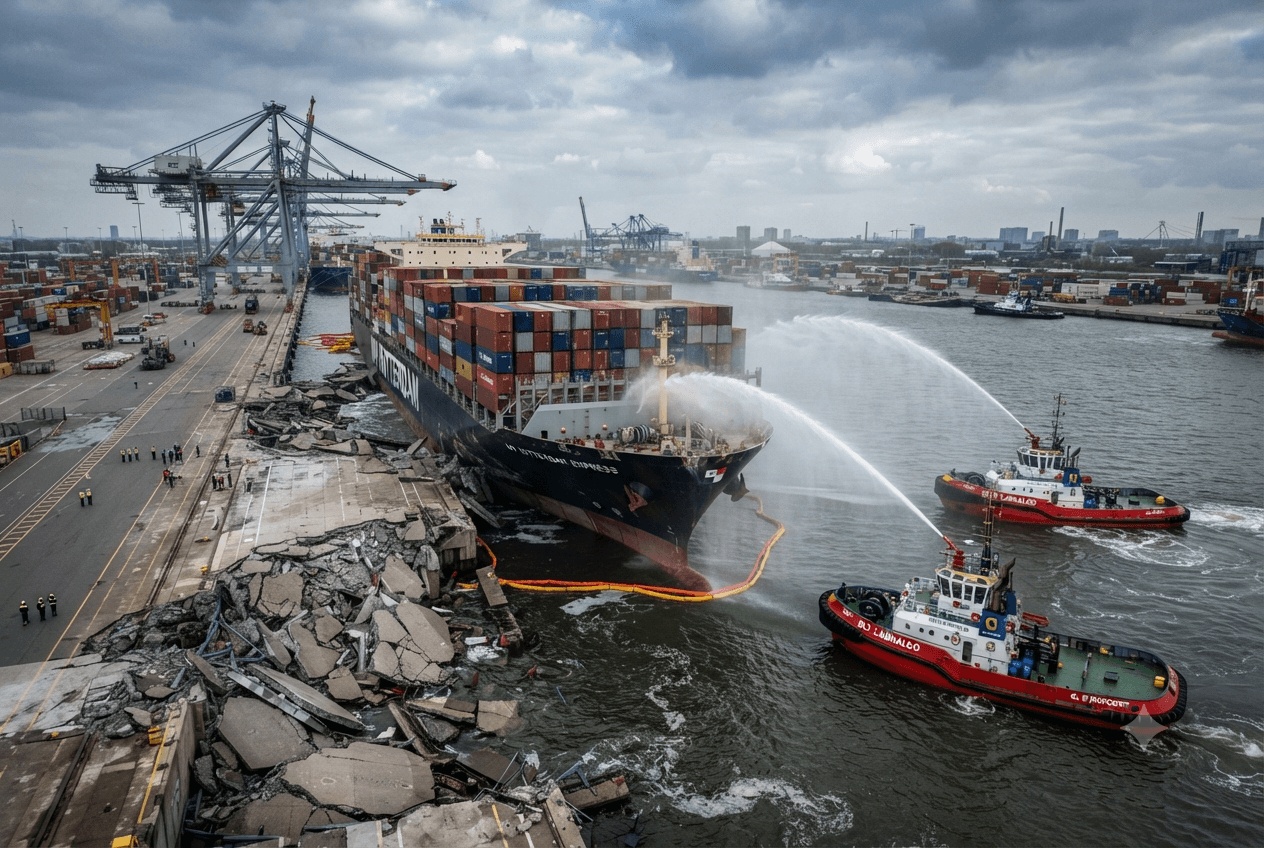
Rotterdam, Netherlands—A rogue wave pushed a three-hundred-meter container ship directly into the concrete pilings of the primary import terminal at 4:30 AM. The impact shattered reinforced concrete supports and sent a dozen steel shipping containers tumbling into the murky shipping channel below. Dockworkers inside the nearby crane control tower scrambled for safety as the towering bow of the vessel scraped past the structure. Harbor masters immediately suspended all incoming and outgoing maritime traffic across the entire harbor basin. Emergency tugboats rushed to the scene to pin the disabled freighter against the mud banks before it drifted further.
Port authorities confirmed that the vessel lost steering control after suffering a total main engine blackout during a sudden gale. The ship captain radioed Mayday signals just seconds before impact, but gale-force winds rendered the rudder completely unresponsive. Maritime investigators boarded the vessel by rope ladder from a pilot boat while crew members assembled on the main deck. Preliminary inspections revealed severe buckling along the starboard bow plating and crushed container securing pins. Environmental protection ships deployed containment booms around the site to monitor potential fuel oil leaks from ruptured bunker tanks.
Longshoremen unions announced an immediate work stoppage for all terminals adjacent to the crash site pending safety clearances. Port executives gathered in an emergency crisis room to calculate the economic impact of blocking the primary shipping lane. Hundreds of deep-sea cargo vessels stacked up in the North Sea waiting for anchorage assignments while the channel remained closed. Logistics firms warned of immediate supply chain bottlenecks affecting manufacturing plants throughout the European interior river network. Insurance adjusters arrived at the terminal docks by helicopter to begin documenting the structural devastation.
Divers descended into the freezing, zero-visibility water to inspect underwater foundation damage to the collapsed pier section. Sonar scans revealed massive concrete blocks resting on the harbor floor directly beneath the sunken steel containers. Port engineers stated that repairing the damaged berth would take months of specialized underwater construction work. Cranes capable of lifting heavy metal boxes were mobilized from neighboring marine yards to clear the blocked channel. Authorities maintained a strict one-mile safety exclusion zone around the stricken vessel to prevent civilian boat traffic interference.
The ship operating company released a brief written statement expressing full cooperation with national maritime safety inspectors. Crew members were detained on board for mandatory drug and alcohol testing conducted by harbor police investigators. Representatives from the national transport safety board seized the vessel voyage data recorder for forensic analysis. Initial data downloads confirmed that engine alarms had sounded less than three minutes before the structural impact occurred. Union representatives demanded immediate reviews of pilotage protocols during severe weather events in narrow harbor channels.
Export cargo destined for overseas markets sat stranded on terminal platforms as customs processing windows slammed shut. Freight forwarders scrambled to reroute time-sensitive shipments through alternative ports along the Belgian and German coasts. Local fisheries boats reported finding floating debris and damaged packaging materials scattered across several miles of coastal waters. Municipal environmental inspectors tested water samples near the crash site for potential chemical contamination from damaged containers. Salvage experts warned that extracting the fallen metal boxes from the muddy channel bottom would require specialized floating cranes.
Port operations remained entirely paralyzed as daylight revealed the full extent of the structural collapse along the waterfront. Harbor police cordoned off the pedestrian viewing promenade overlooking the terminal to keep crowds away from the danger zone. Commercial shipping executives called for government subsidies to offset losses incurred during the unexpected channel closure. Salvage tugboats attached heavy towlines to the stern of the container ship to stabilize its position against shifting tides. Maritime authorities refused to provide a definitive timeline for reopening the blocked navigation channel to deep-sea traffic.
The crippled freighter remained pinned against the ruined pier while salvage engineers debated the safest extraction strategy. Port administration offices fielded hundreds of anxious inquiries from international shipping conglomerates and transport ministries. Coast guard vessels patrolled the perimeter with searchlights sweeping across the choppy, storm-tossed surface of the harbor basin. Repair crews prepared hydraulic cutting equipment on floating pontoons in anticipation of underwater salvage operations. The shipping channel remained completely deadlocked as investigators pieced together the final moments before the crash.
Published by Banx Network. This article is part of the Banx decentralized media programme, powered by the BXE token on the XRP Ledger.