There is a peculiar persistence to memory in the world of gaming. Consoles age, hardware cycles advance, and graphics evolve into ever more lifelike detail — yet the emotional architecture of past experiences remains intact. Players return not only to titles, but to moments: a first victory, a familiar soundtrack, a digital landscape once explored late into the night. In that spirit of continuity, new technological signals from suggest a future where classic PlayStation experiences may live again, not through emulation alone, but through native execution on upcoming hardware.
At the center of the discussion is the long-standing challenge posed by the architecture. Powered by the complex Cell Broadband Engine processor, the PS3 was notoriously difficult to emulate or replicate due to its unconventional multi-core design. While modern consoles have offered limited backward compatibility through cloud streaming and select re-releases, full native support has remained elusive.
Recent technical disclosures and patent-related research point toward a potential solution: hardware-level compatibility or advanced system translation designed to run legacy code natively. Rather than simulating the PS3 environment entirely through software emulation — which can be resource-intensive and inconsistent — Sony appears to be exploring methods that allow future devices to interpret and execute original game instructions with far greater efficiency and accuracy.
If realized, such technology could significantly expand access to classic PlayStation titles across future consoles. Native execution would allow improved performance stability, reduced latency, and enhanced visual processing, potentially enabling legacy games to benefit from modern rendering enhancements without altering original gameplay logic. This approach preserves authenticity while leveraging contemporary hardware capabilities.
Backward compatibility has become an increasingly important feature in the console ecosystem. As digital libraries expand and players invest in long-term collections, the ability to carry forward purchased titles strengthens platform loyalty. Competitors have emphasized compatibility strategies in recent years, underscoring the strategic importance of preserving gaming heritage alongside technological innovation.
Beyond consumer convenience, native compatibility carries cultural significance. Video games are now recognized as a form of artistic and historical expression, and preserving access to earlier generations helps maintain continuity in interactive storytelling and design evolution. Ensuring that classic titles remain playable safeguards not only nostalgia, but also the medium’s archival integrity.
Technical hurdles remain. PS3-era games were built around hardware assumptions that differ significantly from modern system architectures. Achieving seamless compatibility may require hybrid approaches combining hardware instruction translation, system-level virtualization, and developer-side optimization tools. Still, the emergence of research in this direction signals renewed commitment to bridging past and future.
For players, the promise is both practical and emotional: a future console that does not abandon its lineage. The possibility of inserting a legacy title and watching it run natively — smoothly, faithfully, and without streaming dependencies — suggests a shift toward continuity rather than replacement.
Technology often moves forward by leaving things behind. Yet, in this case, progress may arrive not as a departure, but as a return — a recognition that the worlds built yesterday still deserve a place in tomorrow’s hardware.
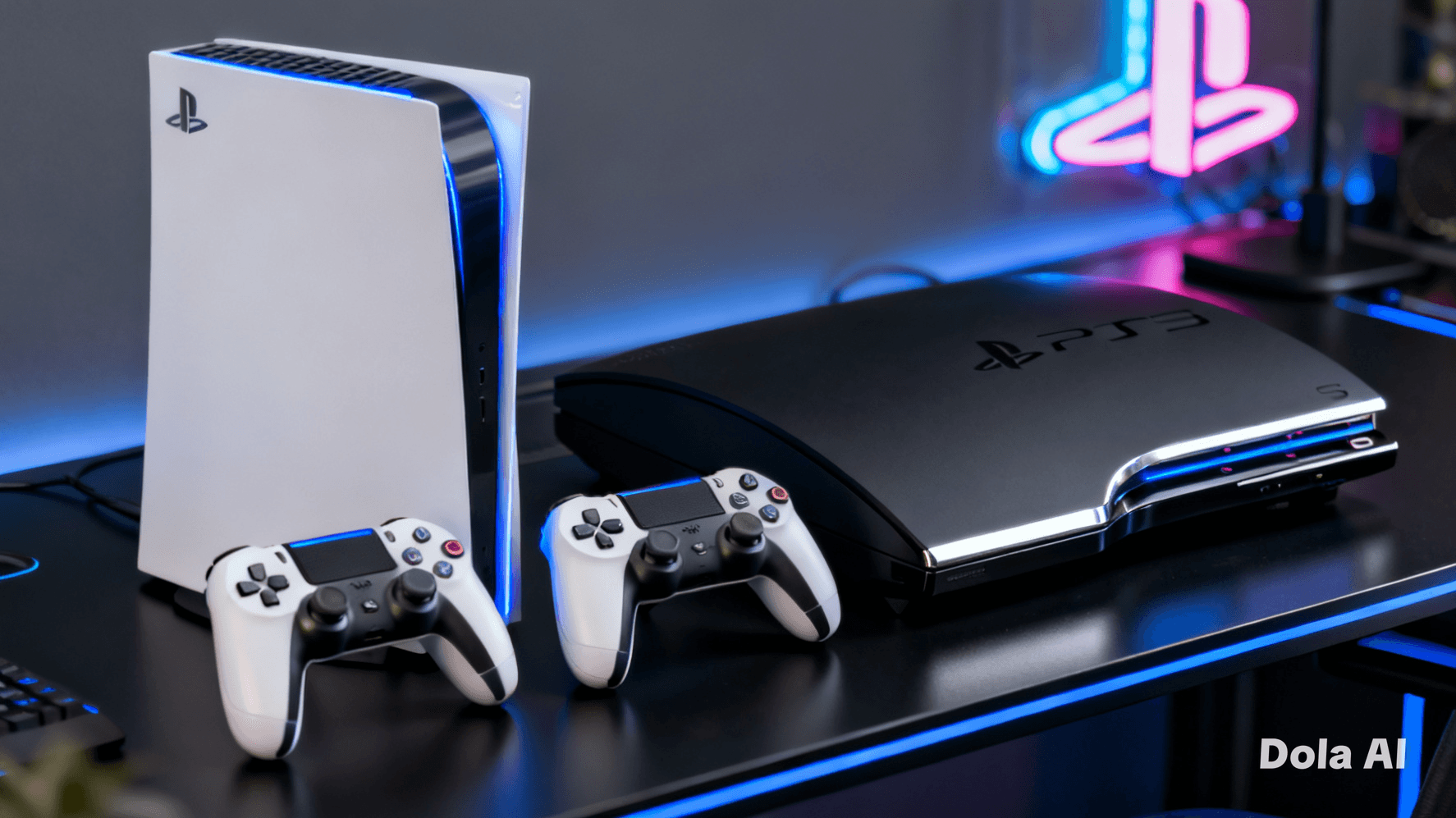
AI Image Disclaimer Visuals are created with AI tools and are not real photographs.
Sources : IGN Eurogamer Digital Foundry The Verge TechRadar
Published by Banx Network. This article is part of the Banx decentralized media programme, powered by the BXE token on the XRP Ledger.