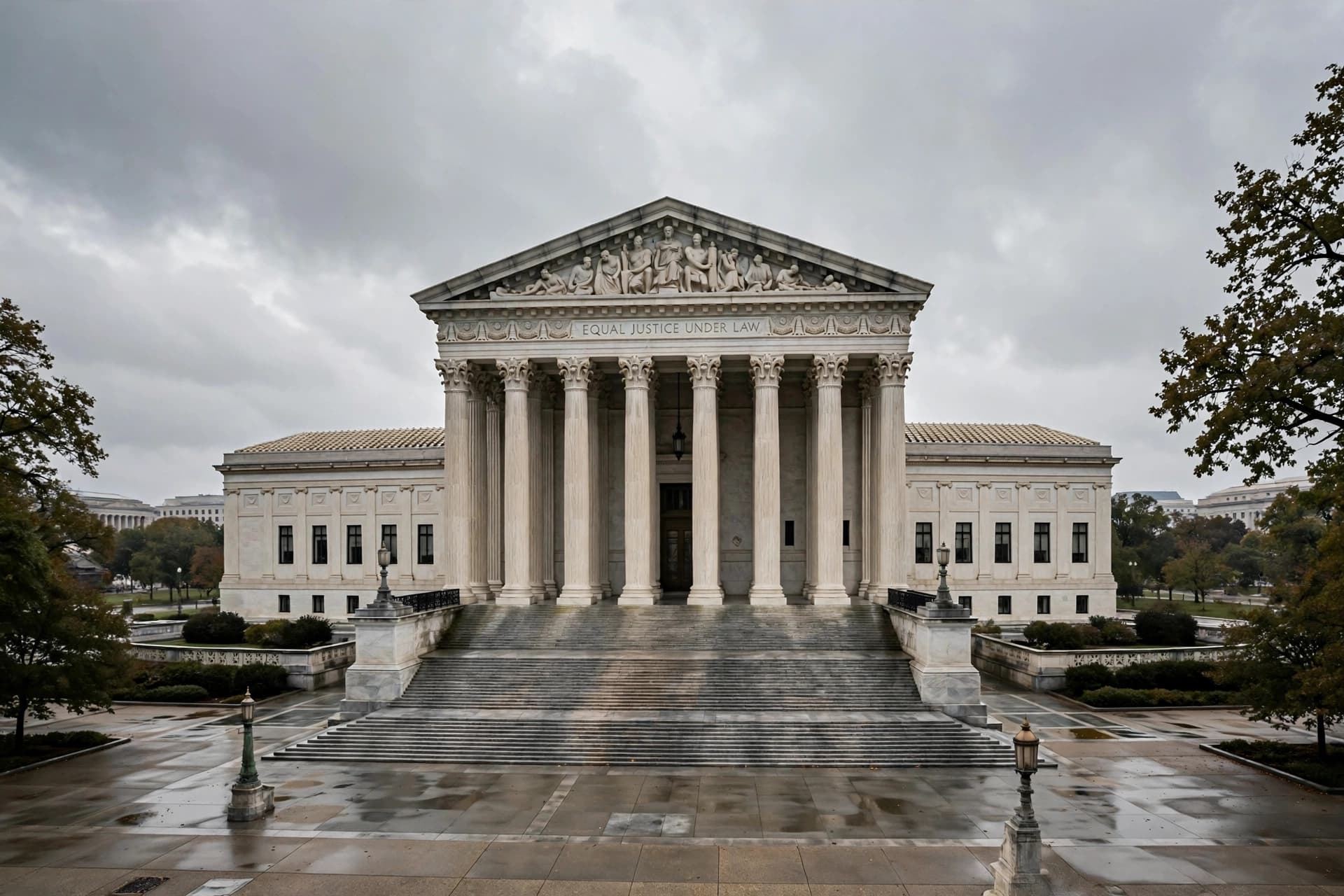
There are cases that decide questions, and there are cases that decide whether questions can be asked at all. On Monday, the Supreme Court opened its fall term with a case that belongs to the second category—a dispute that could determine whether dozens of communities across the country may hold fossil fuel companies accountable for the costs of a warming world, or whether that door closes before the first witness is ever called.
The case, Suncor Energy v. County Commissioners of Boulder County, began in 2018 when Boulder sued Suncor and Exxon Mobil under Colorado state law. The county and city alleged that the companies knowingly contributed to climate change and misled the public about the risks of their products, causing localized harms—wildfires, floods, droughts, and damage to public infrastructure—that taxpayers have been left to absorb . More than 30 similar lawsuits are pending nationwide, brought by states, counties, and cities seeking damages under state tort and consumer-protection law .
The oil companies argue that federal law, particularly the Clean Air Act, preempts these state-law claims. They contend that climate change is inherently an interstate and international matter, and that allowing state courts to assign liability for global emissions would create an unworkable patchwork of rules . Boulder responds that it seeks only damages for local harms, not regulation of emissions, and that its claims are grounded in traditional state authority over deceptive conduct .
During Monday's arguments, the justices appeared skeptical of the oil companies' broadest arguments. Justice Elena Kagan drew a comparison to the tobacco and opioid litigation, asking why climate lawsuits should be barred when similar state-law claims were allowed to proceed in those cases . Justice Brett Kavanaugh acknowledged a "wall of precedent" for federal regulation of interstate pollution, but also suggested there might still be room for state authority . Justice Amy Coney Barrett invoked a Venn diagram, noting that even under the pre-Clean Air Act system, states retained an "outer ring" of authority over certain pollution claims .
Yet the court's path forward is anything but clear. The justices also pressed both sides on whether the court even has jurisdiction to hear the case at this stage. Because the Colorado Supreme Court's ruling was an interlocutory decision—not a final judgment—there is a serious question about whether the case is properly before the high court . Justice Ketanji Brown Jackson suggested the matter was "premature" and that the lawsuit needed to proceed further in lower courts before the justices weighed in .
Adding to the uncertainty, Justice Samuel Alito announced last week that he would no longer participate in the appeal. With only eight justices deciding the case, the possibility of a tie vote—which would leave the Colorado Supreme Court's ruling in place without setting a national precedent—remains .
The stakes extend far beyond Boulder. If the court sides with the oil companies on preemption, dozens of climate accountability lawsuits could be effectively shut down. If it allows the cases to proceed, energy companies could face billions of dollars in potential liability, and state courts would become a primary venue for climate policy in the absence of federal action . The court is expected to issue a decision by next summer. For now, the chips remain in the air.
AI Image Disclaimer: The images accompanying this article are AI-generated and intended for illustrative purposes only.
Sources: Courthouse News Service, The National Law Review, Columbia Law School Sabin Center for Climate Change Law, Spencer Fane, Living on Earth, Washington Examiner
Published by Banx Network. This article is part of the Banx decentralized media programme, powered by the BXE token on the XRP Ledger.