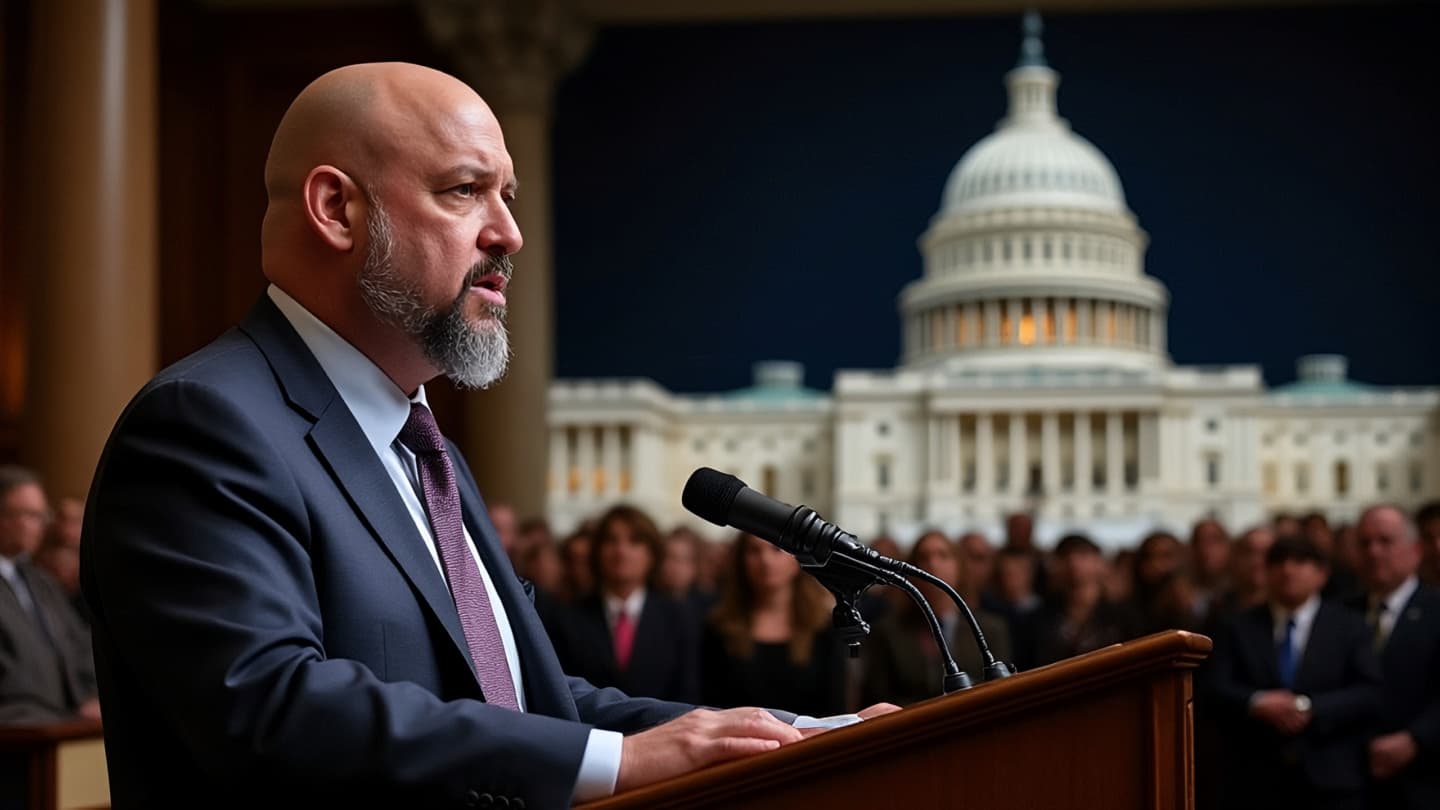
In the intricate dance of Washington politics, where alliances are often fluid and loyalties tested, a single vote can signal a significant shift in the political landscape. Senator John Fetterman, a Democrat from Pennsylvania, has announced his intention to oppose the nomination of Todd Blanche for Attorney General. This decision, made public in early June 2026, adds a notable voice to the growing chorus of skepticism surrounding the Trump administration’s choice for the nation’s top law enforcement position. It is a moment that underscores the complex interplay between party loyalty, personal conviction, and institutional integrity.
Fetterman’s opposition stems from concerns about Blanche’s past role as President Trump’s personal attorney and his involvement in various legal battles that have defined the former president’s post-presidency. Critics argue that Blanche’s close ties to Trump could compromise the independence of the Justice Department, turning it into an instrument of political retribution rather than a guardian of the rule of law. For Fetterman, who has often positioned himself as a pragmatic moderate, this stance reflects a commitment to preserving the department’s nonpartisan legacy.
The nomination has already faced scrutiny in the Senate Judiciary Committee, where Republicans advanced it on a party-line vote. However, Fetterman’s public declaration signals that the battle for confirmation will not be straightforward. His influence within the Democratic caucus, particularly among swing voters and moderates, could sway other undecided senators. The outcome of this confirmation process may well depend on whether more Democrats follow his lead or if Republicans can maintain unity in the face of mounting pressure.
Blanche’s supporters argue that his legal expertise and loyalty make him the ideal candidate to restore order to a department they view as having been politicized by previous administrations. They point to his experience in high-stakes litigation and his understanding of executive power as assets. Yet, for many observers, these same qualities raise red flags about potential conflicts of interest and the erosion of checks and balances.
The debate over Blanche’s nomination is not just about one individual but about the broader direction of American justice. It touches on fundamental questions about accountability, transparency, and the separation of powers. As the Senate prepares for a full vote, the nation watches closely, aware that the decision will have lasting implications for the credibility of federal law enforcement.
For Fetterman, the decision to oppose Blanche is likely calculated but principled. It aligns with his broader narrative of putting country over party, a theme that has resonated with his constituents in Pennsylvania. By taking this stand, he reinforces his image as an independent thinker willing to challenge his own party when necessary. It is a risky move politically, but one that may strengthen his long-term standing.
Senator Fetterman’s opposition to Todd Blanche’s nomination marks a pivotal moment in the confirmation process. It highlights the tensions within the Democratic Party and the high stakes involved in appointing the next Attorney General. As the Senate moves forward, the focus remains on ensuring that the Justice Department remains a pillar of impartial justice, free from political manipulation.
AI Image Disclaimer: The visual elements accompanying this report are AI-generated interpretations designed to reflect the political and legislative context of the story.
Sources: The Hill PoliticsPA ABC3340
Published by Banx Network. This article is part of the Banx decentralized media programme, powered by the BXE token on the XRP Ledger.

.jpg&w=3840&q=75 "EU Gambling Levy Omitted From Irish MFF Budget Draft, but Remains Under Discussion")