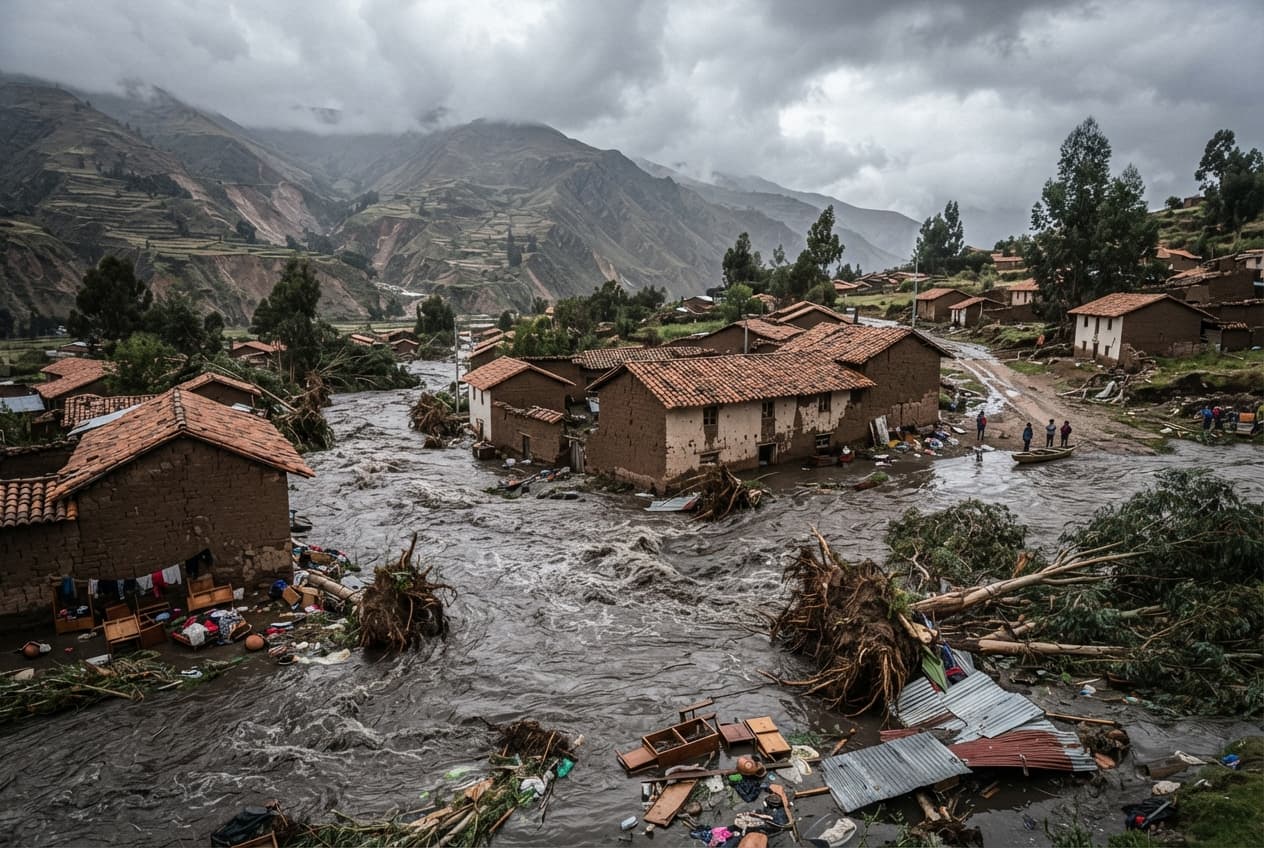
La Paz, Bolivia—A swollen river breached its containment banks early Tuesday morning, sending tons of dark water into a lowland village. Four residents drowned when the surge hit their mud-brick homes. The event struck a rural district of the La Paz department without warning. Local civil defense units arrived hours after the initial breach, finding narrow dirt roads completely submerged.
The floodwaters carried uprooted vegetation and heavy stones from higher elevations. Most families were asleep when the water level rapidly crested over the improvised earth barriers. Survivors scrambled onto corrugated metal roofs, watching the river swallow their livestock and agricultural supplies. Emergency sirens malfunctioned or were never activated at the regional level.
Provincial authorities blamed an unusually intense localized storm system that dumped weeks of rain in three hours. Geologists mapping the watershed had previously warned of critical sediment buildup in the river channel. The dredging equipment assigned to the sector remained parked and rusted in a municipal yard miles away. These administrative failures left the community entirely unprotected against the rising current.
Rescue crews utilized small motorized boats to reach isolated clusters of survivors scattered across the submerged plain. Firefighters retrieved the bodies of two adults and two children trapped inside a collapsed structure. First responders faced extreme difficulties navigating the turbid water due to submerged fences and downed utility poles. Makeshift extraction points were set up along higher ground near the main provincial highway.
"The water hit the walls like a physical blow," said rural police captain Marcos Vargas, pointing to the watermarks on remaining structures. "We received no alert from the meteorological station. By the time the call came, the entire valley floor was already a lake. Our immediate focus is preventing further loss of life."
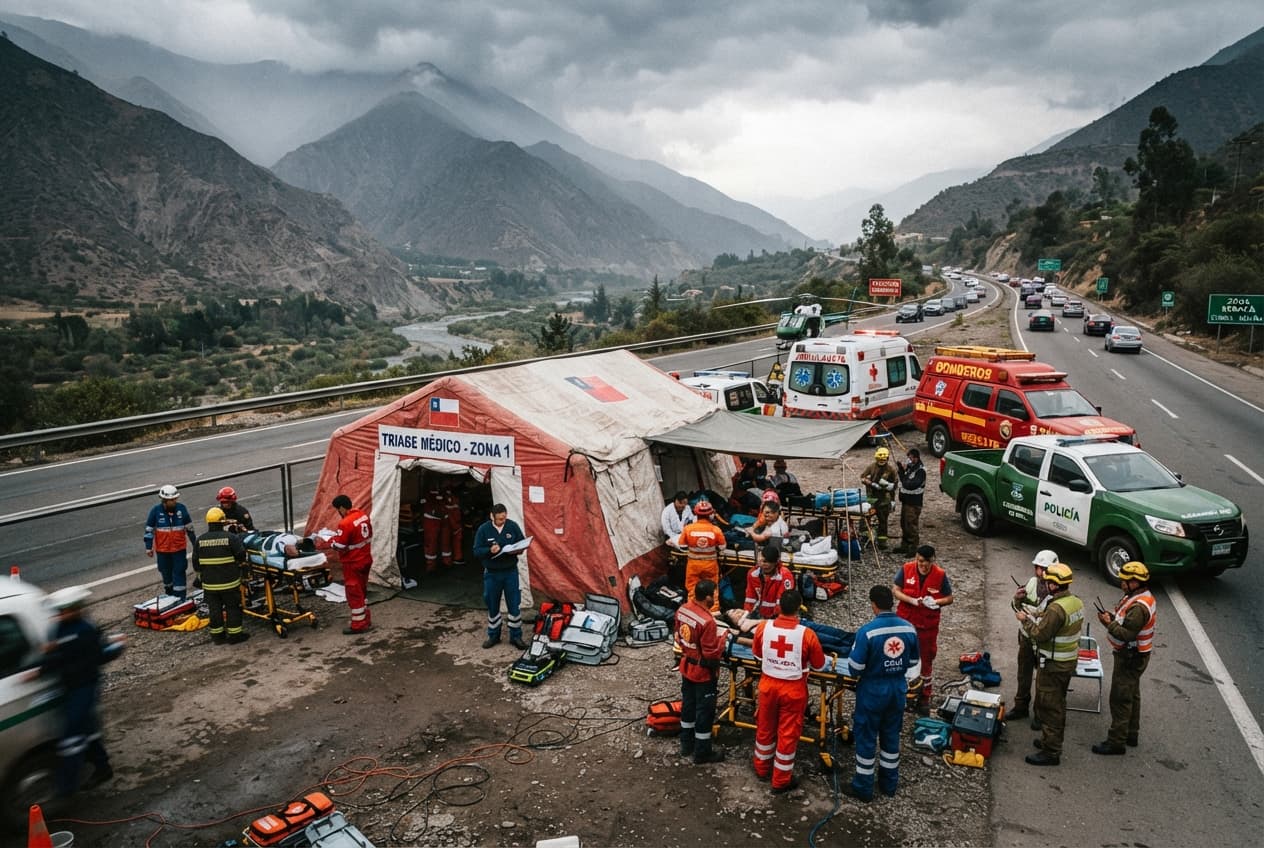
Medical teams set up triage tents beside the highway to treat severe cases of hypothermia and shock. Volunteers distributed thin foil blankets and basic rations to displaced families sitting in the mud. Several elderly residents required immediate transport to regional clinics after ingesting heavily contaminated floodwater. Helicopters remained grounded due to ongoing low visibility and persistent rain showers.
The municipal government declared a localized state of emergency, authorizing the release of emergency contingency funds. Engineers arrived late in the afternoon to assess the structural integrity of the remaining earth dams upstream. Fresh cracks appeared along a secondary containment wall, threatening to unleash another wave of water into the valley. Heavy machinery crawled along the damaged access roads to begin shoring up the failing levees.
Search and rescue divers continued dragging the deep pockets of the submerged village. Operations slowed as darkness fell and the air temperature plummeted near freezing. The river current showed no signs of receding.
Published by Banx Network. This article is part of the Banx decentralized media programme, powered by the BXE token on the XRP Ledger.