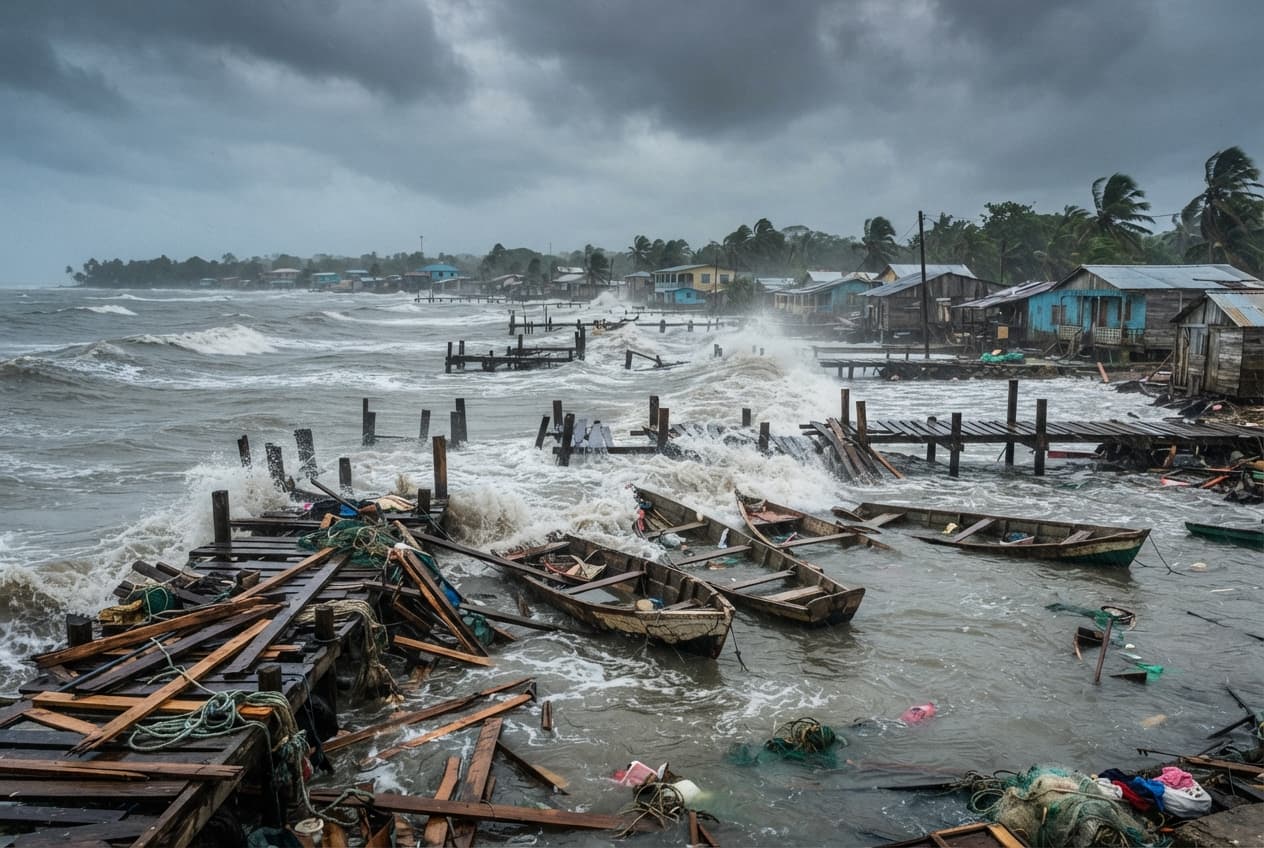
Bluefields, Nicaragua—Violent coastal storm surges battered the Caribbean shoreline, smashing wooden fishing docks to splinters and sweeping docked vessels out to sea. Naval authorities confirmed that two local fishermen lost their lives when their small skiff capsized amidst mountainous offshore waves. Severe weather conditions materialized rapidly as an intense low-pressure system off the coast intensified overnight. Emergency naval units mobilized rescue craft as soon as wind speeds allowed safe navigation beyond the barrier reefs.
The pounding surf tore through municipal port infrastructure, reducing wooden piers and storage sheds to floating debris. Families of maritime workers gathered along the storm-lashed shoreline, watching helplessly as white-capped swells swallowed remaining craft. Naval search squads deployed twin-engine patrol boats to scour the open water for missing vessels reported overdue from morning excursions. Coastal police cordoned off damaged boardwalks to prevent civilian onlookers from entering unstable zones.
Naval operations commander Captain Roberto Arcia briefed reporters near the battered dock facilities. Wave heights exceeded six meters within the immediate coastal shelf, rendering standard search maneuvers extremely hazardous, Arcia stated. Our patrol vessels recovered two victims from open water after an extensive grid sweep. Small craft advisories remain strictly enforced across all eastern ports.
Local fishing cooperatives criticized maritime safety agencies for issuing weather alerts too late for fleets operating far from safe harbor. Fishermen explained that economic pressures force crews to risk open waters despite deteriorating meteorological forecasts. The lack of reliable satellite communication equipment on artisanal boats compounds offshore vulnerabilities significantly. Those administrative and technological gaps left the community unprepared for the rapid surge.
Medical personnel established an emergency triage station near the naval pier to treat survivors and comfort grieving relatives. Local clinics reported adequate emergency supplies, though psychological support counselors were rushed to the coast. Heavy rain bands continued sweeping across the littoral zone, restricting visibility for secondary aerial search units. Transport links connecting coastal villages to inland trading posts experienced severe weather delays.
Naval engineers began surveying the damaged pier foundations to determine structural stability once the storm front passes. Civil protection teams maintained red alert statuses across three coastal departments experiencing intense wave action. Forensic transport units prepared to move the victims' remains to the regional medical examiner's office. Maritime recovery operations will resume at first light as meteorological conditions stabilize.
Published by Banx Network. This article is part of the Banx decentralized media programme, powered by the BXE token on the XRP Ledger.