
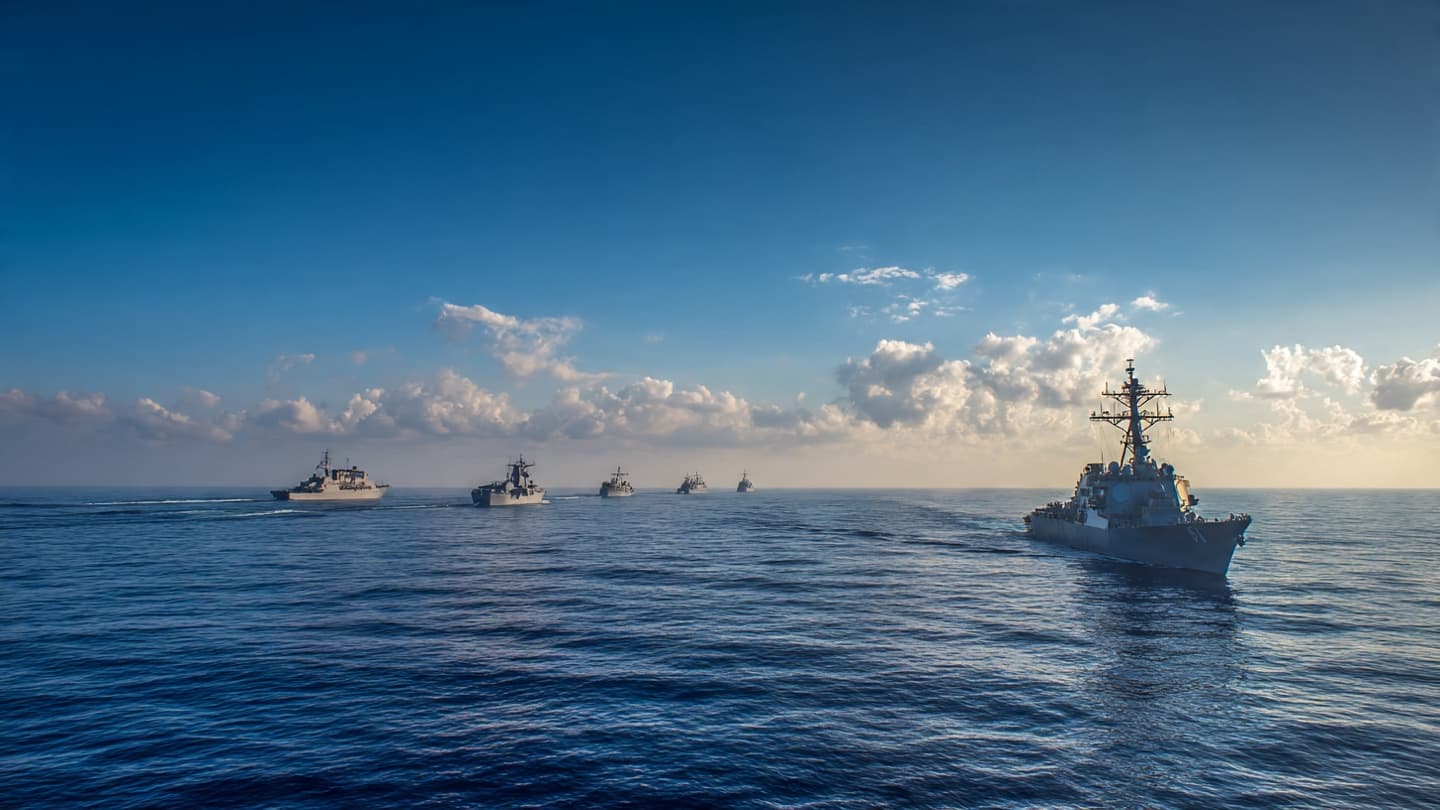
Morning light spreads slowly across the waters of the Persian Gulf, where commercial vessels trace routes that have connected continents for centuries. The sea appears calm from above, yet beneath its surface flows one of the world's most consequential maritime corridors. Around these waters, decisions made in distant capitals often ripple outward like tides, touching diplomacy, commerce, and the everyday lives of millions who may never stand on the shoreline themselves.
The United States continues to face increasingly complex choices in managing its relationship with Iran following months of heightened military tension, negotiations, and regional instability. While Washington has sought to keep diplomatic channels available, it has also maintained military deployments and economic sanctions designed to deter further escalation. At the same time, Iranian leaders have continued to insist on their strategic interests while rejecting several American proposals viewed as inconsistent with Tehran's national priorities. Together, these developments have narrowed the range of options available to both governments.
One of the central challenges remains the balance between diplomacy and deterrence. Diplomatic engagement may reduce immediate tensions and create opportunities for future agreements, yet negotiations require compromises that neither side has consistently shown itself prepared to accept. Conversely, stronger military pressure may reinforce deterrence but also increases the possibility of miscalculation, regional escalation, and broader instability extending beyond the immediate dispute.
The Strait of Hormuz continues to occupy an important place within these calculations. As one of the world's most significant maritime energy corridors, any disruption to shipping would affect global oil markets, international trade, and energy security far beyond the Middle East. Governments across Europe, Asia, and North America therefore monitor developments closely, recognizing that regional tensions can quickly become international economic concerns.
American policymakers must also consider a network of regional partnerships. Long-standing security relationships with Israel and Gulf Arab states influence strategic planning, while European allies continue encouraging diplomatic solutions wherever possible. Each partner brings distinct priorities, requiring Washington to balance commitments that occasionally point in different directions while maintaining broader regional stability.
Iran, meanwhile, confronts its own set of strategic calculations. Economic sanctions continue to affect domestic conditions, while regional alliances and security concerns shape Tehran's foreign policy decisions. Iranian officials have repeatedly stated that negotiations must respect the country's sovereignty and national interests, illustrating that diplomatic progress depends upon reciprocal political decisions rather than unilateral concessions.
Military technology further complicates the landscape. Missile capabilities, unmanned aerial systems, cyber operations, and maritime security have transformed regional deterrence into a multidimensional challenge. Unlike earlier periods, today's strategic environment allows relatively small incidents to generate wider diplomatic and economic consequences with remarkable speed, increasing the importance of careful communication between governments.
Beyond official statements and military planning, millions of civilians throughout the Middle East continue their daily routines beneath these larger geopolitical currents. Merchants, fishermen, energy workers, students, and families all experience the indirect effects of uncertainty through changing markets, investment decisions, travel conditions, and regional security. Their lives quietly remind observers that international strategy ultimately unfolds within ordinary communities as much as within government meeting rooms.
For now, no single path offers an easy resolution. The United States continues weighing diplomatic engagement, military readiness, economic pressure, and cooperation with international partners as it responds to evolving developments involving Iran. Like the ships that navigate the narrow waters of the Gulf with patience and precision, future decisions will likely require careful judgment rather than sudden movement, acknowledging that enduring stability often depends not only on strength, but also on sustained dialogue and measured restraint.
AI Image Disclaimer
The accompanying visuals were created using AI as conceptual illustrations and do not represent actual photographs of the events described.
Sources
Reuters Associated Press International Crisis Group U.S. Department of State International Atomic Energy Agency (IAEA)
Published by Banx Network. This article is part of the Banx decentralized media programme, powered by the BXE token on the XRP Ledger.


.jpg&w=3840&q=75 "Sally Rooney’s Books to Be Withdrawn From UK Sale Over Palestine Action Support")