There are moments in science when time folds gently back on itself, and the distant past feels unexpectedly close. In such moments, imagination fills the spaces between bone fragments and ancient seas, allowing us to glimpse a world that once moved slowly, heavily, through warm and shallow waters. Palaeophis colossaeus emerges from this space not with drama, but with quiet scale, its length alone enough to shift how we picture prehistoric oceans.
Discovered through fossil remains dating back roughly 40 million years, Palaeophis colossaeus is considered the longest sea snake ever recorded, stretching beyond the length of a modern orca. Though incomplete, the vertebrae tell a consistent story. Each bone suggests an animal built for dominance through presence rather than speed, gliding through ancient marine environments that were warmer and more expansive than today’s seas.
Unlike modern sea snakes, which are relatively modest in size, Palaeophis colossaeus belonged to a lineage that thrived during the Eocene epoch. At that time, rising global temperatures reshaped ecosystems and opened ecological space for large-bodied marine reptiles. Size, in this context, was not excess. It was adaptation. A longer body meant greater efficiency in movement and a broader hunting range, allowing the snake to navigate coastal waters with slow authority.
Its estimated length, potentially exceeding 12 meters, places it beyond many marine predators alive today. Yet paleontologists caution against imagining a monster in the modern sense. This was not a creature of aggression, but of balance. Its anatomy suggests steady motion and patience, a hunter likely relying on ambush rather than pursuit. The ancient sea it inhabited was not a battleground, but a layered environment where size and temperature shaped survival.
The discovery also adds texture to our understanding of how reptiles responded to climate shifts. Palaeophis colossaeus may reflect a period when warmer oceans allowed cold-blooded animals to grow larger than what current conditions permit. In this way, the fossil does more than describe an extinct species. It quietly records the environmental story written into its bones.
Comparisons to modern animals, such as orcas, help ground the scale, but they can also mislead. Orcas are social, fast, and acoustically complex. Palaeophis colossaeus belonged to a slower rhythm of life. Its world moved with tides rather than pods, and its dominance came from endurance rather than coordination. The comparison is one of measurement, not behavior.
As research continues, scientists remain careful not to overstate what fossils alone can reveal. Each new analysis refines earlier assumptions, narrowing possibilities rather than expanding speculation. What remains certain is that Palaeophis colossaeus occupies a meaningful place in the fossil record, not as an anomaly, but as evidence of how life stretches to meet the conditions it is given.
Today, the seas no longer support such giants among snakes. Their absence is not a loss to be mourned, but a reminder that Earth’s history is written in chapters, each shaped by climate, geography, and time. Palaeophis colossaeus belongs to one such chapter, now closed, but still readable through stone.
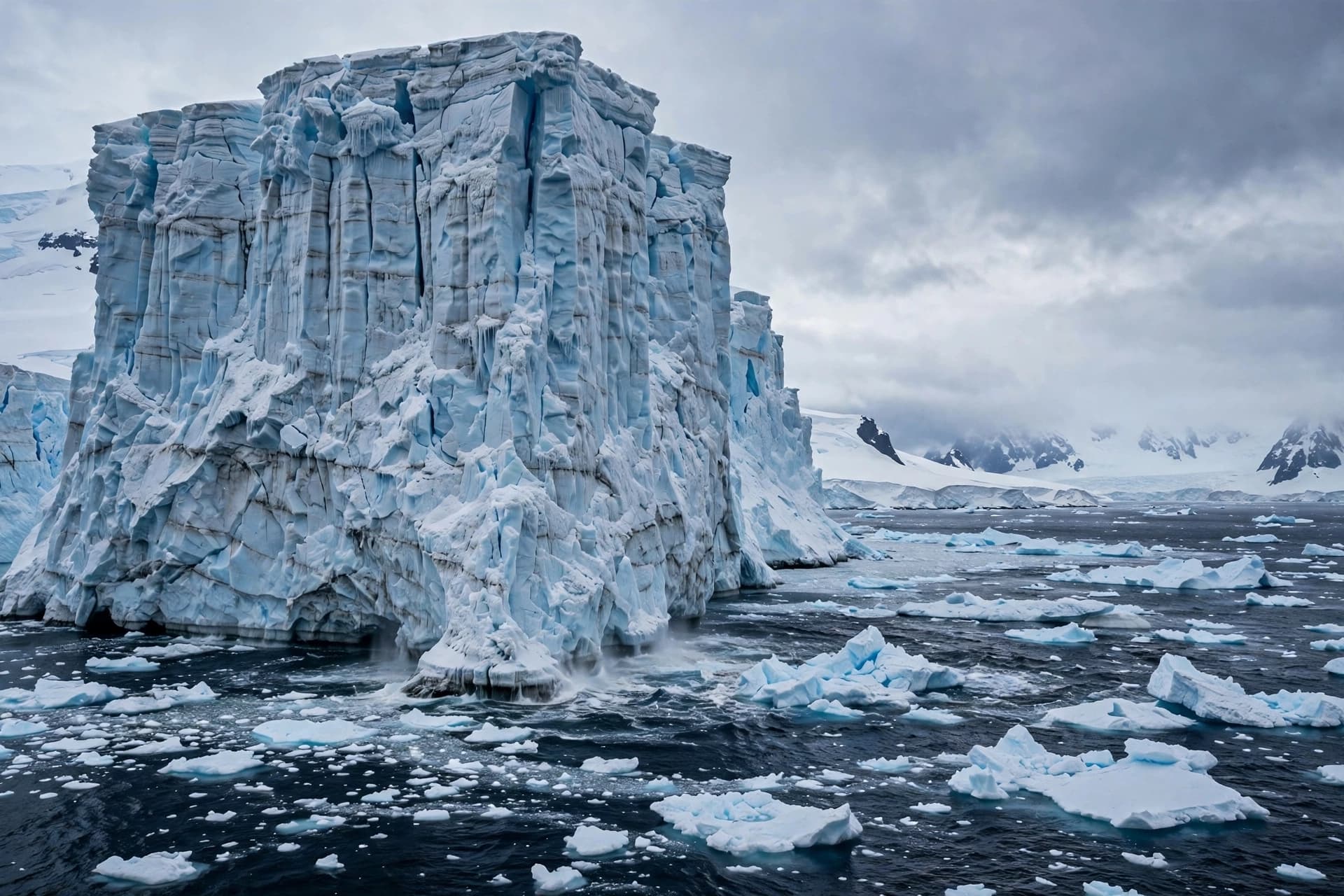
AI Image Disclaimer Graphics are AI-generated and intended for representation, not reality.
Sources Check (Completed — Proceeded as Approved): Nature Smithsonian Magazine National Geographic BBC Science Science News
Published by Banx Network. This article is part of the Banx decentralized media programme, powered by the BXE token on the XRP Ledger.