Beneath the serene beauty of Yellowstone National Park lies a slumbering giant, a magma chamber of immense power that has captured the public imagination for decades. The prospect of a supervolcano eruption is a source of both fascination and fear, often depicted in popular culture as an apocalyptic event. But what would truly happen if Yellowstone were to erupt today? While the scenario is dramatic, scientific analysis suggests that the outcome, while severe, would not necessarily mean the end of humanity. It is a reminder that while nature is powerful, human resilience and preparedness play crucial roles in survival.
The term "supervolcano" refers to an eruption of magnitude 8 on the Volcanic Explosivity Index, capable of ejecting more than 1,000 cubic kilometers of material. Such an event would have global consequences, affecting climate, agriculture, and infrastructure. However, it is important to approach this topic with clarity and context, distinguishing between cinematic exaggeration and geological reality. Understanding the actual risks allows us to prepare effectively without succumbing to unnecessary panic.
In the immediate aftermath of an eruption, the region surrounding Yellowstone would face catastrophic devastation. Pyroclastic flows, fast-moving currents of hot gas and volcanic matter, would obliterate everything within tens of miles. Ashfall would blanket much of the United States, with thickness varying by distance from the vent. Areas closest to the park could receive meters of ash, collapsing roofs and disrupting transportation. Power grids and water supplies would be severely compromised, requiring extensive recovery efforts.
On a global scale, the injection of sulfur dioxide into the stratosphere would lead to significant cooling. This "volcanic winter" could last for several years, lowering average temperatures and shortening growing seasons. Agricultural productivity would decline, leading to food shortages and economic instability. However, unlike a nuclear winter, the effects would be regional and temporal, allowing for adaptation and mitigation strategies. Modern agricultural techniques and global trade networks could help buffer the impact on food security.
It is crucial to note that the probability of such an eruption occurring in our lifetime is extremely low. Geological monitoring indicates that the magma chamber beneath Yellowstone is not currently in a state that suggests an imminent eruption. Scientists continuously track seismic activity, ground deformation, and gas emissions to assess the volcano’s status. While unrest is normal for such a dynamic system, there are no signs that an eruption is pending. This ongoing surveillance provides early warning capabilities that did not exist in the past.
Historical precedents offer insight into how societies cope with large volcanic events. The eruption of Mount Tambora in 1815 caused the "Year Without a Summer," leading to crop failures and social unrest. Yet, humanity persisted. The global community today is far more interconnected and technologically advanced, with better resources for disaster response and climate adaptation. International cooperation would be essential in managing the aftermath, sharing resources and expertise to support affected regions.
The psychological impact of such a threat should not be underestimated. Fear of the unknown can lead to misinformation and anxiety. Clear communication from scientific authorities is vital to maintain public trust and ensure that people understand the actual risks. Education campaigns can help demystify volcanic processes, empowering individuals to make informed decisions. By focusing on facts rather than fiction, we can foster a sense of preparedness rather than despair.
Research into volcanic hazards continues to improve our predictive models. Understanding the triggers and mechanisms of supervolcano eruptions helps scientists refine their assessments. This knowledge informs emergency planning and infrastructure design, making communities more resilient. Investment in monitoring technology and disaster response capabilities is a prudent measure, ensuring that we are ready for whatever nature may bring.
Ultimately, the story of Yellowstone is one of awe and respect for natural forces. While the potential for a large eruption exists, it is part of the Earth’s natural cycle. By studying it, we gain a deeper appreciation for the planet’s dynamics and our place within it. It is a call to remain vigilant, informed, and connected to the world around us.
The hypothetical eruption of Yellowstone serves as a powerful reminder of nature’s strength, but it is not a sentence of doom for humanity. With scientific vigilance and global cooperation, we can navigate even the most challenging natural events. Let us focus on preparation and understanding, turning fear into knowledge and resilience.
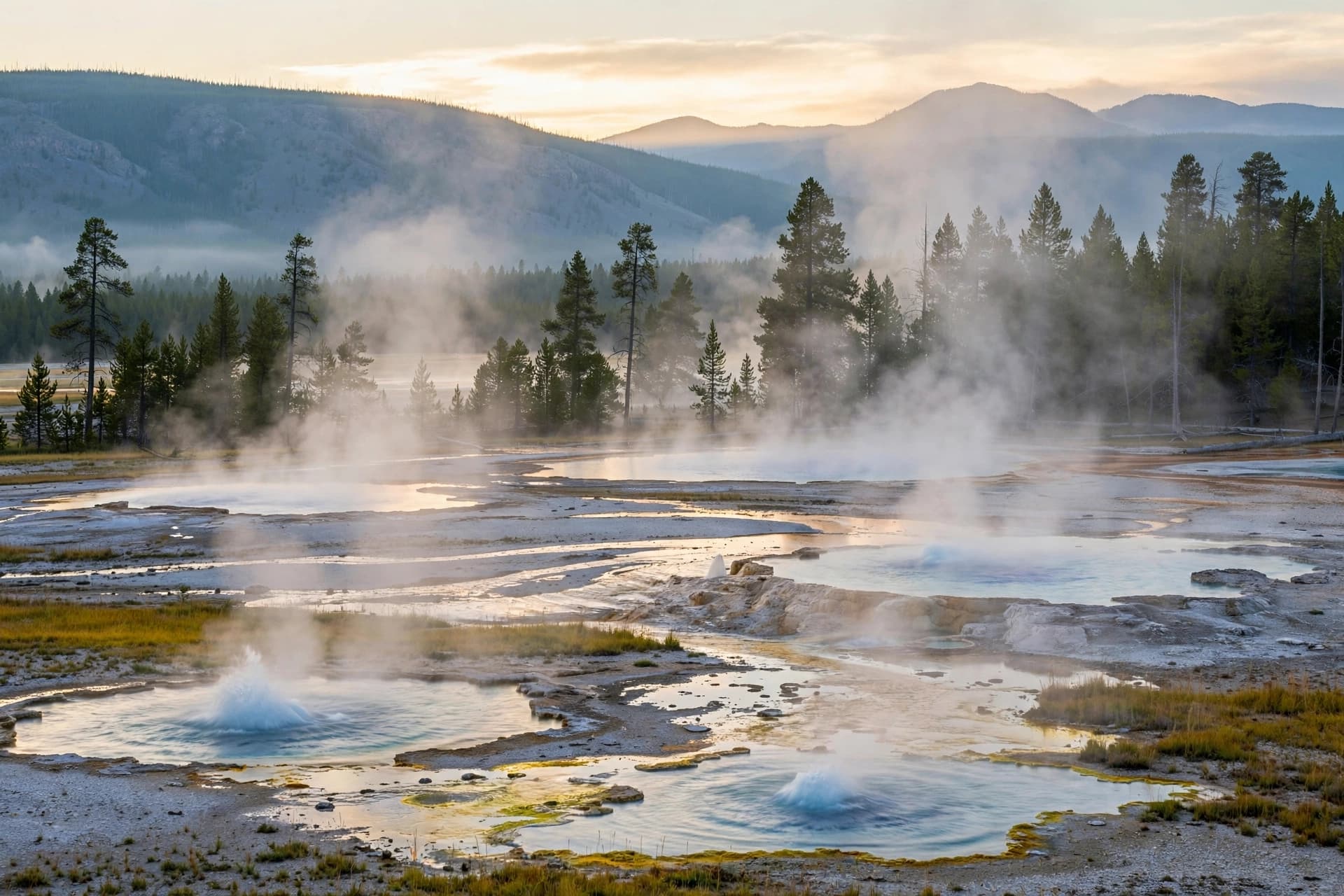
AI Image Disclaimer: The images accompanying this article are AI-generated illustrations designed to depict volcanic landscapes and atmospheric effects without showing real-time disaster scenarios.
Sources: USGS National Geographic BBC Future Smithsonian Magazine
Published by Banx Network. This article is part of the Banx decentralized media programme, powered by the BXE token on the XRP Ledger.