
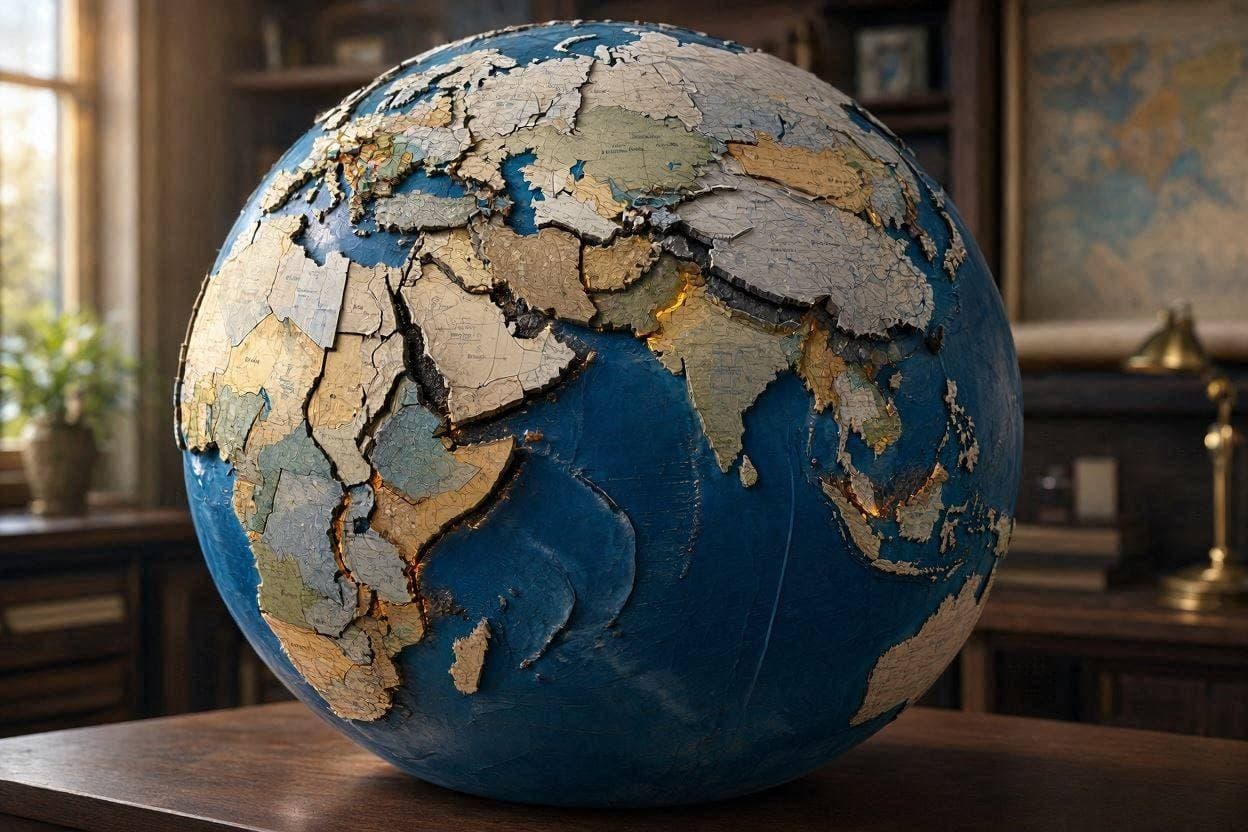
In the annals of geopolitical history, empires rise and fall, leaving behind legacies that shape the world for centuries. A recent provocative statement, "You aren’t going to like what comes after America," has captured the imagination of analysts and citizens alike. This phrase, often attributed to critics of U.S. foreign policy or observers of global power shifts, suggests that the current international order, despite its flaws, may be preferable to the uncertainty of a post-American era. It is a sentiment that invites reflection on the role of the United States in global stability and the potential consequences of its decline or withdrawal.
The comment serves as a stark reminder of the complex interdependence of nations. It highlights the anxiety surrounding power vacuums and the search for a new global equilibrium.
Body: The United States has played a dominant role in global affairs since World War II, establishing institutions like the United Nations, NATO, and the World Bank. These structures have provided a framework for international cooperation, trade, and security. While criticized for imperialism or interventionism, they have also contributed to relative peace and economic growth in many parts of the world. The prospect of this order unraveling raises questions about what might replace it.
Critics argue that U.S. hegemony has often served its own interests at the expense of others, citing military interventions, economic sanctions, and cultural dominance. They envision a multipolar world where power is distributed more evenly among nations like China, India, and regional powers. However, skeptics worry that such a transition could lead to increased conflict, instability, and a lack of universal standards for human rights.
The phrase "what comes after America" implies a chaotic or authoritarian alternative. Without a single superpower to enforce norms, some fear a return to great power competition reminiscent of the early 20th century. Regional conflicts might escalate, and global challenges like climate change could go unaddressed due to lack of coordinated leadership.
Proponents of a post-American world argue that it would allow for greater sovereignty and diversity in governance models. They believe that local solutions are often more effective than imposed global ones. Yet, the transition period remains a source of significant concern for policymakers and citizens worldwide.
Economic implications are also profound. The U.S. dollar’s status as the global reserve currency facilitates international trade. A shift away from this system could lead to volatility and uncertainty in financial markets. Countries are already exploring alternatives, such as digital currencies and bilateral trade agreements, to reduce dependence on the dollar.
Culturally, American soft power has influenced global trends in music, film, and technology. A decline in this influence might lead to a richer tapestry of cultural expressions, but also a fragmentation of shared global narratives. The loss of a common lingua franca could hinder cross-border collaboration.
As the world navigates this potential shift, the focus is on building resilient institutions and fostering dialogue. The goal is to ensure that whatever comes next is based on cooperation rather than coercion. It requires vision and humility from all major powers.
The debate is not just about politics but about the kind of world we want to live in. It invites us to consider our values and how we can uphold them in a changing landscape.
Closing: The warning about a post-American world highlights the uncertainties of global power transitions. It invites a deeper discussion on international cooperation and the future of global governance.
AI Image Disclaimer: Images used in this report are AI-generated depictions intended to illustrate the themes of geopolitical change and global uncertainty.
Sources: Foreign Policy The Atlantic Reuters BBC News
Published by Banx Network. This article is part of the Banx decentralized media programme, powered by the BXE token on the XRP Ledger.



.jpg&w=3840&q=75 "Sally Rooney’s Books to Be Withdrawn From UK Sale Over Palestine Action Support")