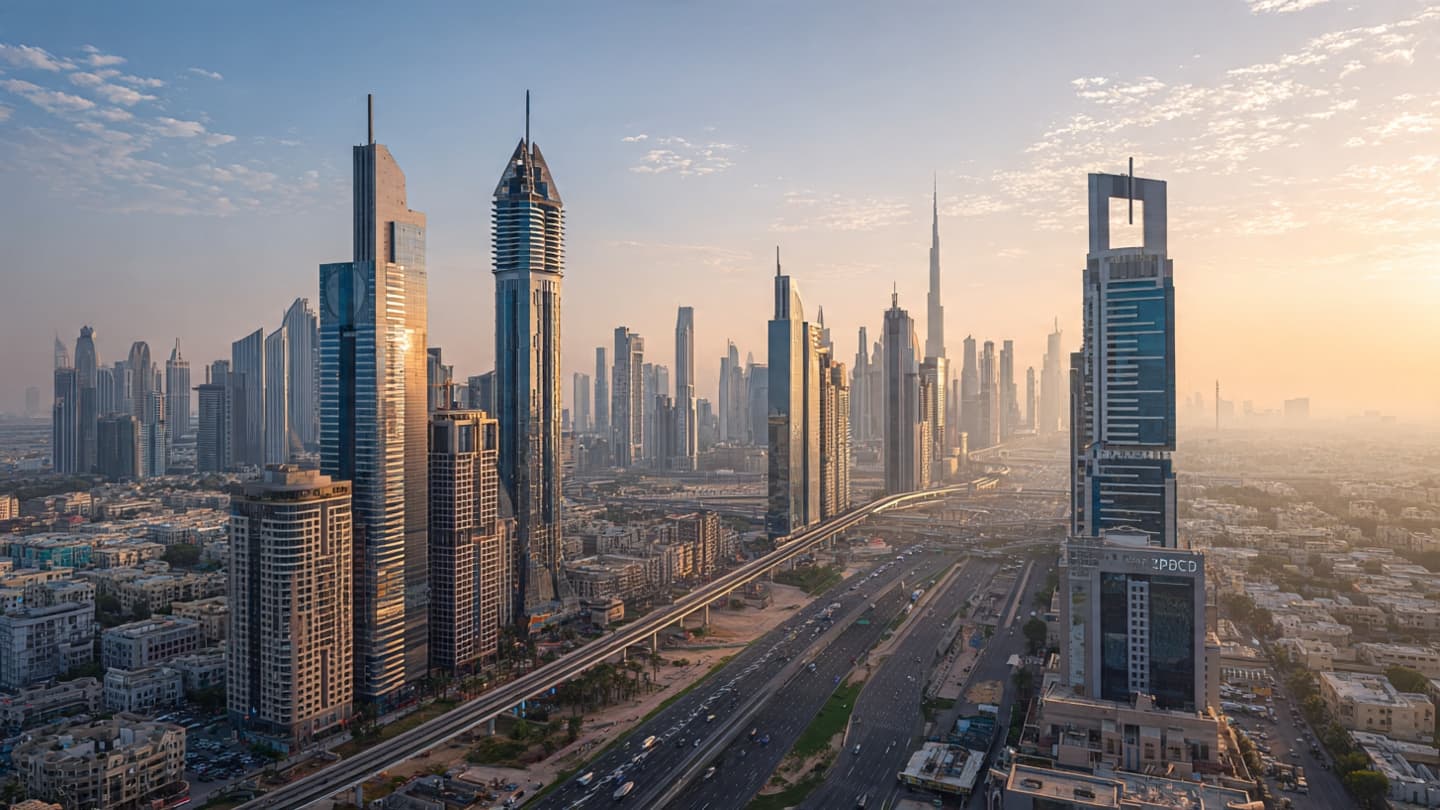
Morning arrives differently over Dubai. Glass towers catch the first light while roads begin filling with the quiet movement of deliveries, workers, visitors, and commercial traffic. Beneath that familiar rhythm, another movement has been taking shape: the continued expansion of the United Arab Emirates’ non-oil economy. August brought a particularly strong signal, with business conditions improving at their fastest pace since December 2024.
The latest purchasing managers’ data placed the UAE’s non-oil private-sector PMI at 55.3 in August, up from 52.7 in July. A reading above 50 indicates expansion, and the latest figure therefore points to a noticeable acceleration rather than simply a continuation of modest growth. For businesses across services, trade, construction, and other non-oil activities, the month carried a stronger current of demand.
New business was one of the clearest forces behind that movement. New orders increased at one of their strongest rates in more than two years, while output growth accelerated to a six-month high. Export demand also improved for a second consecutive month after weakening during the second quarter, giving companies another source of activity beyond domestic markets.
The numbers are notable because they arrive against a complicated regional backdrop. Businesses have continued to operate amid disruptions affecting transportation, energy routes, and wider commercial activity across the Gulf. Yet the August survey suggests that companies in the UAE’s non-oil economy were still finding customers and maintaining a degree of commercial momentum.
That distinction matters for an economy that has spent years broadening its foundations. Oil remains important to the UAE, but sectors such as tourism, real estate, logistics, finance, technology, and professional services have become increasingly visible parts of the country’s economic landscape. The latest figures offer another glimpse of how activity in those areas can continue moving even when the wider region is unsettled.
Dubai, in particular, has long been shaped by movement: cargo through its ports, passengers through its airports, capital through its financial markets, and people through its expanding urban districts. The latest business figures fit naturally into that larger picture. Growth is not represented by one factory or one commodity, but by thousands of separate transactions unfolding across a dense commercial ecosystem.
There are still quieter notes within the August picture. Employment growth has not moved with the same strength as business activity, suggesting that companies remain cautious about expanding their workforces even while orders increase. That restraint reflects a familiar uncertainty in periods when businesses see opportunities but remain attentive to costs and future conditions.
Price pressures also remain part of the story. As demand strengthens, businesses must balance the opportunity to increase activity against the cost of maintaining operations. For the UAE, where international trade and imported inputs play an important role, changes in transportation, energy, and supply costs can quickly become part of the calculation behind investment and hiring decisions.
Still, August leaves the UAE’s non-oil economy standing on firmer ground than it occupied only a month earlier. The 55.3 PMI reading does not erase the uncertainties surrounding the region, but it does provide a clear measure of commercial activity moving forward. In Dubai and beyond, the month ended with the sense of an economy still finding room to expand, one order and one transaction at a time.
AI Image Disclaimer: The accompanying visuals are AI-generated conceptual illustrations and should not be interpreted as actual photographs.
Sources: Reuters The National Gulf News S&P Global
Published by Banx Network. This article is part of the Banx decentralized media programme, powered by the BXE token on the XRP Ledger.