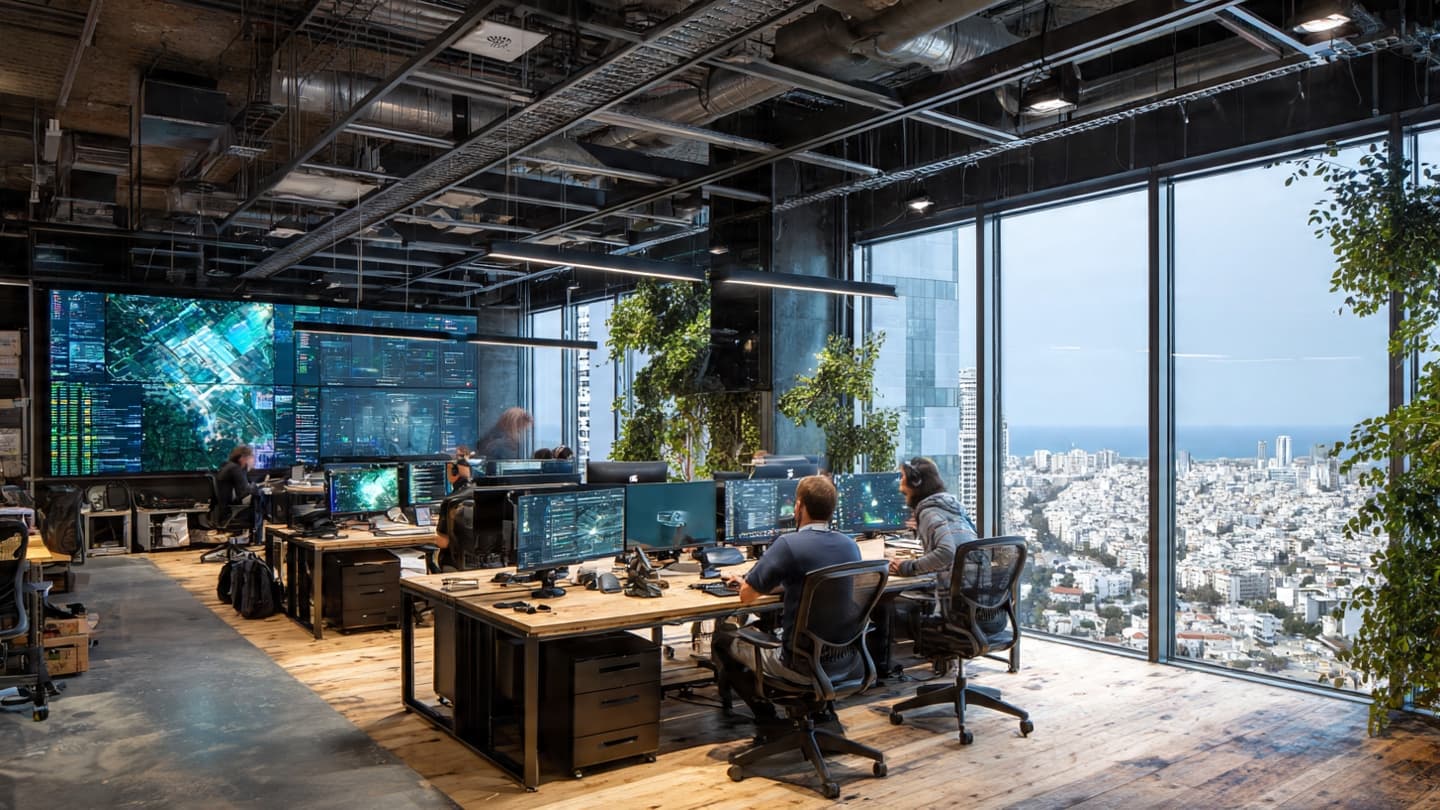
In Tel Aviv, technology companies often seem to exist several steps ahead of the present, building products for markets that may not yet exist. But even the most forward-looking industry remains tied to ordinary economic forces. Currency values, financing costs and global demand can quietly reshape the path of a startup or established technology exporter.
Israel’s technology sector is facing that kind of adjustment as the shekel remains relatively strong and international conditions become more demanding. The government has been developing a support program worth about $1.6 billion to help technology companies maintain investment and competitiveness.
The technology industry has long played an unusually large role in Israel’s economy. Software, cybersecurity, artificial intelligence, semiconductors and other technology businesses generate substantial export revenue and attract international investment. That global orientation, however, also means companies are particularly sensitive to exchange-rate movements.
A stronger shekel can create a complicated situation for exporters. Companies that receive revenue in dollars or euros but pay many of their expenses in shekels may see their local-currency earnings reduced when the shekel appreciates. The effect can be especially noticeable for businesses with large domestic workforces.
At the same time, technology companies continue to compete for highly skilled employees. Salaries and research costs represent significant portions of operating expenses, while companies must continue investing in development even when global financing conditions become less favorable.
The government’s proposed support mechanism is therefore designed to preserve the sector’s ability to invest and expand. Support for technology businesses can take different forms, including funding programs, investment incentives and measures intended to encourage research and development.
The backdrop is changing beyond Israel as well. Global technology investors have become increasingly selective after several years of rapid expansion, while artificial intelligence has redirected large amounts of capital toward computing infrastructure, software and specialized technology companies.
Israel’s technology ecosystem remains deeply connected to that global investment network. Venture capital firms, multinational companies and local startups interact continuously with markets in the United States, Europe and Asia. That international connection provides opportunities, but it also exposes the sector to changes in global investor sentiment.
Currency conditions remain an important part of that equation. The Bank of Israel noted that the shekel had appreciated against the U.S. dollar by 0.6 percent between its previous monetary-policy decision and September 1. At the same time, the central bank lowered its benchmark interest rate to 3.25 percent as inflation remained subdued.
For Israel’s technology industry, the coming period will therefore involve several moving parts at once: government support, currency movements, global investment and the continuing race to develop new technologies. The proposed funding program may provide additional breathing room, but the sector’s longer-term direction will continue to depend heavily on how successfully Israeli companies connect innovation with demand beyond the country’s borders.
AI Image Disclaimer The visual illustrations accompanying this article are AI-generated representations created for editorial purposes. They do not depict specific real-world companies, employees, offices or funding events.
Sources Reuters The Jerusalem Post Bank of Israel Israel Innovation Authority
Published by Banx Network. This article is part of the Banx decentralized media programme, powered by the BXE token on the XRP Ledger.