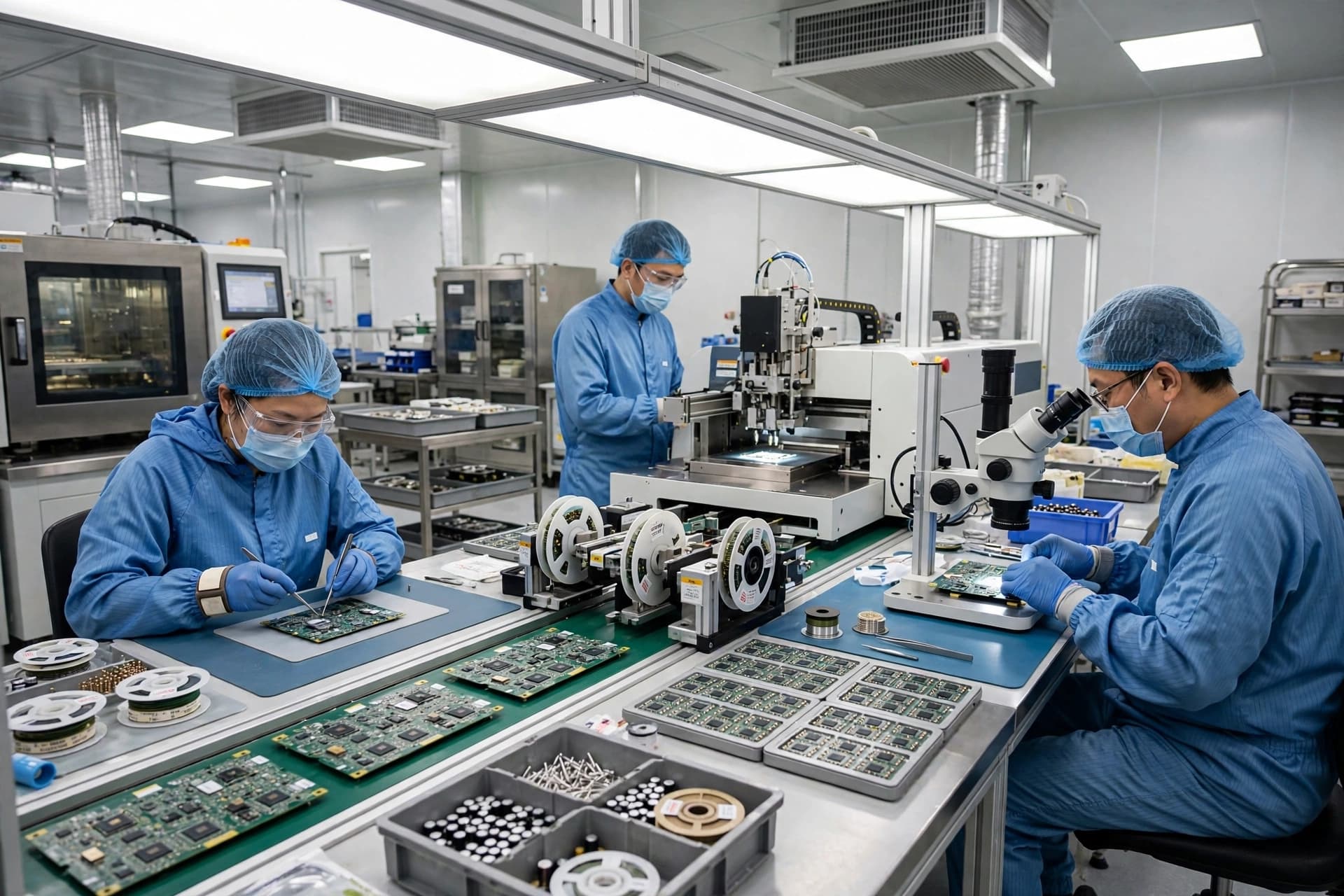
In Japan, the future often arrives quietly. A robotic arm moving across a factory floor may appear almost ordinary, especially in a country that has spent decades integrating automation into manufacturing. Yet each new machine reflects a larger economic reality: Japan is searching for ways to maintain productivity while its working-age population continues to face long-term demographic pressure.
Japanese manufacturers have remained among the world's most advanced users of industrial robots. Automotive companies, electronics producers and machinery manufacturers have invested in automated systems that can perform repetitive tasks with high precision, helping factories maintain output while reducing dependence on manual labor.
The demand for automation is increasingly connected to the country's labor market. Japan faces persistent shortages in several industries, including manufacturing, logistics, construction and services. Companies therefore have an incentive to use technology not simply to reduce costs, but to ensure that production can continue when recruiting enough workers becomes difficult.
Robotics can also change the nature of work rather than simply eliminate it. Workers may move away from repetitive physical tasks and toward equipment supervision, maintenance, quality control and programming. This requires new skills, meaning that investment in machines often creates a parallel need for investment in people.
Japanese logistics companies are another area where automation is becoming increasingly important. Warehouses are adopting automated sorting systems, guided vehicles and digital inventory management to process large volumes of goods. The growth of online commerce has increased the need for faster and more reliable distribution, placing additional pressure on logistics operators.
The technology sector is also contributing to the development of more advanced machines. Artificial intelligence can allow robots to respond to changing environments rather than simply repeat a fixed sequence of movements. That development could expand the range of tasks robots are capable of performing, particularly in warehouses and production environments where conditions change throughout the day.
For Japanese businesses, the economic calculation is therefore evolving. The initial investment in robotics can be significant, but companies may see longer-term benefits through higher productivity, lower dependence on scarce labor and more consistent production. In industries facing persistent recruitment challenges, automation can become part of a broader strategy for maintaining competitiveness.
Japan's experience also offers lessons for other aging economies. Countries across Asia and Europe are beginning to confront similar demographic pressures, and many are looking toward automation as one possible response. Japanese companies, having worked with industrial robotics for decades, occupy an important position in that global transition.
The future of Japanese automation will not be determined by machines alone. Businesses must also consider energy use, worker training, cybersecurity and the ability of smaller companies to afford new technologies. Still, across factory floors and logistics centers, robotics continues to become a more familiar part of economic life. In Japan, the movement toward automation is no longer a distant vision of tomorrow; it is already embedded in the machinery of today.
AI Image Disclaimer: The illustrations are AI-generated representations created for visual context and are not real photographs of Japanese factories.
Sources: Reuters, International Federation of Robotics, Japan Ministry of Economy, Trade and Industry.
Published by Banx Network. This article is part of the Banx decentralized media programme, powered by the BXE token on the XRP Ledger.