In the quiet twilight between what we know and what we imagine, there lies a cosmos both vast and deeply intimate — a realm where the simplest forms of matter dance in patterns that echo life itself. Imagine, for a moment, a young star in a nearby galaxy, its cradle of dust and ice glimmering like frost under a distant sun. In that serene and silent place, light moves slowly through frozen particles, tracing whispers of chemistry that might one day kindle life elsewhere. New observations from the James Webb Space Telescope invite us to linger there, between stars and possibility, reflecting on how the universe writes its own story of beginnings.
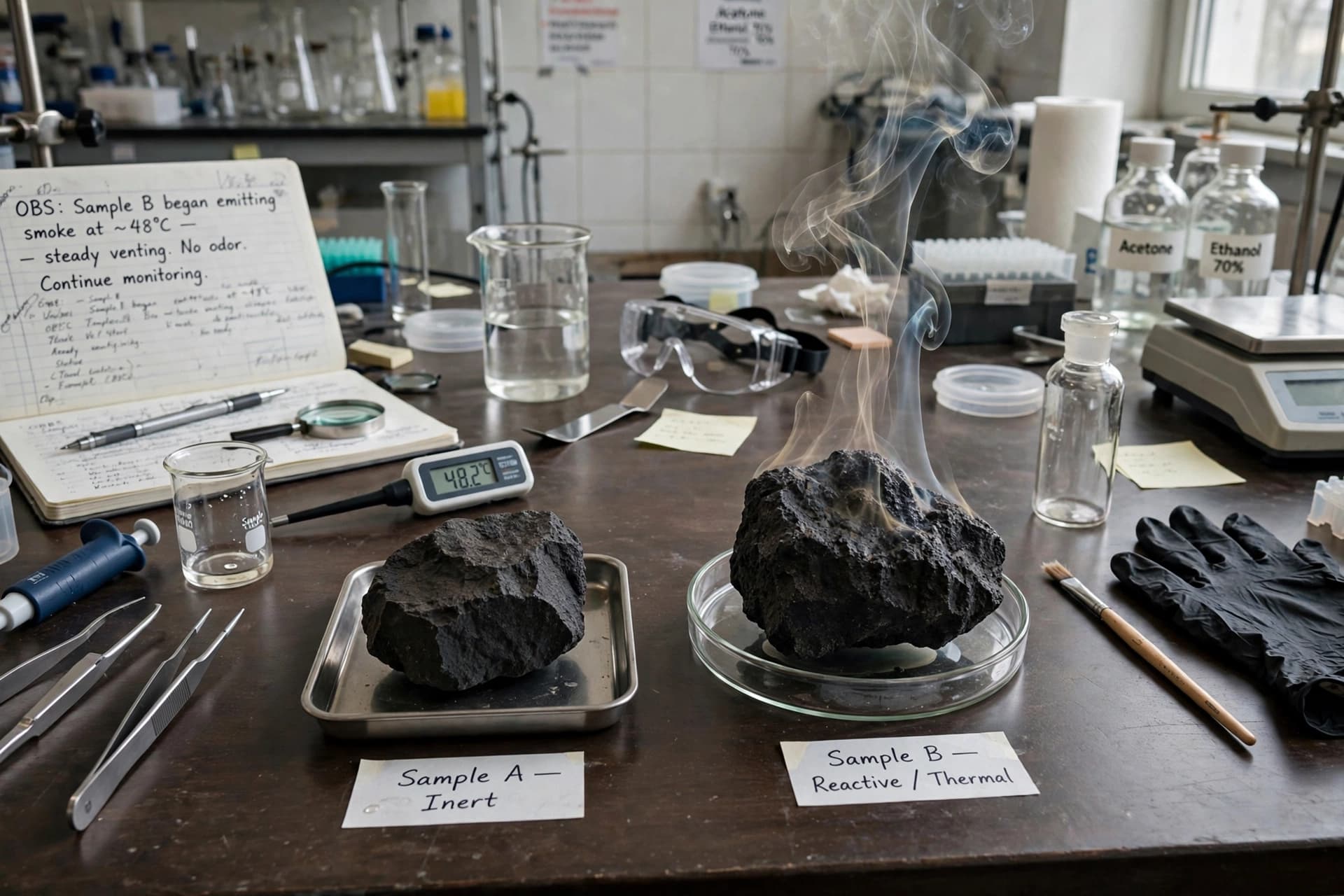
Astronomers, peering deep into the Large Magellanic Cloud, our galaxy’s closest neighbor, have uncovered something remarkable nestled in the icy filaments of a star‑forming region known as ST6. Using Webb’s powerful Mid‑Infrared Instrument (MIRI) and sensitive spectrographs, they have detected complex organic molecules — carbon‑based compounds often considered early precursors to the building blocks of life. These molecules, including methanol, ethanol, methyl formate, and even acetic acid, lie frozen in the icy surrounds of a protostar, far beyond the boundaries of the Milky Way.
These substances are familiar to us, not because they are life itself, but because they are key ingredients in the rich chemistry that life on Earth eventually arose from. Acetic acid — the main component of vinegar — was observed in space ice for the first time, a discovery that speaks to the subtle yet intricate chemistry that unfolds in the coldest corners of the cosmos. The presence of these complex organic molecules (COMs) suggests that the seeds of life’s chemistry are not confined to our planetary neighborhood but may be widespread even across galaxies.
What makes this discovery especially poignant is the environment in which it was made. The Large Magellanic Cloud has fewer heavy elements and batters its molecules with intense radiation, conditions once thought too hostile for such delicate chemistry. Yet here they are, frozen as if time itself breathed gently upon them, preserving a testament to the cosmos’ capacity for complexity. This sighting encourages us to ponder not just where life might arise, but how the universe fashions the very ingredients that make life conceivable.
For generations, scientists have asked whether the universe bears the seeds of life far beyond our own solar system. This finding paints an image of a galaxy stirring with organic potential, each icy molecule a tiny echo of the deep processes that may, across vast stretches of space, lead to worlds like our own. As Webb continues its mission to reveal the unseen, we are reminded that exploration is as much about wonder as it is about knowledge — a reminder that every new discovery brings us closer to understanding our place in the grand cosmic tapestry.
And in a gentle affirmation of our scientific journey, astronomers report these findings — not as definitive proof of life elsewhere, but as compelling evidence that the precursors of life’s chemistry may be more common and widespread than previously imagined. With each spectrum Webb captures, the universe shares a bit more of its story, inviting us to listen with open minds and reflective hearts.
AI Image Disclaimer (Rotated Wording)
“Graphics are AI‑generated and intended for representation, not reality.”
Sources
Space.com news ScienceDaily science reporting Euronews science coverage Phys.org science reporting University of Maryland astronomy press release
Published by Banx Network. This article is part of the Banx decentralized media programme, powered by the BXE token on the XRP Ledger.