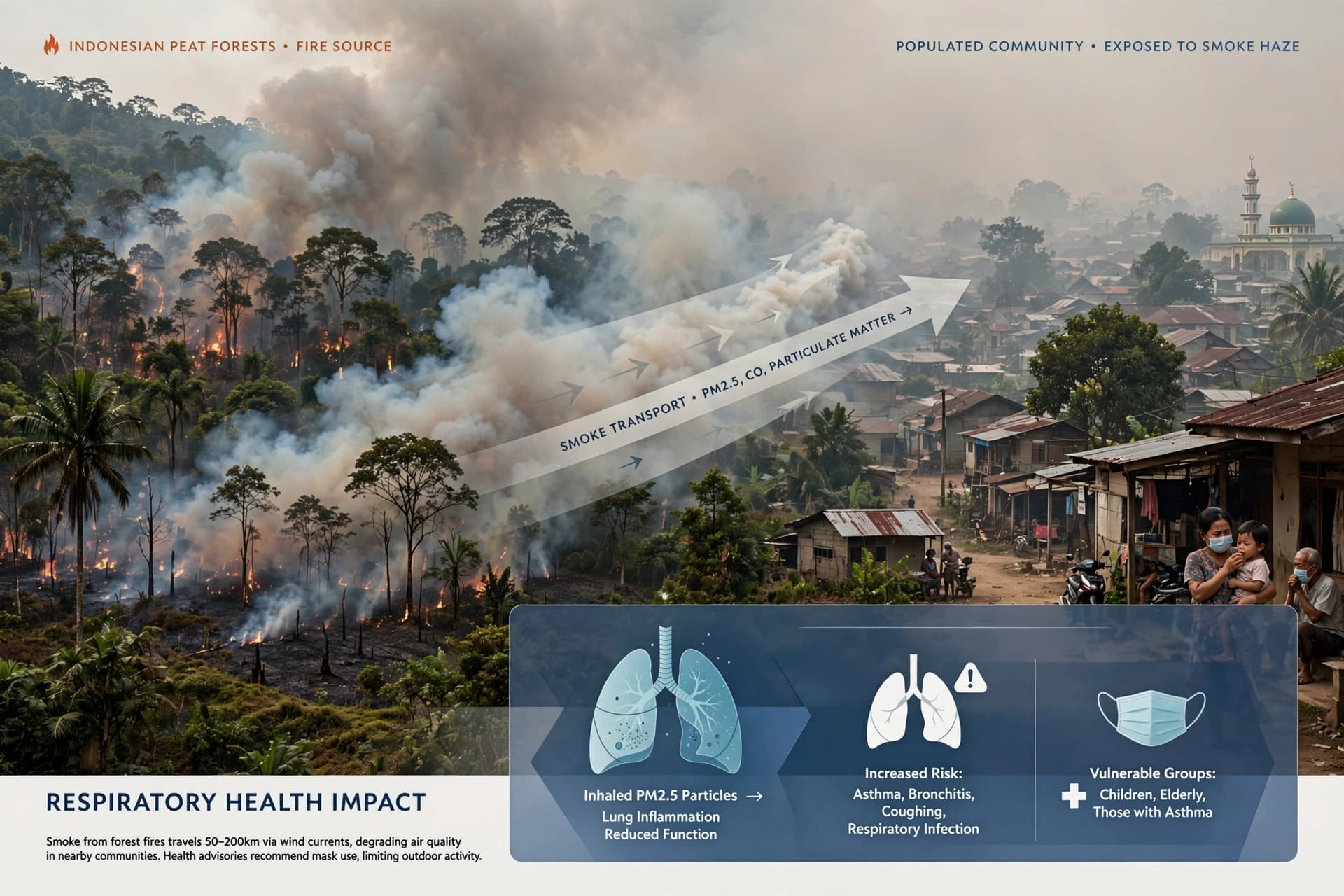
In Indonesia, respiratory infections more than doubled within a week during a period of severe wildfire activity, according to health and environmental data reported in September. The increase coincided with deteriorating air quality in areas affected by smoke.
Wildfire smoke contains fine particles and other pollutants that can irritate the respiratory system. Exposure can cause coughing, throat irritation, breathing difficulties, and other symptoms, with people who already have respiratory conditions potentially facing greater risks.
The rapid increase in reported infections highlighted the connection between environmental conditions and public health. When large fires produce smoke across populated areas, healthcare systems may see increased demand from people experiencing respiratory symptoms.
Children, older adults, and people with existing health conditions can be particularly sensitive to polluted air. Outdoor workers can also face greater exposure because they spend more time outside during periods of poor air quality.
Air-quality monitoring can help communities understand when pollution reaches unhealthy levels. Public-health authorities can use that information to advise residents about reducing exposure, especially during periods when smoke concentrations are high.
Wildfires also create challenges for healthcare facilities themselves. Clinics and hospitals may need to respond to more patients while communities are simultaneously dealing with transportation difficulties, reduced visibility, and other effects of widespread smoke.
The connection between fires and respiratory health is not unique to Indonesia. Similar patterns have been observed in wildfire-prone regions around the world, where prolonged smoke exposure can create short-term health effects and contribute to broader public-health pressures.
Preventing the fires remains an important part of reducing those health impacts. Fire management, land-use practices, early detection, and protection of vulnerable ecosystems can all influence the scale of future smoke events.
For people living beneath a smoky sky, however, the issue becomes immediate and personal. A distant forest fire may begin as a point on a satellite image, but once smoke reaches a community, it becomes part of the air in every breath. Indonesia's recent rise in respiratory infections illustrates how closely the health of people can be tied to the health of the landscapes around them.
SEO SLUG
indonesia-wildfires-respiratory-infections-rise-2026
HASHTAGS
#Indonesia #Wildfires #RespiratoryHealth #AirPollution #Smoke #PublicHealth #Environment #Healthcare
IMAGE DISCLAIMER
This AI-generated visual is a conceptual editorial illustration and does not depict actual patients, medical facilities, wildfire locations, or specific communities.
SOURCES
Reuters Ministry of Health of Indonesia Indonesia Meteorology, Climatology and Geophysical Agency World Health Organization
Published by Banx Network. This article is part of the Banx decentralized media programme, powered by the BXE token on the XRP Ledger.