In some parts of Papua New Guinea, distance is not simply measured in kilometers. A journey to a hospital can involve mountains, rough roads, long walks, or difficult flights. For a health worker in an isolated community, even obtaining a second medical opinion can become a challenge of its own.
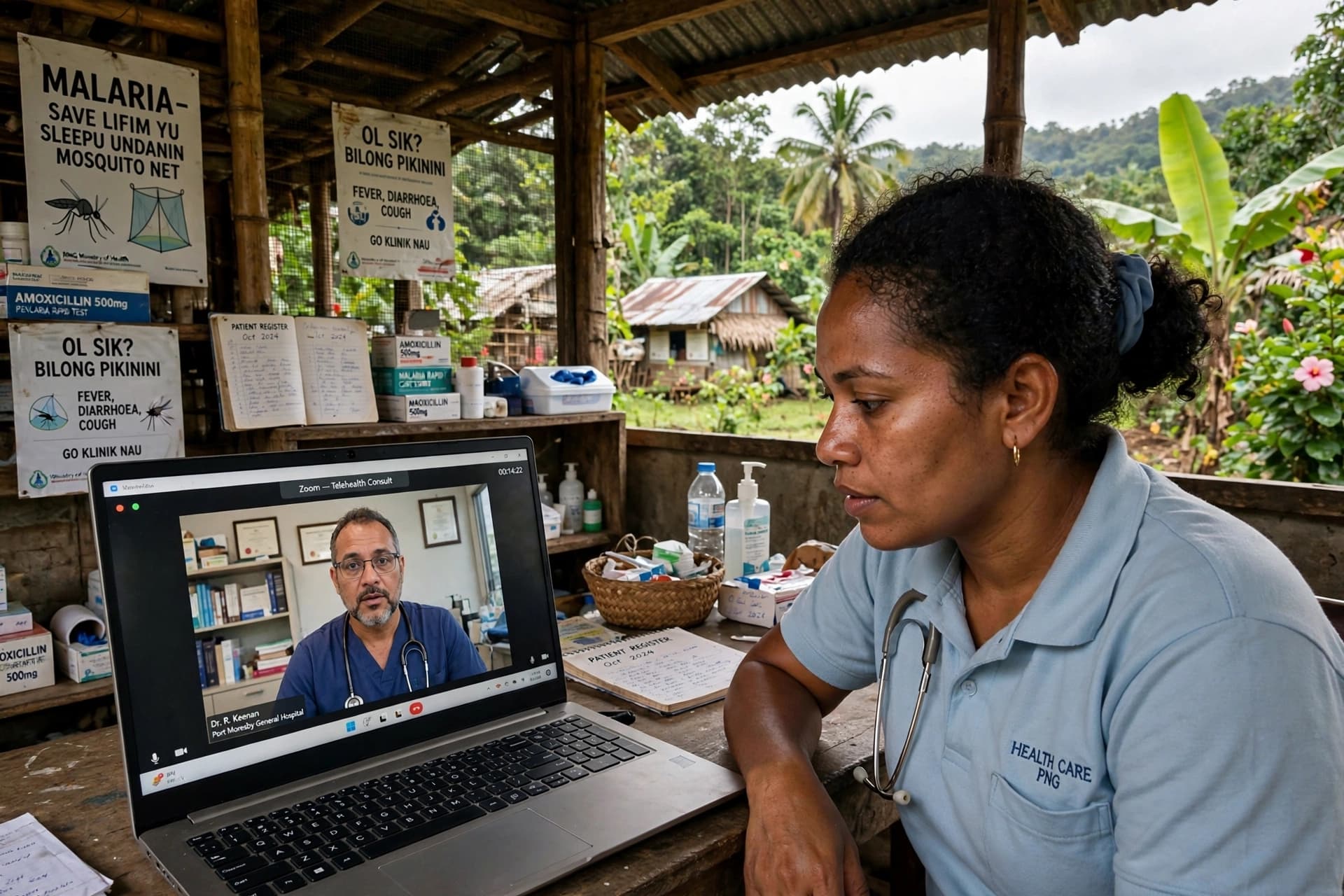
A rural healthcare model being tested at Indagen Health Sub-centre in Morobe Province is attempting to narrow that distance through telemedicine, improved infrastructure, continuous training, and community participation. The initiative is being developed by the Katim Tasol Foundation through its Lighthouse model.
The approach recognizes that technology works best when it is connected to the realities of a healthcare system. A digital consultation by itself cannot replace medicine, equipment, trained health workers, electricity, or emergency transport. At Indagen, those elements are being developed together.
The need is considerable. According to information presented by the project, more than 85 percent of Papua New Guinea’s population lives in rural areas, while most doctors are concentrated in urban centers. That geographical imbalance can leave rural health workers dealing with complex cases with limited access to specialist advice.
At Indagen, telemedicine has already been used to support health workers during emergencies. One reported case involved a patient with an open lung injury who required urgent treatment when no doctor was present and evacuation was unavailable overnight. The procedure was performed under remote guidance.
Another reported case involved a pregnant woman whose condition made immediate air transfer difficult. A remote assessment helped guide the decision to provide a blood transfusion at the clinic before she was eventually transferred to Angau Memorial Hospital for further care.
The model also depends on infrastructure beyond the internet connection. The Lighthouse clinic operates with off-grid solar power, while health workers receive training and have access to continuous telemedicine support. The combination is intended to make the service more resilient in places where conventional infrastructure can be unreliable.
The project is now moving beyond its original pilot. Katim Tasol has secured funding to establish three modular rural clinics in Finschhafen District, with Lengbati identified as one of the locations. The clinics are intended to extend the model into other communities while working with local health authorities.
There is a quiet significance in this kind of technology. Telemedicine does not erase geography, nor does it make a remote village suddenly resemble a city hospital. What it can do is allow knowledge to travel when people cannot.
For Papua New Guinea’s rural communities, that connection may become one part of a larger effort to strengthen primary healthcare. A signal crossing mountains and forests cannot replace a doctor standing beside a patient, but it can place another experienced voice within reach. At Indagen, that possibility is being tested one consultation, one health worker, and one patient at a time.
SEO SLUG
papua-new-guinea-telemedicine-remote-rural-healthcare-2026
HASHTAGS
#PapuaNewGuinea #Telemedicine #Healthcare #DigitalHealth #RuralHealthcare #HealthTechnology #Morobe #MedicalInnovation
IMAGE DISCLAIMER
This AI-generated illustration is intended for editorial visualization only and does not portray an actual patient, medical worker, clinic, or telemedicine consultation.
SOURCES
The National Katim Tasol Foundation Papua New Guinea National Department of Health
Published by Banx Network. This article is part of the Banx decentralized media programme, powered by the BXE token on the XRP Ledger.