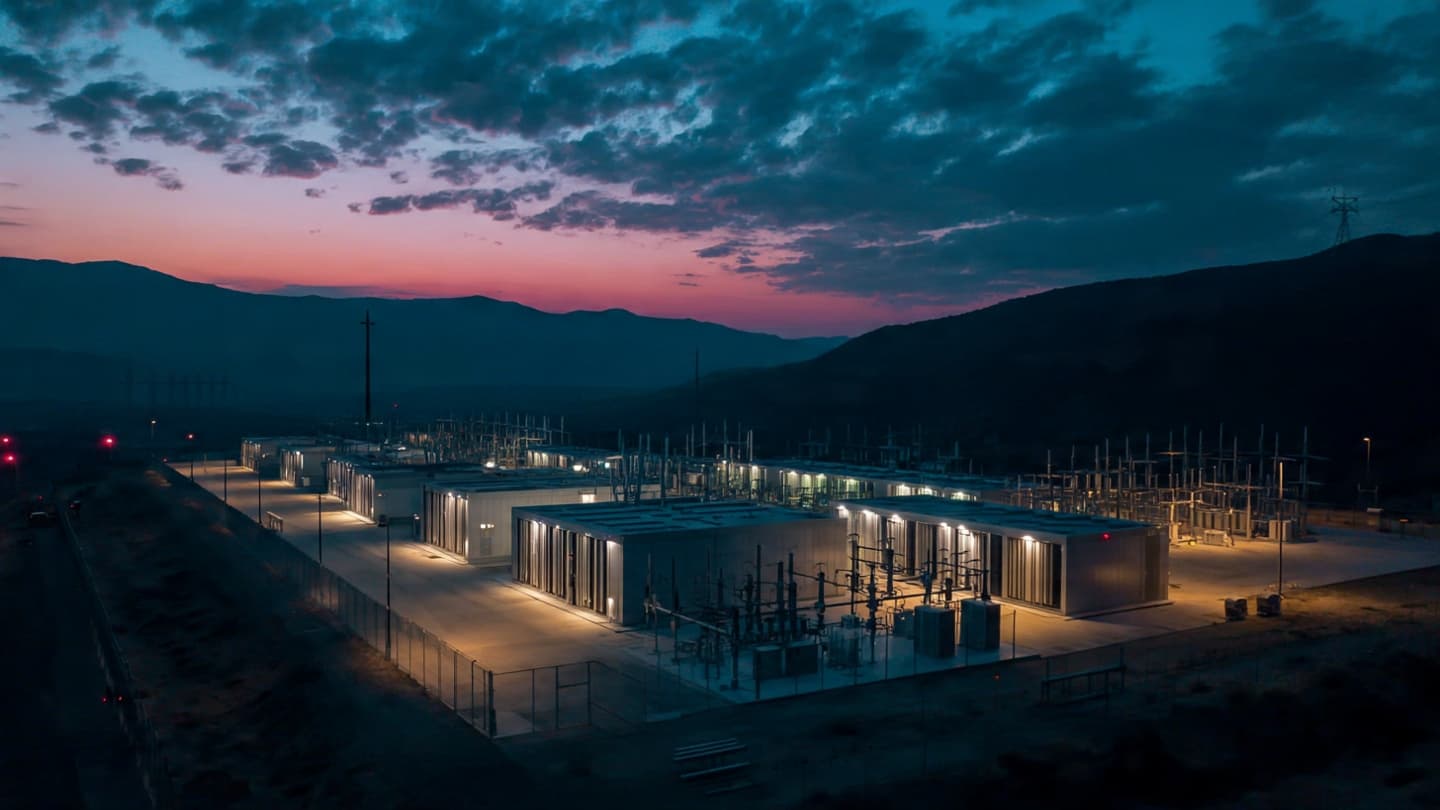
There is a particular kind of silence inside a data center at night. Beyond the walls, the world may be still, but thousands of machines continue their quiet work, consuming electricity, processing information and turning streams of digital instructions into something increasingly central to the modern economy. Across the United States, that landscape is expanding, and with it comes another, less visible movement: a growing tide of borrowed money.
Artificial intelligence has become one of the largest infrastructure stories in corporate America. Building the systems behind it requires far more than software. Companies need processors, servers, cooling equipment, electricity and enormous buildings capable of operating continuously. Those requirements have pushed major technology companies toward the bond market at a pace that has begun to attract closer attention from investors.
Reuters reported on August 21 that AI-related corporate debt issuance had reached roughly $220 billion in 2026, compared with only $12.5 billion during the previous year. The number offers a sense of how quickly the financial architecture surrounding artificial intelligence has changed. What once appeared largely as an investment funded by enormous technology cash reserves is increasingly becoming a story about credit as well.
The companies doing much of this borrowing remain among the strongest names in corporate America. Their balance sheets, global businesses and established technology platforms provide considerable support for investors. Yet even strong borrowers can encounter a market that has its own limits. As more debt arrives at once, investors begin comparing one opportunity with another, and the price of attracting capital can gradually change.
That change has begun to appear in technology bond spreads. Reuters reported that spreads on technology bonds had widened to 89 basis points, nine basis points above the broader investment-grade market. The difference is not necessarily a sign of financial distress, but it suggests that investors are becoming more selective as the amount of AI-related borrowing grows.
There is something almost physical about the transformation. A new data center may stand quietly at the edge of a city, its walls enclosing rows of machines that few people ever see. But behind the building is a network of financing decisions stretching through banks, bond markets and institutional portfolios. The physical expansion of computing therefore leaves a financial footprint far beyond the property itself.
The timing creates another layer of uncertainty. Companies are spending heavily today in anticipation of demand and revenue that may develop over years. Investors, meanwhile, must evaluate the debt according to current conditions, current yields and the changing cost of capital. The future may justify today’s construction, but financial markets still place a price on the waiting period.
That does not mean the artificial intelligence investment cycle is coming to an end. The infrastructure buildout remains substantial, and the largest technology companies continue to have access to capital. What appears to be changing is the ease with which that capital can be obtained. As the supply of new debt rises, investors may increasingly ask for better compensation for taking it on.
The bond market therefore provides a different window into the AI boom. The familiar images are usually processors, server racks and glowing screens, but another story is unfolding behind them in conference rooms and trading desks. It is a story of yields, maturities and the gradual calculation of how much tomorrow’s technology can reasonably be asked to finance today.
For now, U.S. technology companies remain active borrowers and artificial intelligence continues to attract enormous investment. Recent figures show, however, that the financing required for the expansion is becoming large enough to test investor capacity. The machines continue to multiply, while the financial markets supporting them watch the cost of that growth more carefully.
AI Image Disclaimer These visuals are AI-generated conceptual representations and are not actual photographs.
Sources Reuters
Published by Banx Network. This article is part of the Banx decentralized media programme, powered by the BXE token on the XRP Ledger.