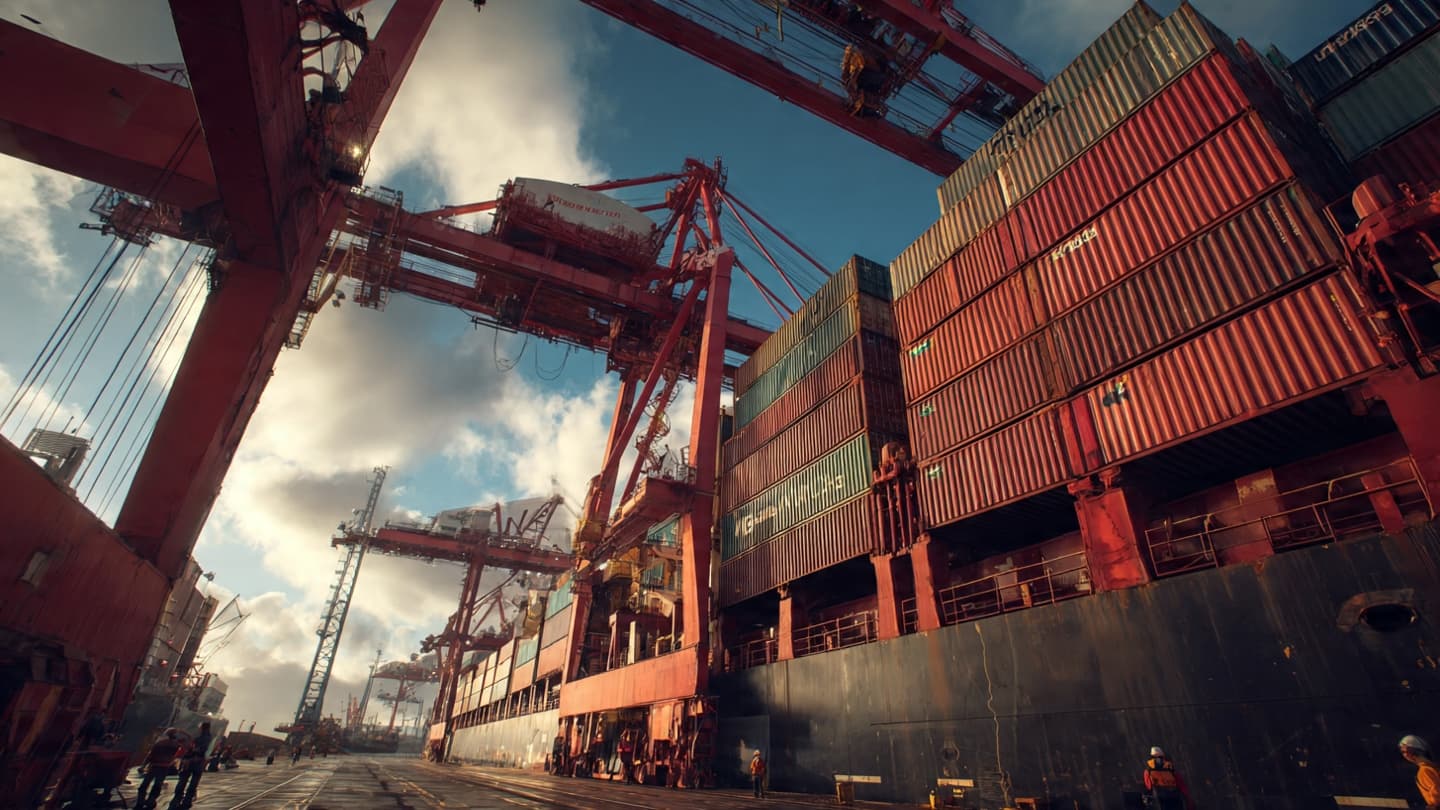
At Japan's ports, the movement of goods can seem almost endless: containers arriving, cranes lifting, ships leaving and trucks carrying another piece of the global economy inland. In July, that movement accelerated. Japan recorded its strongest monthly exports on record, with semiconductor-related demand providing much of the momentum.
Japan's exports rose 23.2 percent year over year in July to 11.5 trillion yen, reaching a monthly record, according to data from the Ministry of Finance reported by Reuters. The increase was stronger than economists had expected.
Semiconductor-related products were an important source of the growth, reflecting the global investment taking place around artificial intelligence and data centers. As companies around the world expand computing capacity, demand has increased for the equipment and components needed to build that infrastructure.
Japan's exports to the United States increased 22 percent from a year earlier, while shipments to China rose 25.8 percent. The figures illustrate how deeply Japanese manufacturing remains connected to two of the world's largest economies, even as global trade patterns continue to shift.
The weaker yen also helped Japanese exporters. When the domestic currency loses value against the dollar and other currencies, Japanese goods can become relatively less expensive for overseas buyers, although the same currency movement can make imported energy and raw materials more expensive for Japanese companies and households.
That second side of the equation appeared clearly in July. Imports climbed 27.8 percent to 12.1 trillion yen, also setting a monthly record. The rise was driven partly by higher oil prices, with the value of crude oil imports increasing sharply even as physical import volumes rose more modestly.
Japan relies heavily on imported energy, making global oil prices particularly important. Disruptions to Middle Eastern supply routes earlier in the year forced importers to rely more heavily on alternative sources, including U.S. crude. The result was a larger energy bill arriving alongside the country's record export performance.
The result was still a trade deficit of 634.5 billion yen in July, although that was narrower than economists had forecast. The numbers therefore tell two stories at once: Japan's industrial exports are benefiting from strong global demand, while the cost of maintaining the country's energy-dependent economy remains elevated.
The export figures also arrive after Japan's economy expanded for a third consecutive quarter, with external demand helping offset weakness in household consumption and business investment. That makes overseas demand particularly important to the country's current economic momentum.
For now, Japan's ports are carrying a powerful combination of old and new industries. Traditional manufacturing remains central, while semiconductors and AI-related equipment are creating new demand. July's record export figure captures that transition in a single number, even as higher energy costs remind Japan that every shipment leaving the country is connected to another shipment arriving from somewhere else.
SEO-friendly Slug japan-record-exports-semiconductor-ai-demand-july-2026
Hashtags #Japan #Exports #Semiconductors #ArtificialIntelligence #AI #Business #GlobalTrade
Image Disclaimer The visuals presented here are AI-generated conceptual scenes designed to illustrate the reported trade developments.
Sources Reuters Japan Ministry of Finance
Published by Banx Network. This article is part of the Banx decentralized media programme, powered by the BXE token on the XRP Ledger.