Far from Argentina’s major coastal cities, the story of liquefied natural gas begins beneath the dry landscape of Patagonia. Vaca Muerta holds enormous reserves of shale gas, and the country is now attempting to connect that resource with consumers far beyond South America.
Argentina LNG, backed by state oil company YPF and energy companies Eni and XRG, has applied to join Argentina’s investment incentive scheme for a planned $51 billion integrated liquefied natural gas project.
The project is designed to develop Vaca Muerta as a source of LNG for international markets. Natural gas extracted from the shale formation would eventually be processed and cooled into liquid form, allowing it to be transported by specialized ships.
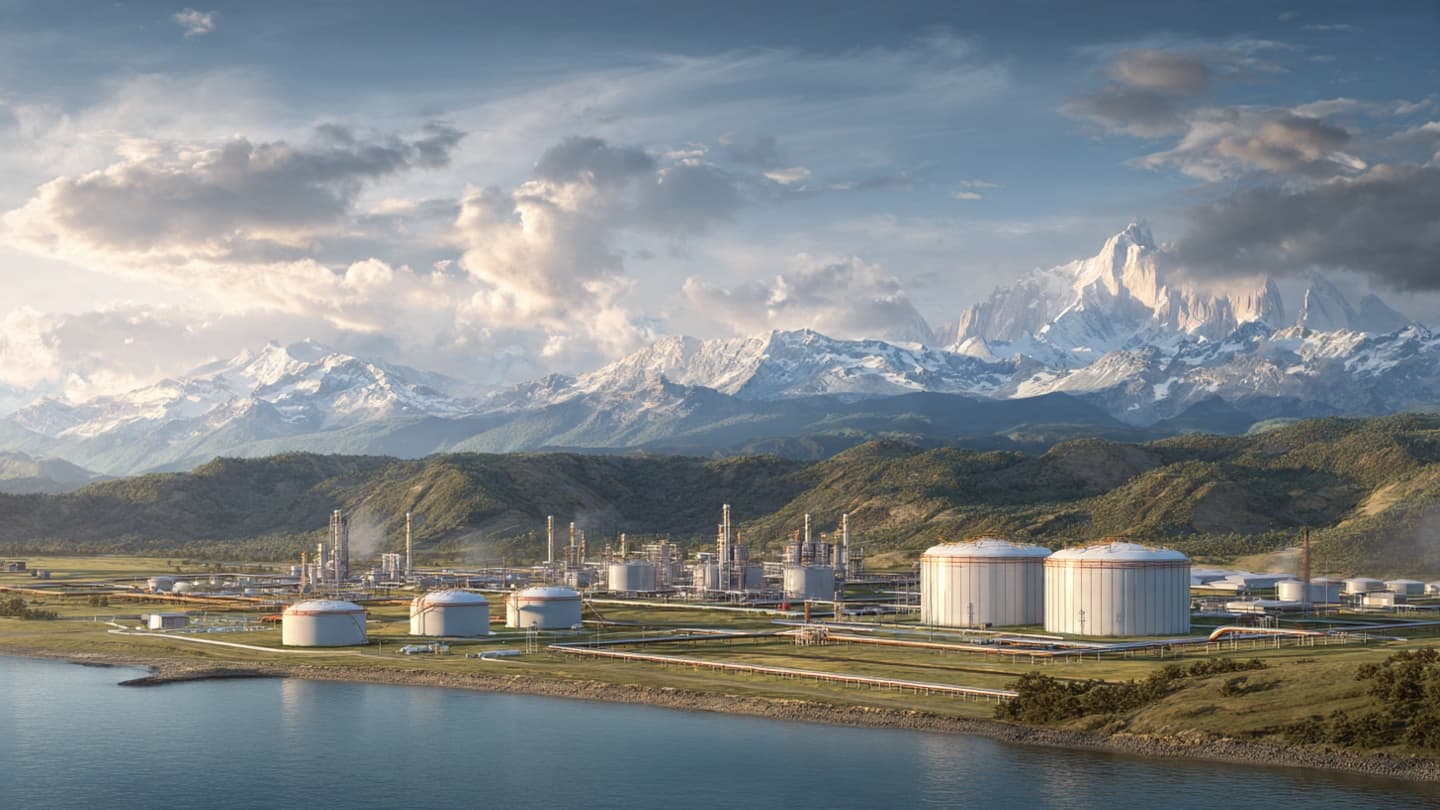
The scale of the proposed investment places the project among Argentina’s largest energy ambitions. Such a development would require production facilities, pipelines, processing infrastructure, liquefaction capacity and export terminals.
Vaca Muerta provides the resource foundation. The formation is recognized as one of the world's largest unconventional gas reserves, giving Argentina an unusually large domestic supply base from which to develop an export industry.
For YPF, the LNG project represents a potential extension of the company's rapidly growing shale operations. The company reported strong second-quarter results this year, with increased shale oil production contributing to a $1.21 billion quarterly net profit.
The partnership also gives the project an international dimension. Eni brings experience from global energy operations, while XRG is part of Abu Dhabi's energy investment ecosystem. Their participation connects Argentina's shale resources with companies experienced in international energy markets.
LNG projects require long-term planning because the infrastructure is expensive and complex. Developers must secure sufficient gas supply, build processing capacity and establish access to buyers willing to commit to long-term energy purchases.
Argentina is therefore looking beyond simply increasing gas production. The larger objective is to build an integrated chain in which natural gas extracted in Patagonia can eventually become a globally traded commodity.
If developed at scale, LNG exports could create additional foreign-currency earnings for Argentina. Energy exports have already become an increasingly important part of the country's economic strategy as production from Vaca Muerta expands.
The project also reflects the changing geography of global gas markets. LNG allows natural gas to move between continents, meaning producers do not have to rely entirely on pipeline connections with neighboring countries.
For Argentina, that flexibility could provide access to customers in markets where natural gas demand remains significant. But reaching those markets requires infrastructure on a scale far beyond the drilling operations currently expanding in Vaca Muerta.
The $51 billion proposal therefore represents more than a single energy project. It is an attempt to connect Argentina’s geological resources with an international industrial network involving production, transportation, processing, shipping and global trade.
The investment application is an early but significant step. The project will still depend on development decisions, financing, infrastructure and market conditions before its full export potential can be realized.
For now, the landscape of Vaca Muerta remains dominated by wells, pipelines and open Patagonian terrain. Yet beneath that landscape, Argentina is building a much larger ambition: turning its shale gas resources into a long-term LNG business capable of reaching markets around the world.
Image Disclaimer
These visuals were generated with AI to illustrate the proposed Argentine LNG development and are not photographs of the actual project.
Sources
Reuters YPF Eni XRG Argentina LNG
Published by Banx Network. This article is part of the Banx decentralized media programme, powered by the BXE token on the XRP Ledger.