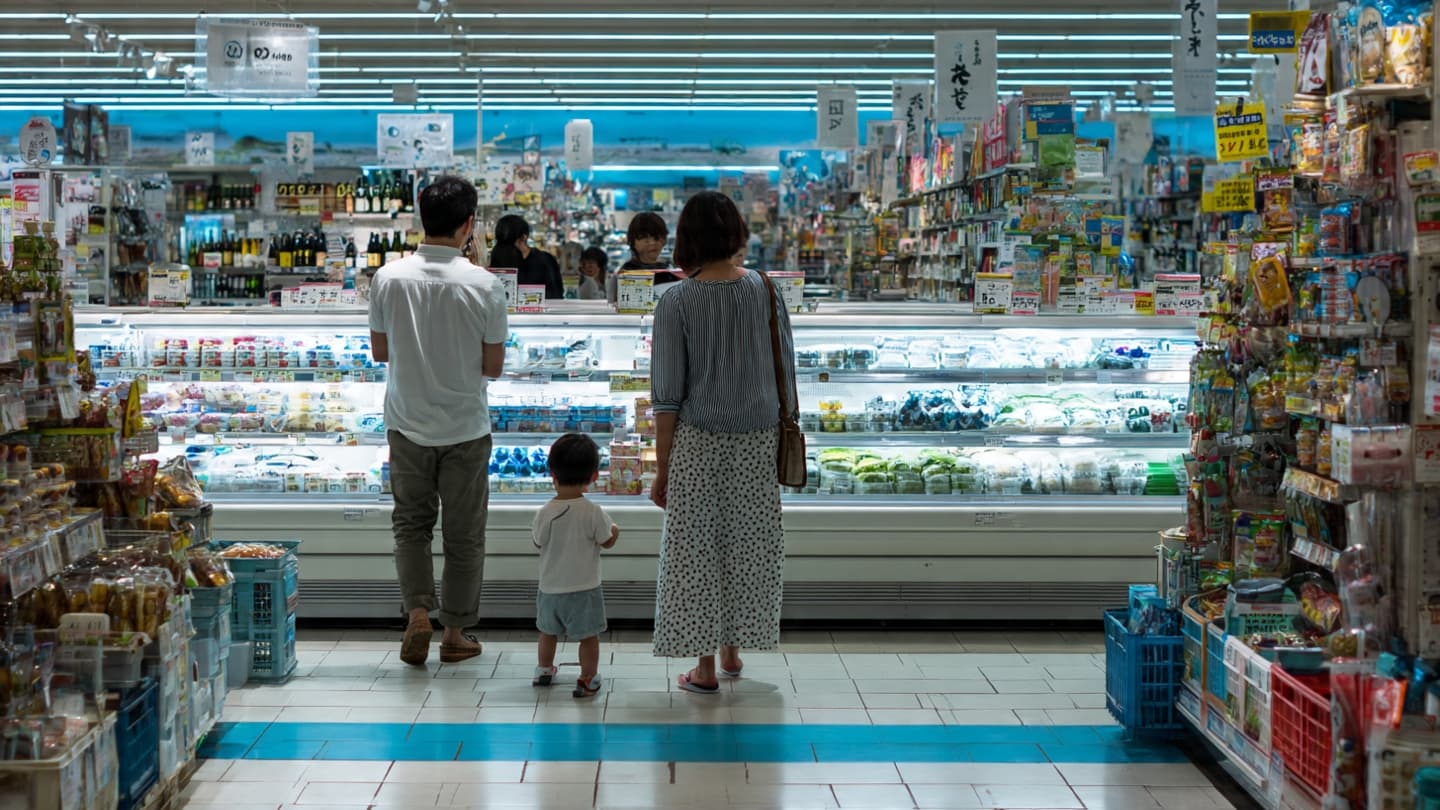
There is a quiet rhythm to household spending, visible in grocery aisles, train stations, restaurants and the small purchases made at the end of an ordinary day. In Japan, that rhythm slowed noticeably in July, as families became more selective about where their money went.
Japanese household spending fell 3.6% from a year earlier in July, marking the steepest decline since January 2024 and extending the decline for an eighth consecutive month. The result was considerably weaker than economists had expected, with forecasts calling for a 1.6% drop.
On a month-to-month basis, the picture was somewhat less severe. Spending increased 0.5% after seasonal adjustment, although that was still below the 2.6% rise economists had anticipated. The contrast suggests that households were not completely withdrawing from consumption, but were moving more cautiously through their daily expenses.
The pattern was visible across several areas of household budgets. Spending on entertainment and household goods increased, while purchases of food and transportation declined. The difference reflects how consumers can continue to spend in selected categories while reducing expenses elsewhere when prices remain elevated.
Rising living costs remain an important part of the picture. Even with wage increases earlier in the year, higher prices have continued to place pressure on household purchasing power. For families, the effect can be gradual: fewer restaurant visits, smaller grocery purchases, or a decision to postpone a larger expense.
The weakness in consumption also arrives as Japan's economy enters an important period for financial markets. Household spending is one of the indicators watched closely when assessing the strength of domestic demand, particularly as expectations surrounding the Bank of Japan's future interest-rate decisions continue to change.
At the same time, other parts of Japan's economy have shown greater resilience. Services activity accelerated during August, reaching its strongest growth pace in five months, supported by stronger domestic demand. That creates a mixed picture in which some businesses are seeing renewed activity while household consumption remains under pressure.
Inflation is another part of the equation. Tokyo's core inflation accelerated for a third consecutive month in August, suggesting that price pressures have not disappeared from the domestic economy. For households, persistent inflation can gradually alter spending habits even when incomes are rising.
July's figures therefore tell a story less about a sudden disappearance of consumer activity than about adjustment. Japanese households are still spending, but the choices appear more deliberate, shaped by prices and the changing value of everyday purchases. As autumn begins, the strength of consumption will remain one of the clearest windows into how Japan's economy is moving beneath the surface.
AI Image Disclaimer: The accompanying visuals are AI-generated conceptual illustrations and do not represent actual photographic documentation.
Sources: Reuters
Published by Banx Network. This article is part of the Banx decentralized media programme, powered by the BXE token on the XRP Ledger.