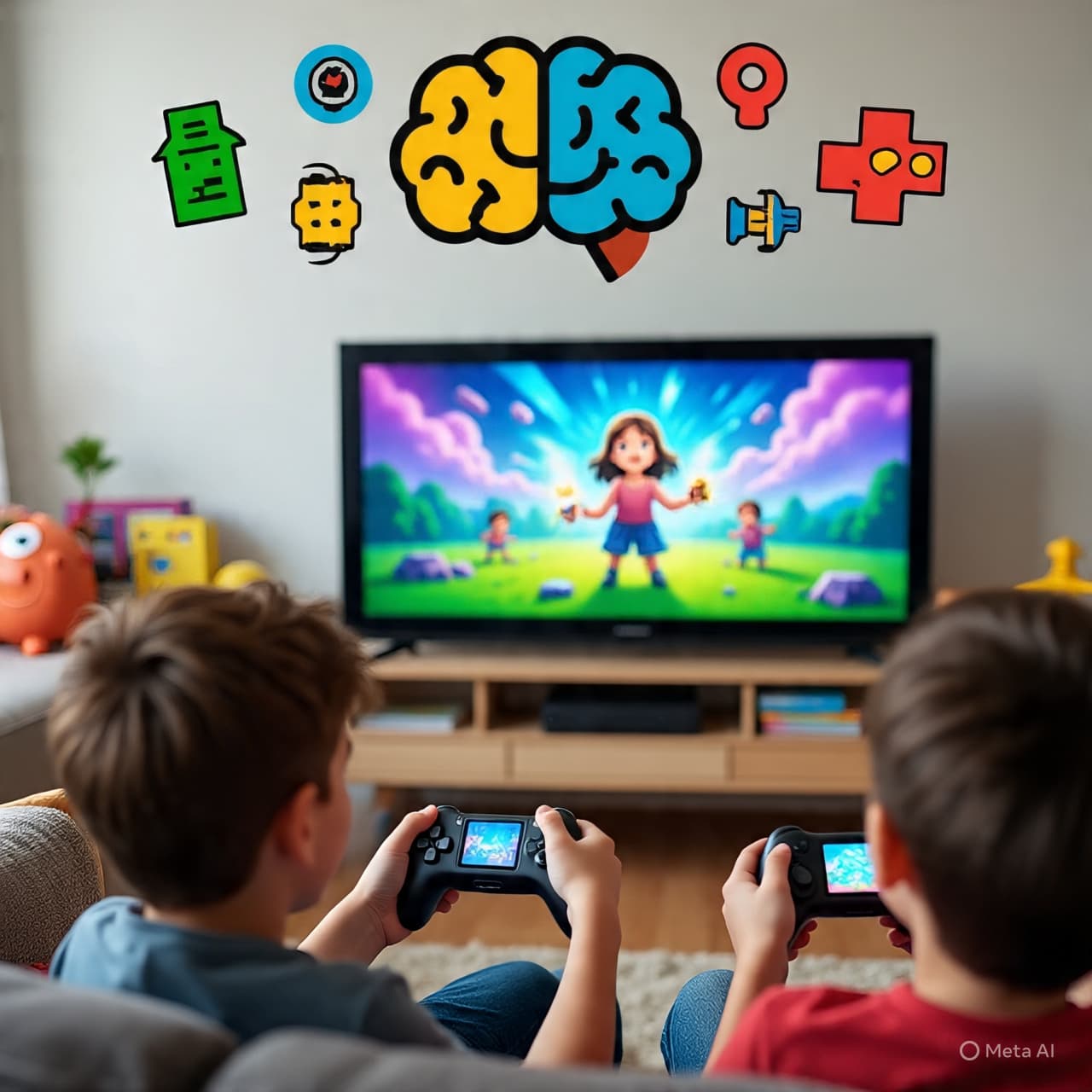
In the quiet of a living room, where afternoon light falls on cushions and controllers rest like ordinary tools of play, a subtle shift in understanding is unfolding. Much like placing a seed in fertile soil and watching it bloom over time, the simple act of a child reaching for a video game may nurture more than just fleeting joy. In the gentle landscape of childhood learning, researchers are discovering that play — that seemingly ordinary pastime — might also stir the roots of intelligence in ways that surprise our collective imagination.
At the heart of this insight is a large longitudinal study that followed nearly ten thousand children in the United States, all around nine or ten years old. Instead of assuming video games were merely distractions, scientists looked at screen habits — time spent watching videos, socializing online, and playing games — and then revisited the same children two years later to see how their intelligence had changed. What emerged was a pattern that gently challenged long-held assumptions: those who played video games more than average saw a slightly larger rise in IQ over time, about 2.5 points above the typical increase seen in their peers.
This isn’t framed as a sweeping vindication of screen time in all its forms, nor as a call for children to spend endless hours with a controller in hand. Rather, it is a reminder that not all digital experiences are the same. Strategizing through challenges, recognizing patterns, and adjusting to new situations — these elements of many games may subtly shape parts of cognitive development. The study authors stress that intelligence is not a fixed trait but can be influenced by environment and activities.
It’s worth noting that the broader research landscape raises important caveats. The same body of work underscores that effects vary widely, and positive associations with IQ do not capture other aspects of child wellbeing — like social skills, physical activity, sleep quality, or academic performance outside the gaming context. As one senior researcher noted, these findings are only part of a larger picture that still needs careful exploration.
Still, in a world where digital play is woven into daily life, this gentle discovery invites reflection rather than alarm. Instead of casting video games only as a threat or a waste of time, it encourages us to consider how certain kinds of play might engage young minds in unexpected ways — not with loud pronouncements, but with the quiet unfolding of learning over time.
In the end, the data offers neither a simple mandate nor a stern warning, but a nuanced view: playing video games correlates with modest IQ gains in childhood according to this study, suggesting that, when balanced and mindful, the digital worlds children explore may contribute to facets of their intellectual growth.
AI Image Disclaimer (Rotated Wording)
“Illustrations were produced with AI and serve as conceptual depictions.”
Sources (media names only):
• ScienceAlert
• Upworthy
• BGR
• Nature Scientific Reports (via IFLScience / ScienceDaily)
• NIH / ScienceDaily
Published by Banx Network. This article is part of the Banx decentralized media programme, powered by the BXE token on the XRP Ledger.