As demand for computing grows, the government is placing greater emphasis on how these facilities are managed. New digital infrastructure rules are expected to require covered operators to meet clearer standards for security, operational resilience and energy efficiency.
The changes reflect the increasing importance of data centres to Singapore’s economic life. These facilities are no longer simply buildings filled with servers. They support interconnected services used by financial institutions, companies, government agencies and millions of consumers.
Security is one of the central concerns. A serious disruption can affect more than the facility itself, particularly when a data centre supports multiple customers or essential digital services. Strong access controls, incident reporting and tested recovery procedures can help operators identify weaknesses before they become larger problems.
Resilience also extends beyond cybersecurity. Data centres depend on reliable electricity, cooling systems, telecommunications and physical infrastructure. Equipment failures, extreme weather or interruptions to utilities can affect operations even when computer systems have not been directly attacked.
Energy efficiency presents another challenge. Server equipment generates heat and requires cooling, while newer artificial intelligence workloads can demand substantial computing power. Singapore must therefore consider how digital expansion can proceed without placing unnecessary pressure on its energy resources.
For operators, meeting stronger requirements may mean additional investment in monitoring systems, backup arrangements, cooling technology and staff training. Such measures can raise short-term costs, but they can also reduce the risk of costly interruptions and help maintain customer confidence.
The changes may also influence how companies plan future facilities. Clearer standards can provide a more predictable regulatory environment, although businesses will need to assess how the requirements apply to their specific operations.
Singapore’s approach reflects a wider international trend. Governments increasingly regard data centres as strategic infrastructure because so many essential services depend on continuous access to digital systems.
The broader question is how to maintain the balance between growth and responsibility. Singapore wants to remain an attractive location for technology investment, but its limited land and energy resources make careful planning especially important.
As the new requirements take effect, data centre operators will need to show that expansion can be accompanied by stronger safeguards. In an economy built around constant connectivity, reliability is becoming just as important as capacity.
AI Image Disclaimer
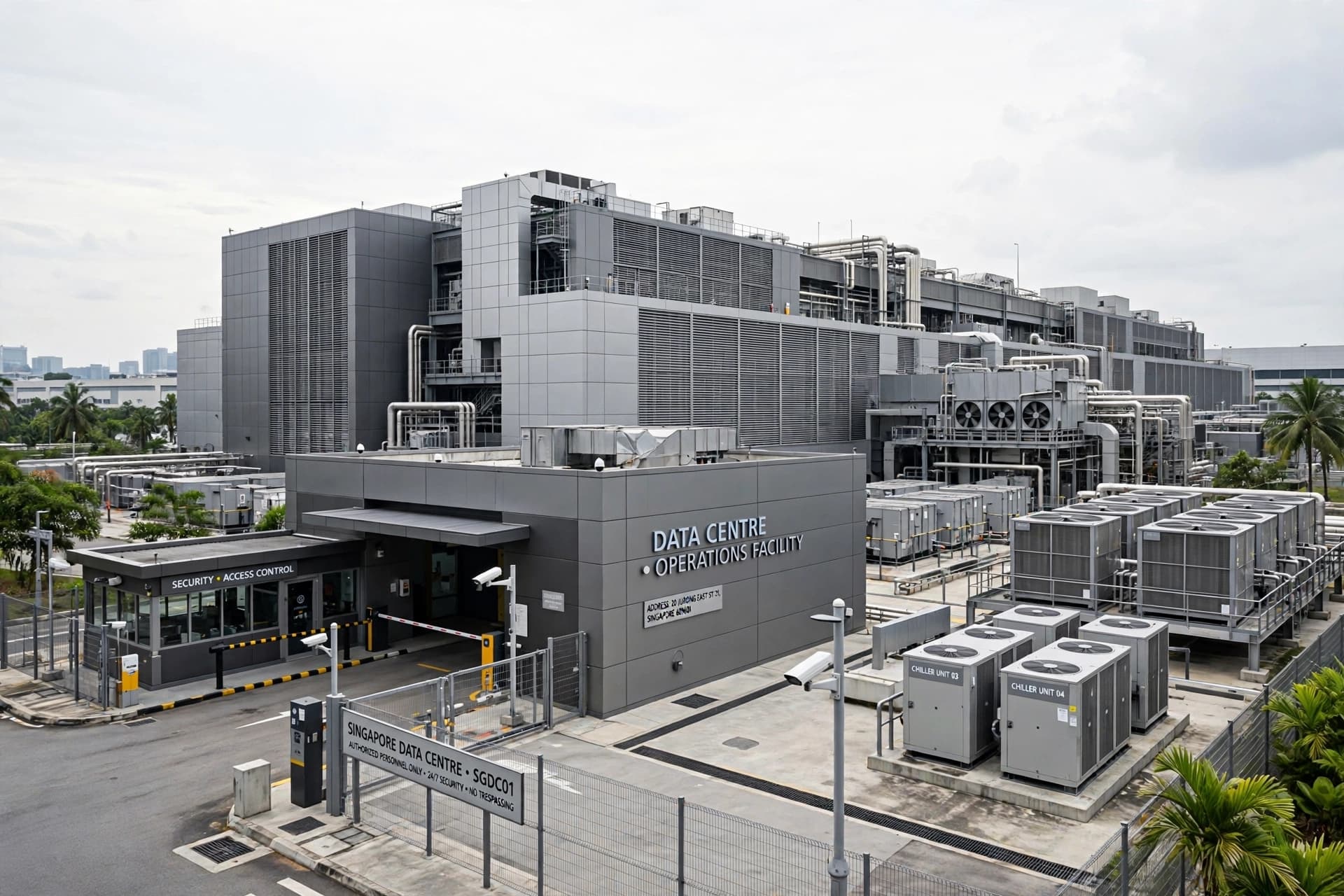
This AI-generated illustration is a conceptual representation of data centre infrastructure and does not depict an actual Singapore facility.
Sources
The Business Times The Straits Times Infocomm Media Development Authority Ministry of Digital Development and Information
Published by Banx Network. This article is part of the Banx decentralized media programme, powered by the BXE token on the XRP Ledger.