Political support often arrives quietly, hinted at rather than declared. It moves through Washington like weather—felt before it is confirmed, sensed in remarks that linger longer than intended. When Donald Trump spoke of Kevin Warsh as a potential Federal Reserve nominee who could attract Democratic backing, it was less an announcement than a signal, cast into the air to see how it might settle.
Warsh is not an unfamiliar name in the architecture of U.S. monetary power. A former Federal Reserve governor, he carries the weight of institutional memory, shaped by the aftermath of the global financial crisis and years spent inside the guarded language of central banking. Trump’s suggestion that Warsh could win bipartisan support gestures toward that past—toward experience as a bridge rather than an ideology as a line in the sand.
The Federal Reserve, by design, exists at arm’s length from partisan tides. Yet its leadership is always chosen in their midst, confirmed through a process that reflects the political temperature of the moment. Trump’s remark acknowledges this reality. In an era of hardened divisions, the idea of a nominee who might draw votes from both parties carries its own kind of currency.
For Democrats, Warsh represents continuity more than disruption. He is known as a traditionalist on monetary policy, skeptical of prolonged intervention, attentive to inflation risks, and fluent in the Fed’s internal rhythms. For Republicans, he has long been viewed as a steady hand aligned with market confidence. In that overlap lies the possibility Trump alluded to—a rare zone of agreement in an otherwise fractured landscape.
The comment also reflects a broader recalibration around the Fed itself. With inflation memories still fresh and economic uncertainty never far from the surface, central bank leadership is increasingly framed as a stabilizing force rather than a political prize. Bipartisan support becomes shorthand for reassurance: to markets, to allies, to a public wary of abrupt shifts.
Yet support, like credibility, cannot be willed into existence. It accumulates slowly, built on hearings, statements, and the careful parsing of past decisions. Trump’s words do not decide the outcome, but they begin a conversation—one that tests whether institutional experience can still outweigh partisan reflex.
In the end, the prospect of Democratic backing for a Fed nominee is less about consensus than about tone. It suggests a momentary pause in the noise, a recognition that some roles demand continuity over confrontation. Whether that pause holds is uncertain. But for now, the idea itself lingers, suspended between politics and policy, waiting to see which way the air moves.
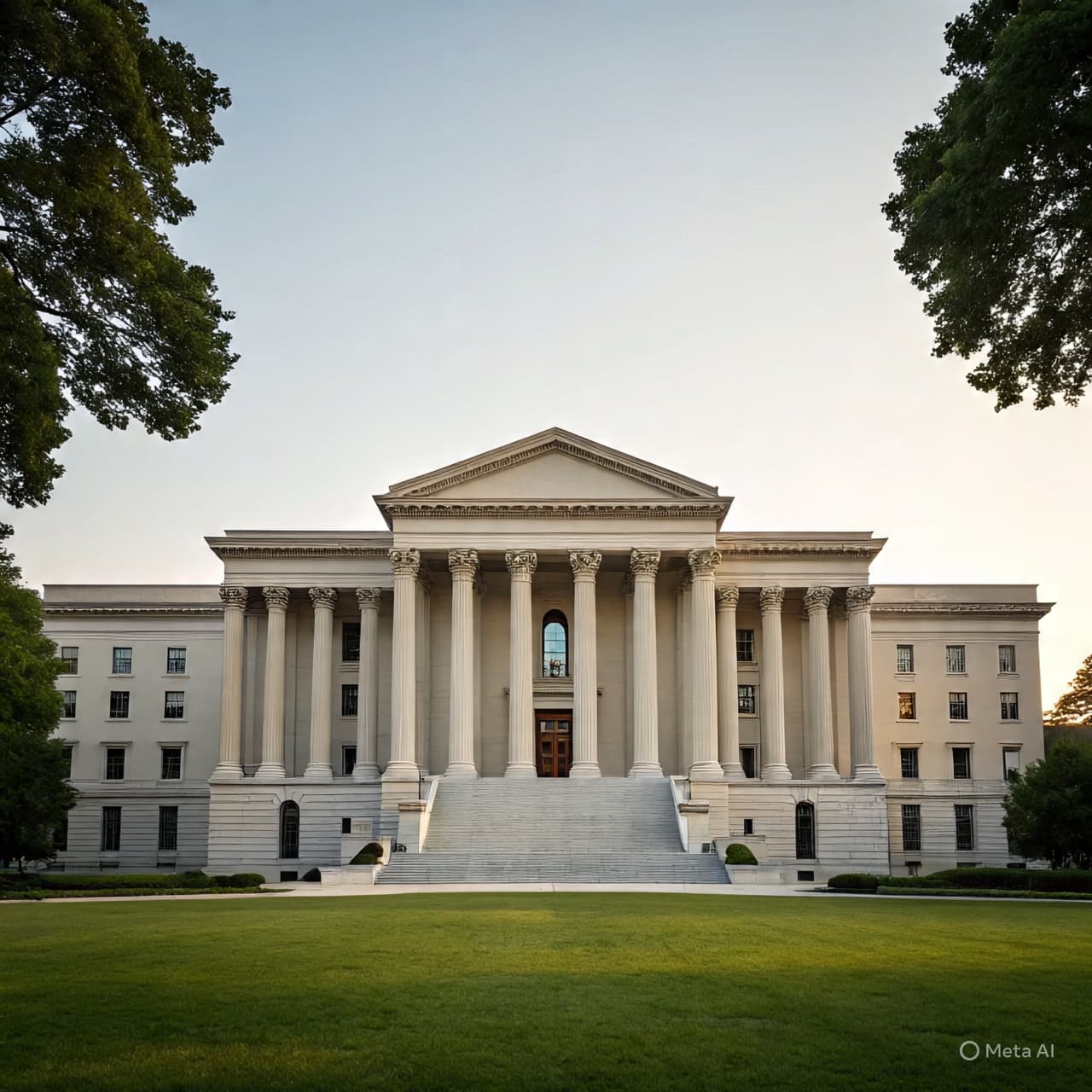
AI Image Disclaimer
Visuals are AI-generated and serve as conceptual representations.
Sources
Federal Reserve White House U.S. Senate Banking Committee Reuters Bloomberg
Published by Banx Network. This article is part of the Banx decentralized media programme, powered by the BXE token on the XRP Ledger.