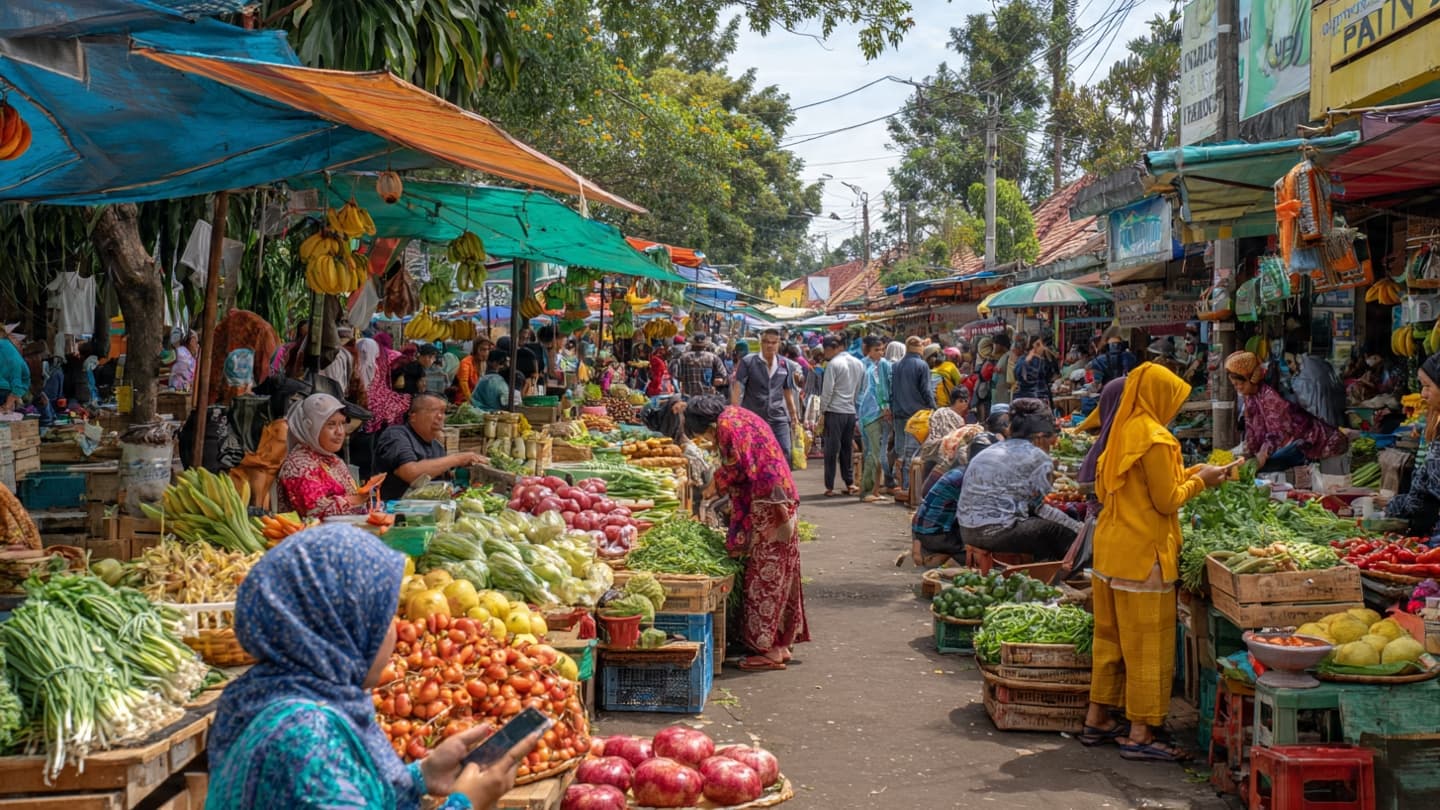
A small market stall can appear to belong entirely to its surroundings: familiar products, familiar faces and the daily rhythm of local trade. Yet a payment made there today can cross an invisible digital bridge, connecting a local seller with a visitor carrying a smartphone from another country.
The use of QRIS among small and medium-sized businesses in West Java continues to expand, opening opportunities for transactions with international tourists through digital payments. Bank Indonesia West Java recorded 14.49 million QRIS users and Rp125.35 trillion in transaction value during the second quarter of 2026.
QRIS, Indonesia's standardized QR payment system, has become an important part of the country's digital-payment ecosystem. Its standardized format allows participating merchants to accept payments through compatible financial applications.
For small businesses, the appeal lies partly in simplicity. A QR code can occupy only a small space at a shop counter or market stall while connecting the merchant to a much larger electronic payment network.
The expansion of QRIS also reflects changes in tourism and consumer behavior. International visitors increasingly use smartphones for navigation, communication and payments, creating demand for payment systems that can work across different commercial environments.
In West Java, the growing adoption has been visible among micro, small and medium-sized enterprises. The regional QRIS figures indicate how quickly digital payments have moved beyond large retailers and into smaller businesses.
The benefits can extend beyond convenience. Digital payment records can give merchants clearer information about transactions and business activity, potentially helping them manage sales and finances more systematically.
For tourists, a familiar digital-payment process can make everyday purchases easier. A meal, souvenir or small service can become a straightforward electronic transaction rather than a moment of uncertainty over cash or payment methods.
The growth of QRIS also forms part of Indonesia's broader push toward a digital economy. Bank Indonesia has been developing payment infrastructure intended to make transactions faster, safer and more interconnected across different sectors.
However, digital adoption still depends on practical conditions. Merchants need smartphones or compatible devices, reliable connectivity and sufficient understanding of the payment system. Customers also need access to financial applications that support the relevant transactions.
These considerations become especially important outside major urban centers. Digital infrastructure may be strong in one location and less reliable in another, meaning that the expansion of cashless payments will continue to depend on connectivity as well as consumer demand.
The numbers from West Java nevertheless show how deeply QR payments have entered everyday commerce. From traditional markets to businesses serving international visitors, a small digital symbol is increasingly becoming part of the physical landscape of Indonesian trade.
For merchants, the opportunity is straightforward: a local business can potentially become more accessible to customers who do not carry Indonesian cash. For Indonesia's digital economy, it represents another step in connecting neighborhood commerce with a wider and increasingly mobile world.
Image Disclaimer
These visuals were generated by AI and are conceptual depictions of QRIS-enabled commerce in Indonesia, not photographs of actual merchants or transactions.
Sources
ANTARA Bank Indonesia The Jakarta Post Ministry of Cooperatives and SMEs Indonesia Payment System Association
Published by Banx Network. This article is part of the Banx decentralized media programme, powered by the BXE token on the XRP Ledger.