In a quiet temple hall where incense lingers and wooden beams carry the memory of centuries, a new figure now stands beneath soft light. It does not breathe, yet it speaks. It does not age, yet it bows. Between ancient sutras and microprocessors, a conversation has begun.
Japan has unveiled what is described as its first Buddhist robot, known as Buddharoid — a machine designed not for industry or entertainment, but for reflection. Developed to hold conversations and offer spiritual guidance, the robot draws its responses from sacred Buddhist texts, while integrating explanatory detail generated through OpenAI’s language model. In this fusion of scripture and software, tradition meets contemporary code.
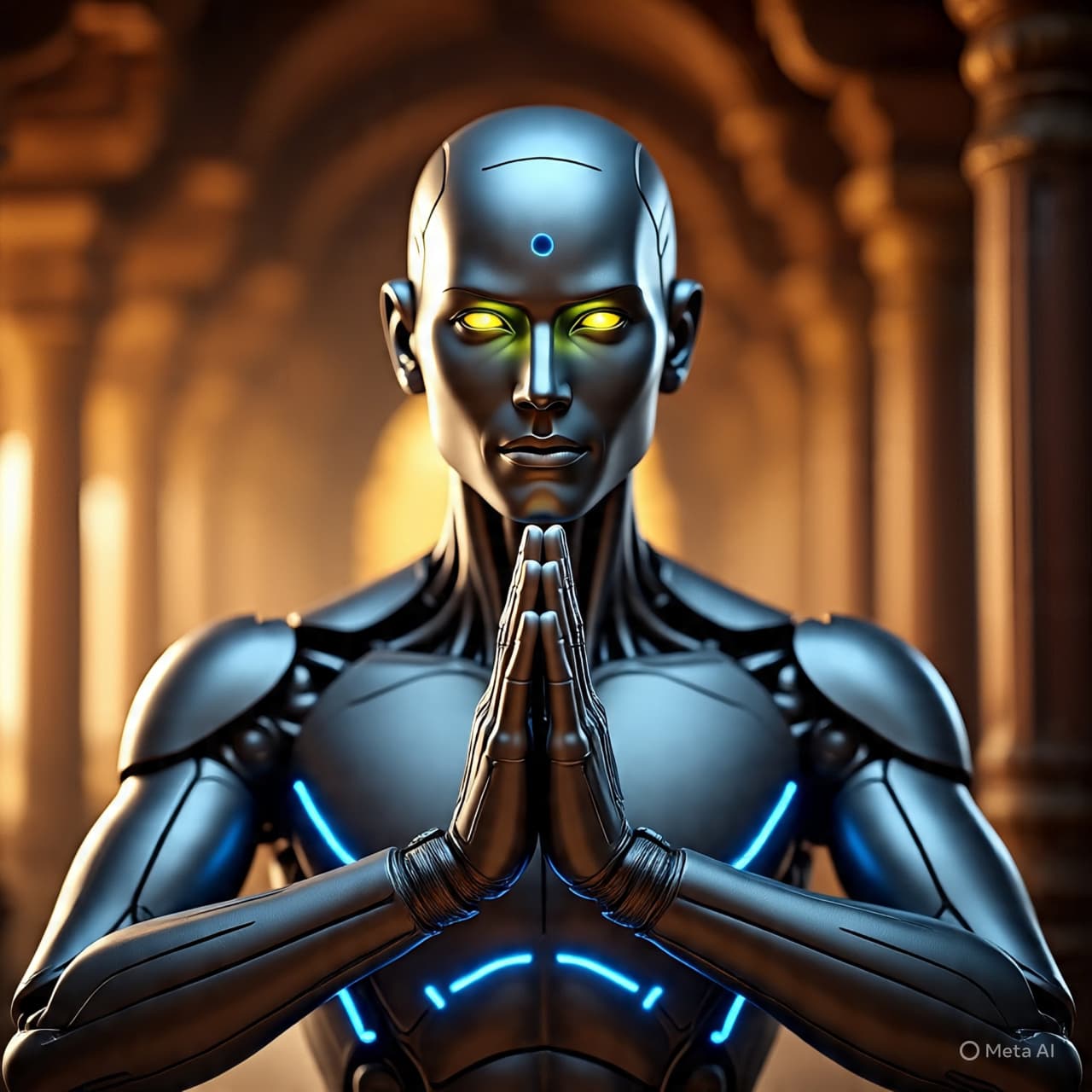
Buddharoid is built to recognize and synthesize speech, enabling visitors to speak aloud and receive verbal replies. It can walk, bow, and place its palms together in a traditional gesture of greeting, echoing the physical language of reverence practiced in temples across Japan. Its gestures are deliberate, almost ceremonial, designed to mirror the rhythms of monastic life.
In a country where robotics has long occupied a respected place in society — from factory floors to eldercare facilities — the presence of a spiritual machine may feel less jarring than elsewhere. Japan’s technological landscape often coexists comfortably with ritual and heritage. Here, innovation is not always framed as disruption, but sometimes as extension.
The creators of Buddharoid present it as a tool for accessibility and education. By answering questions about doctrine, ethics, and daily practice, the robot offers visitors a new entry point into Buddhist thought. The integration of artificial intelligence allows it to provide contextual explanations, translating classical teachings into contemporary language. Yet its foundation remains rooted in canonical texts.
Still, the image carries quiet symbolism: a robot bowing in a hall once reserved for monks, its palms pressed together in gasshō. For some, it may represent an expansion of spiritual outreach — a way to engage younger generations accustomed to digital interfaces. For others, it may raise questions about authenticity and the nature of guidance itself.
Buddhism, after all, has long emphasized impermanence and adaptation. Over centuries, teachings have traveled across borders, languages, and political eras, reshaped yet recognizable. In that long arc, a robotic interlocutor may simply mark another chapter — not a replacement for human clergy, but an experiment in form.
For now, Buddharoid stands as both artifact and inquiry. It listens. It responds. It bows. And in doing so, it invites reflection not only on scripture, but on the evolving relationship between faith and technology.
Published by Banx Network. This article is part of the Banx decentralized media programme, powered by the BXE token on the XRP Ledger.