The U.S. administration has announced plans to remove about 760,000 people from Affordable Care Act insurance exchanges after identifying enrollments it says were fraudulent, improper or associated with people who do not exist. The announcement was made by Vice President JD Vance and other administration officials on September 22.
Officials said the action is part of a wider effort to address fraud and eligibility problems in federal healthcare programs. The administration estimates that canceling associated subsidy payments will save about $2.2 billion.
The administration has described several categories of enrollment that it says require action. These include applications allegedly submitted without individuals’ knowledge and other cases in which officials say applicants did not meet program requirements.
The announcement does not mean that all 760,000 people have been individually found to have committed fraud. The government’s stated figure includes enrollments it considers fraudulent, ineligible or otherwise invalid, making the distinction between an improper enrollment and intentional fraud important.
Federal officials are also increasing scrutiny of insurance brokers and agents. The administration has announced measures affecting brokers involved in enrollments it believes showed signs of improper activity.
Another group of enrollees is expected to face additional verification. Reports on the administration’s plan say hundreds of thousands of applications will undergo further checks involving information such as income and eligibility.
The issue comes as Americans continue to rely heavily on the Affordable Care Act marketplaces for private health insurance. Changes to enrollment or subsidies can therefore affect both government spending and the ability of individuals to maintain their existing coverage.
The administration has framed the effort primarily around preventing government funds from being directed toward people who are not eligible. Supporters of stronger verification measures generally point to the need to protect public resources, while questions remain about how affected individuals will be notified and how legitimate enrollees can challenge an incorrect determination.
Healthcare policy is particularly sensitive because an administrative change can have consequences beyond a government ledger. Losing coverage can affect access to doctors, medications, preventive care and other medical services, depending on an individual’s circumstances and available alternatives.
The planned removals therefore place two objectives alongside each other: improving the accuracy of federal insurance enrollment while maintaining access for people who legitimately qualify. The administration’s next steps, including verification procedures and individual notifications, will determine how the announced policy is implemented in practice.
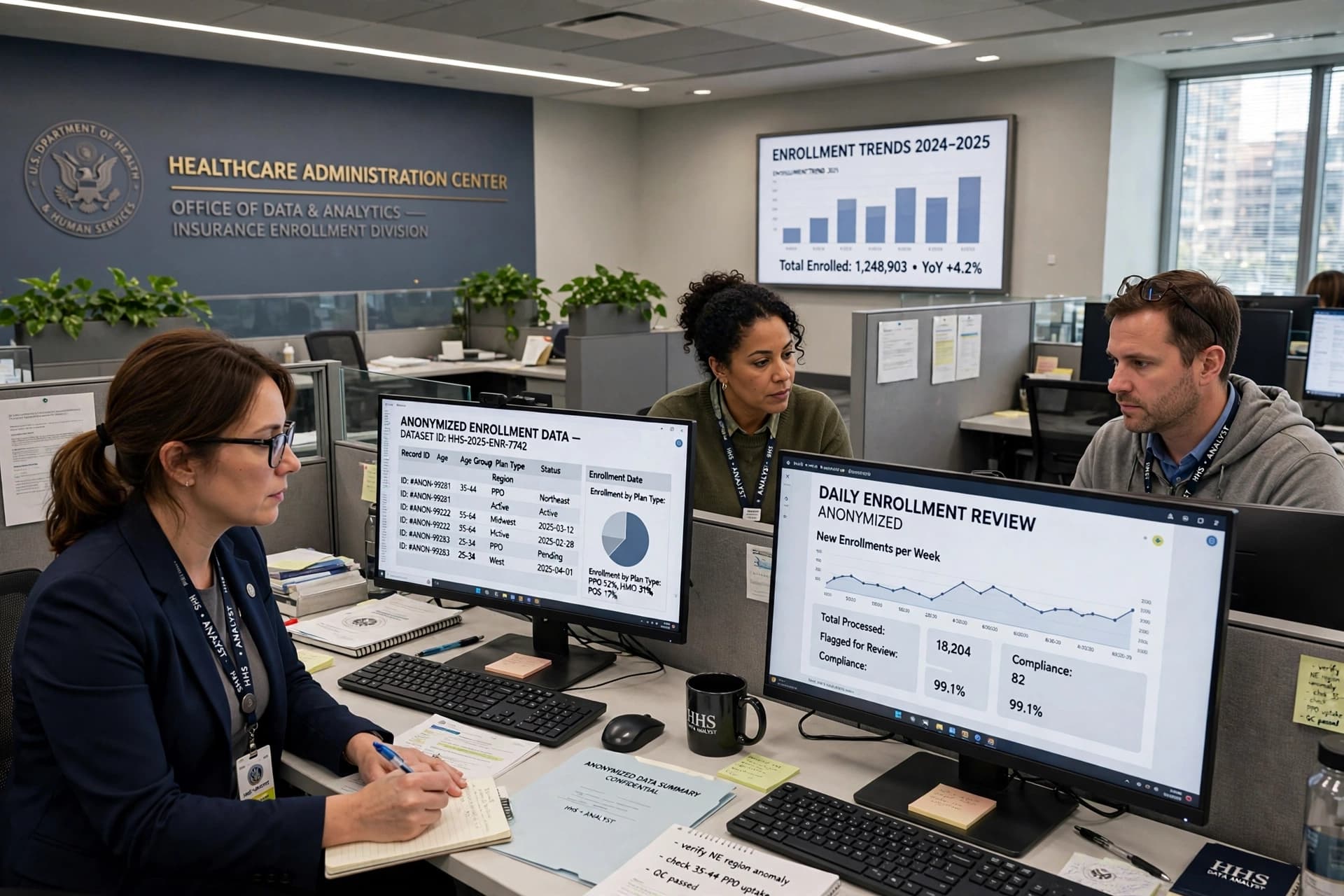
Image Disclaimer: The illustrations are AI-generated representations of U.S. healthcare enrollment and insurance administration. They do not depict actual patients, government databases or individual enrollment cases.
Sources: Associated Press U.S. Department of Health and Human Services Centers for Medicare & Medicaid Services White House
Published by Banx Network. This article is part of the Banx decentralized media programme, powered by the BXE token on the XRP Ledger.