
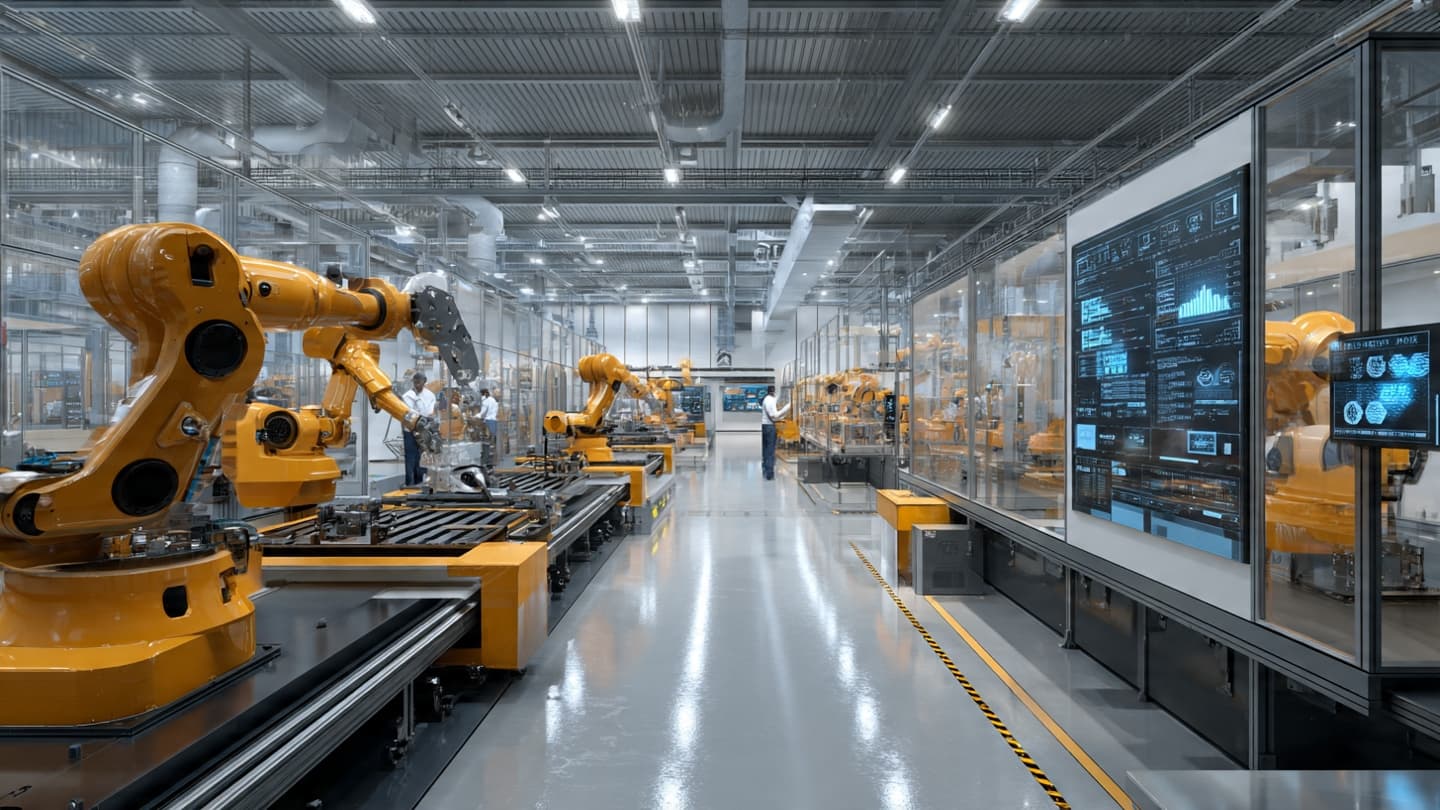
A factory once revealed its rhythm through the sound of machines: metal moving, conveyors turning and workers repeating carefully learned motions. Today, another layer is becoming audible only through data. Sensors measure production, software monitors performance and robots increasingly share the factory floor with people.
Indonesia is accelerating the adoption of Industry 4.0 technologies as manufacturers seek greater efficiency and competitiveness. The country's Making Indonesia 4.0 roadmap has encouraged industries to integrate automation, digital systems, artificial intelligence and advanced manufacturing technologies.
The transformation is visible across sectors. Food processing, automotive manufacturing, electronics, textiles and chemicals are among industries exploring digital tools to improve production and manage increasingly complex supply chains.
Automation does not necessarily mean that every task becomes robotic. In many factories, digital systems are introduced gradually, beginning with monitoring equipment, collecting production data or automating repetitive processes.
The information generated by those systems can become valuable in its own right. Manufacturers can monitor machine performance, identify irregularities and anticipate maintenance needs before equipment failures interrupt production.
Artificial intelligence adds another dimension. AI systems can analyze production data, identify patterns and support quality control, potentially allowing factories to respond more quickly to changes in output or equipment conditions.
Indonesia's industrial ambitions make this transition particularly significant. Manufacturing remains an important part of the country's economy, and increasing productivity can help domestic producers compete with manufacturers in other Asian markets.
The development also creates demand for new skills. Workers increasingly need familiarity with automation systems, digital controls, data analysis and advanced machinery, while engineers must combine traditional manufacturing knowledge with software and information technology.
Government programs have sought to encourage this transition through industrial assessments and technology adoption initiatives. The objective is not simply to introduce new machines, but to help companies develop production systems capable of operating efficiently in a more connected global economy.
Smaller manufacturers face different challenges. Large corporations may have greater resources for robotics and digital infrastructure, while small and medium-sized companies must often adopt technology incrementally.
Cost, workforce readiness and access to technical expertise remain important factors. A smart factory is not created simply by installing a robot; the surrounding production process must be redesigned so that people, machines and software work together effectively.
The transformation nevertheless continues. As Indonesia seeks to strengthen its manufacturing base, digital technology is becoming part of the physical architecture of production.
The modern factory may still contain workers, machines, materials and moving production lines much as it did decades ago. What is changing is the invisible layer connecting them—data moving between systems, algorithms observing processes and automation gradually becoming another form of industrial infrastructure.
Image Disclaimer
The images were generated using AI as conceptual representations of Indonesia’s smart-manufacturing environment and are not photographs of actual factories.
Sources
Ministry of Industry of Indonesia ANTARA World Economic Forum Asian Development Bank International Federation of Robotics
Published by Banx Network. This article is part of the Banx decentralized media programme, powered by the BXE token on the XRP Ledger.



