Some illnesses announce themselves loudly. Others develop quietly, leaving signs that may be difficult to recognize until the heart or another vital organ is already under strain. For researchers in Utrecht, the search for earlier signals has led to something as small as a blood sample.
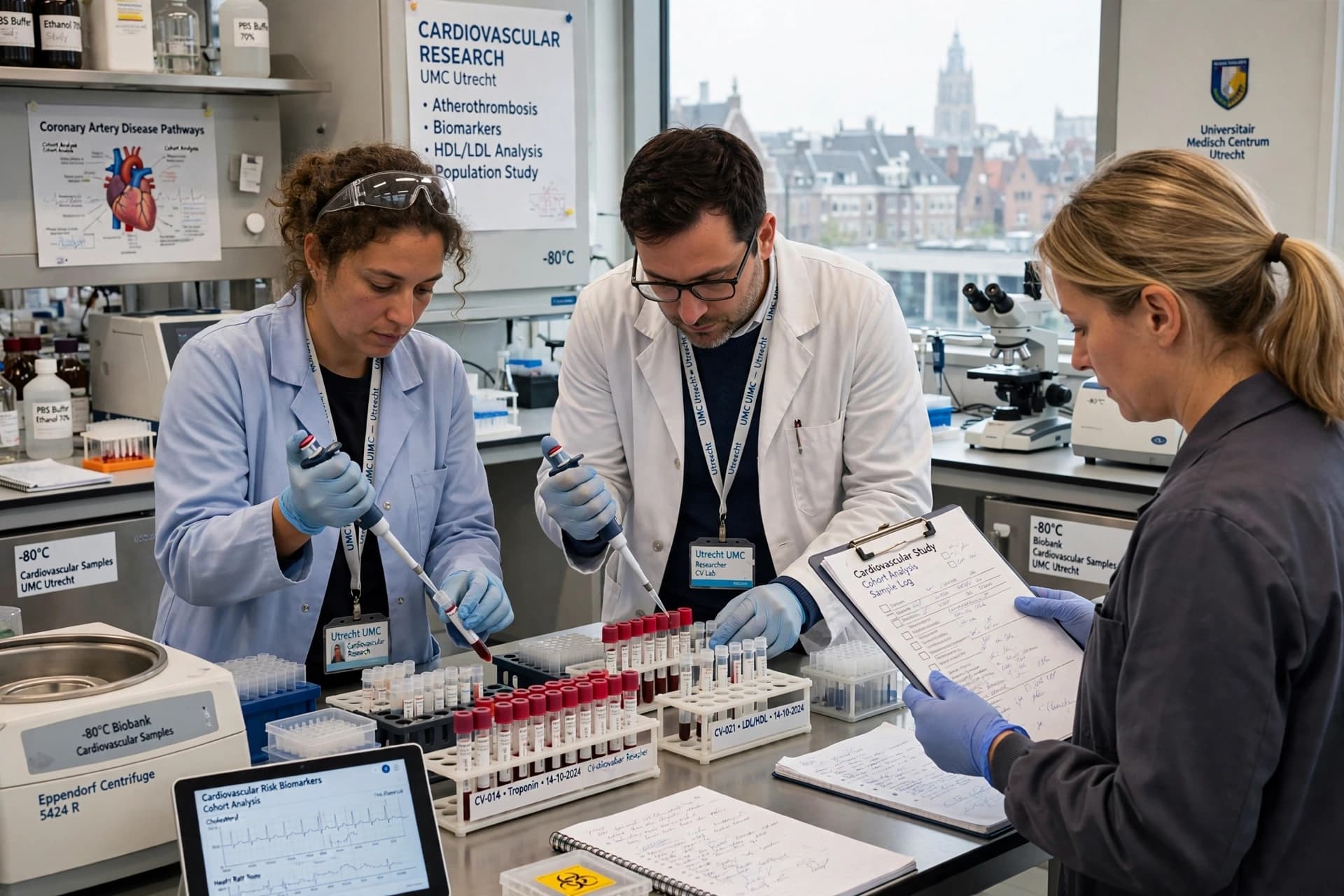
Researchers at Utrecht University and UMC Utrecht are developing a new blood test designed to detect heart disease in women. The research focuses on biological markers that may help identify cardiovascular problems at an earlier stage.
Heart disease has historically been studied using approaches that do not always capture the differences between men and women. Biological differences can influence symptoms, risk factors, disease development, and responses to treatment.
The researchers are therefore examining molecules in blood that could provide information about cardiovascular health. The goal is to determine whether measurable biological patterns can help identify women at increased risk.
A blood test would not replace established medical assessments. Rather, researchers are investigating whether it could become an additional tool alongside medical history, physical examination, imaging, and other diagnostic methods.
Early detection matters because cardiovascular disease can develop over time. Identifying risk earlier can give doctors and patients more opportunity to investigate symptoms, monitor changes, and consider appropriate preventive measures.
The research also reflects a broader movement toward more personalized medicine. Instead of assuming that one diagnostic approach works equally well for everyone, scientists are increasingly examining biological differences between populations and individuals.
Turning a research finding into a reliable clinical test, however, takes time. A potential biomarker must be validated in larger groups, tested for accuracy, and assessed against existing diagnostic methods before it can become part of routine healthcare.
For women, research specifically focused on cardiovascular disease can help address gaps in understanding. Symptoms and disease patterns can sometimes differ from the classic descriptions traditionally associated with heart attacks and other cardiovascular conditions.
The work in Utrecht is therefore part of a longer scientific journey. A tube of blood may appear ordinary, but within it are countless biological signals. Researchers are trying to determine which of those signals can help doctors see cardiovascular disease earlier, when there may still be more time to act.
SEO SLUG
utrecht-blood-test-heart-disease-women-research
HASHTAGS
#Netherlands #Utrecht #HeartDisease #WomensHealth #MedicalResearch #BloodTest #Healthcare #HealthTechnology
IMAGE DISCLAIMER
This AI-generated image is a conceptual representation of medical research and does not depict an actual patient, researcher, blood sample, or laboratory.
SOURCES
NL Times Utrecht University UMC Utrecht
Published by Banx Network. This article is part of the Banx decentralized media programme, powered by the BXE token on the XRP Ledger.