There is a boundary in the early solar system that scientists call the snow line—a frontier where the warmth of the young sun gave way to the cold of deep space. Inside that line, water existed as vapor or liquid. Beyond it, water froze into ice. It was a place of transition, where materials from two different worlds could meet and mingle. And according to new analysis of samples returned from the asteroid Bennu, that boundary may be where our planet's building blocks were assembled.
The findings, published in Nature Astronomy and led by Maria Schönbächler at ETH Zurich, examined isotopes of iron, titanium, and chromium in a half-gram sample of Bennu regolith returned by NASA's OSIRIS-REx mission in 2023 . What they found was unexpected: the isotopes were evenly mixed throughout the sample, suggesting that Bennu's parent body formed from fine dust grains rather than coarser, clumpier material. The presence of water-bearing minerals indicated that ice had acted as a glue, binding those fine particles together .
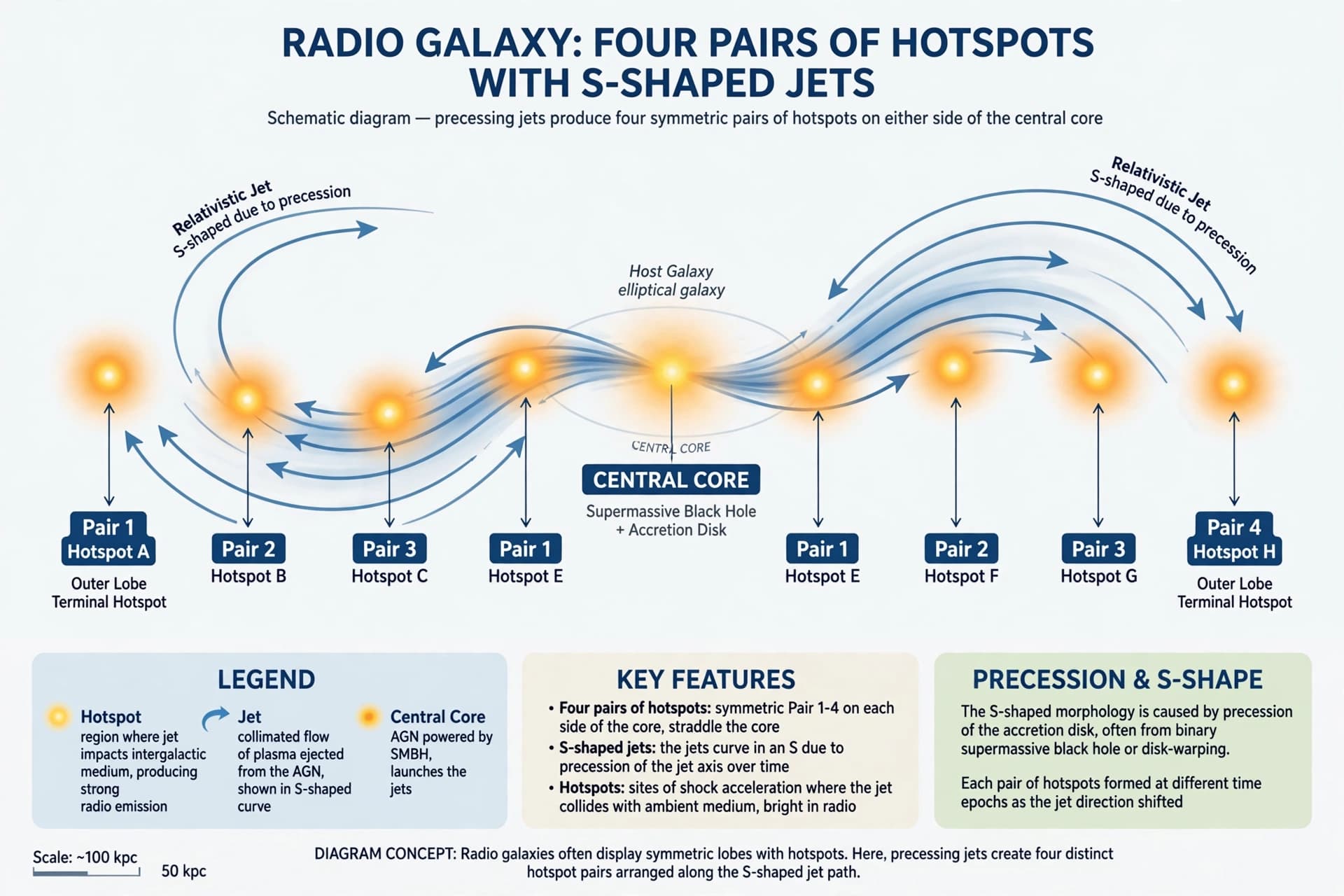
The researchers propose that Bennu's parent body formed near the snow line, roughly where Jupiter orbits today. Material from both sides of that boundary—hot, inner-solar-system material and cold, outer-solar-system material—flowed together to assemble the parent object. Jupiter itself, which formed within a million years of the sun, may have played a role, acting as a barrier that blocked coarser dust while allowing finer grains to flow around it and feed the growing body .
This scenario challenges previous assumptions. Some scientists had suggested that Bennu's parent body formed far from the sun, perhaps alongside comets, and that it formed later than the planets. But the isotopic evidence points to an earlier origin, closer to the sun, and to a formation process that mixed materials from across the snow line .
What makes Bennu particularly valuable is that its composition appears to be representative of the average material in the planet-forming disk that also gave rise to Earth. Schönbächler described it as "our best glimpse of the original mix of chemical elements from which the terrestrial planets were ultimately built" . The sample contains presolar grains—material older than the solar system itself—along with organic molecules and minerals that crystallized under high temperatures near the sun .
Bennu and Ryugu, the asteroid sampled by Japan's Hayabusa2 mission, share remarkably similar compositions. Both appear to be fragments of larger parent bodies that were shattered by impacts, and both seem to have formed in the same region of the early solar system. This similarity may not be coincidence; it may indicate that the material that formed the terrestrial planets was widely distributed and consistently mixed .
The OSIRIS-REx mission returned 120 grams of Bennu material, which has been shared among researchers worldwide. Each analysis adds another layer to our understanding of how the solar system formed and what raw materials were available for the emergence of life on Earth. Bennu, it turns out, is not merely a relic of the early solar system. It is a capsule of time, preserving the chemistry of creation.
Analysis of Bennu samples in Nature Astronomy suggests the asteroid's parent body formed near the snow line, mixing hot and cold material from across the early solar system. The findings offer insight into the building blocks of terrestrial planets.
AI Image Disclaimer: Visuals in this article are produced by artificial intelligence for illustrative purposes only and do not represent actual asteroid samples.
Sources: Space.com, Nature Astronomy, ETH Zurich, NASA
Published by Banx Network. This article is part of the Banx decentralized media programme, powered by the BXE token on the XRP Ledger.