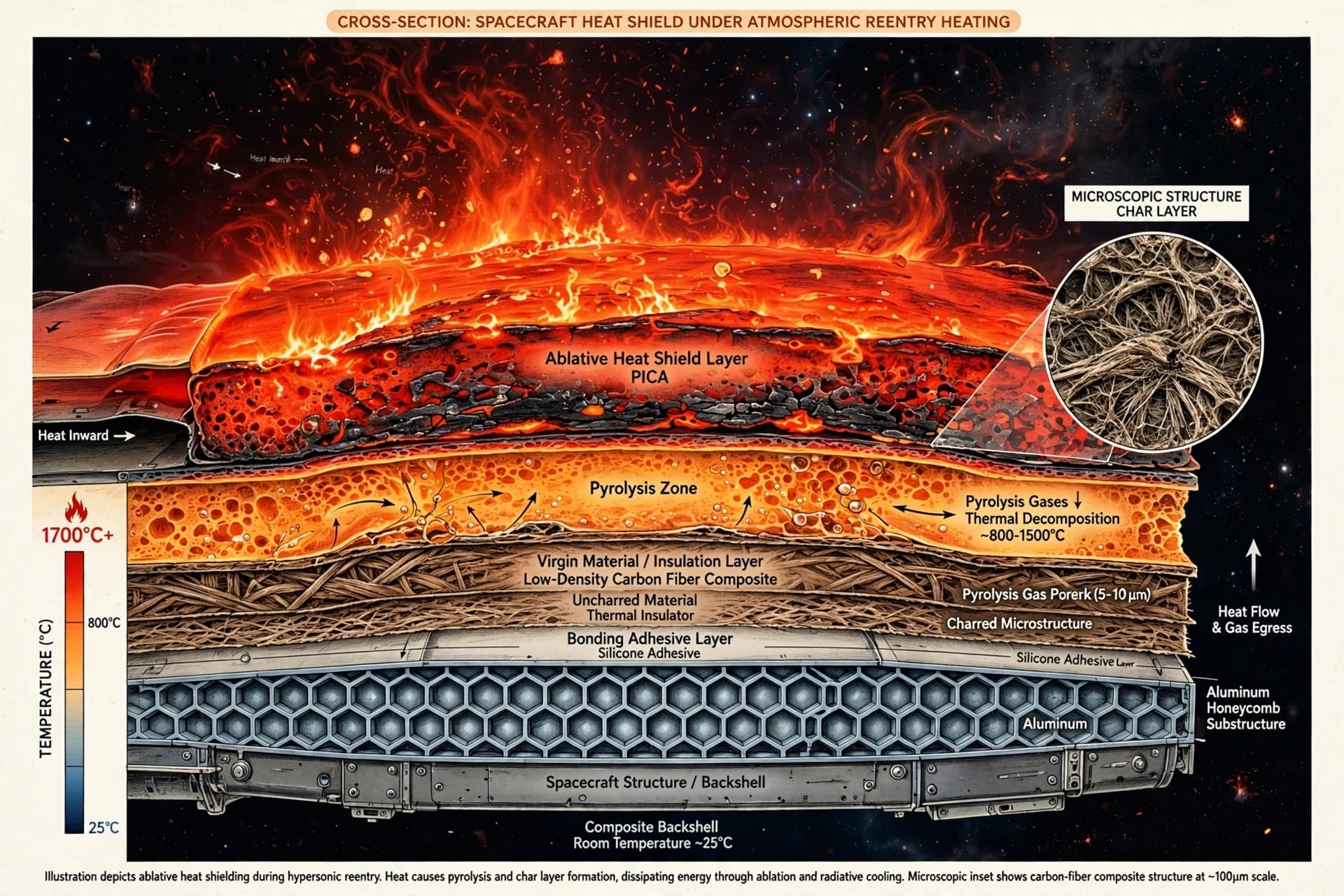
There is a particular kind of sadness in watching a rescue mission end not with a triumph, but with a quiet burn in the atmosphere. The spacecraft was called Link—three robotic arms, a hand-like gripper at each end, built in less than a year with the ambition of reaching out and holding onto something old and valuable before it slipped away. It launched on July 3, and by Friday it was gone, disintegrating as it reentered the air it had briefly escaped . Sometimes the most meaningful attempts are the ones that do not succeed, but teach us what we need to know for the next time.
Link was designed to save NASA’s Swift Observatory, a twenty-two-year-old telescope that has spent its life scanning the universe for gamma-ray bursts and exploding stars . The plan was elegant in its simplicity: approach Swift, grapple onto it, and boost it to a higher orbit where it could continue its work for years longer . The cost was thirty million dollars, a modest sum by space mission standards, and the timeline was aggressive—nine months from conception to launch .
But space has a way of humbling even the most carefully laid plans. Almost immediately after reaching orbit, Link ran into electronic problems that disabled two of its three reaction wheels—the devices needed to turn and orient the spacecraft. Then a faulty valve sent it spinning uncontrollably, disrupting communication with Earth . Engineers spent weeks trying to regain control, uploading new software, slowing the spin but never fully stopping it . By August, the rescue effort was called off .
There was still time, in the weeks that remained, for something. The Katalyst team practiced moving Link’s robotic arms, each about three feet long, testing the grippers that would have held onto Swift . Flight controllers even managed to guide the spacecraft to within seven to nine miles of the telescope—close enough to snap pictures, close enough to see what they had been trying to reach . It was a rehearsal for a mission that would not happen, but a rehearsal nonetheless.
NASA’s Shawn Domagal-Goldman offered a statement that carried no bitterness. “While we’ll be sad to see Swift’s mission come to a close, we knew this boost effort would be worthwhile either way,” he said. It provided valuable practice for future satellite-rescue missions, he added, and pushed teams to race against the clock like never before . Katalyst CEO Ghonhee Lee echoed that sentiment. “We knew from the beginning that this was an ambitious mission on an aggressive timeline,” he said. “This is a foundation we can build on” .
Swift itself is still working, for now. It resumed scanning the universe after NASA repositioned it earlier this year to minimize atmospheric drag, buying time for the rescue that never came . The telescope is expected to fall into the atmosphere and burn up in early November, following the same path as its would-be savior . NASA is now scrambling to figure out how to fill the gap Swift will leave—the role of a rapid-response lookout for other telescopes, the ability to pivot quickly and capture cosmic explosions before they fade .
Katalyst’s Link spacecraft burned up in Earth’s atmosphere on Friday, ending its failed mission to rescue NASA’s aging Swift Observatory. Link suffered technical failures after launching in July, and the rescue effort was called off in August. Swift is expected to reenter the atmosphere in early November.
AI Image Disclaimer: The images accompanying this article are generated by artificial intelligence and are intended for illustrative purposes only.
Sources: Associated Press, Los Angeles Times, Reuters, ETV Bharat, Niagara Gazette
Published by Banx Network. This article is part of the Banx decentralized media programme, powered by the BXE token on the XRP Ledger.