The ground beneath a city is usually the least noticeable part of daily life. Roads carry traffic, trains follow their lines and buildings hold their familiar shapes. Then, for a few moments, the ordinary landscape moves. On August 23, that movement was felt across Tokyo and eastern Kanto as a magnitude 5.9 earthquake struck the region.
The earthquake registered up to lower 5 on Japan's seven-point seismic intensity scale, according to The Japan Times. There was no tsunami risk following the event.
The shaking was strong enough to cause injuries across the affected area. At least 37 people were reported injured, according to reports, bringing the event into focus not only as a geological occurrence but as another reminder of the physical forces beneath one of the world's most densely developed regions.
Japan's cities are built with earthquakes in mind. Building standards, emergency drills, warning systems and public education have become familiar parts of life. Yet preparedness does not remove the unpredictability of the ground itself. Every earthquake arrives with its own combination of depth, location, duration and intensity.
For people inside homes and offices, those differences can be felt immediately. Objects shift, windows rattle and elevators may stop as systems respond to sudden movement. The event can be over within moments, while the process of checking buildings, infrastructure and transportation networks continues for much longer.
The Kanto region carries particular importance because of its population and economic concentration. Tokyo and surrounding prefectures contain millions of people, extensive railway networks, highways, utilities and commercial districts. A stronger earthquake in the region could therefore test not only individual structures but the connections between them.
The recent event also arrived alongside renewed attention to earthquake readiness. The Japan Times has noted that a major disaster would test buildings and infrastructure as well as the preparedness of millions of people. That broader question remains relevant even after the immediate shaking has passed.
Modern technology provides another layer of protection. Japan uses seismic monitoring and warning systems designed to detect earthquake waves and provide alerts before stronger shaking reaches some areas. Such systems cannot prevent an earthquake, but they can create valuable seconds for people and automated infrastructure to respond.
For communities, however, preparedness remains a physical and human practice. Emergency supplies must be available, evacuation routes understood and buildings maintained. The effectiveness of those measures becomes visible only when the ground stops behaving as expected.
The August 23 earthquake caused injuries but no tsunami, and authorities continued assessing its effects. For Kanto, the event became another brief interruption in the rhythm of a vast urban region—one that quietly reminded residents that beneath the concrete, rail lines and buildings, Japan's landscape remains part of a moving geological world.
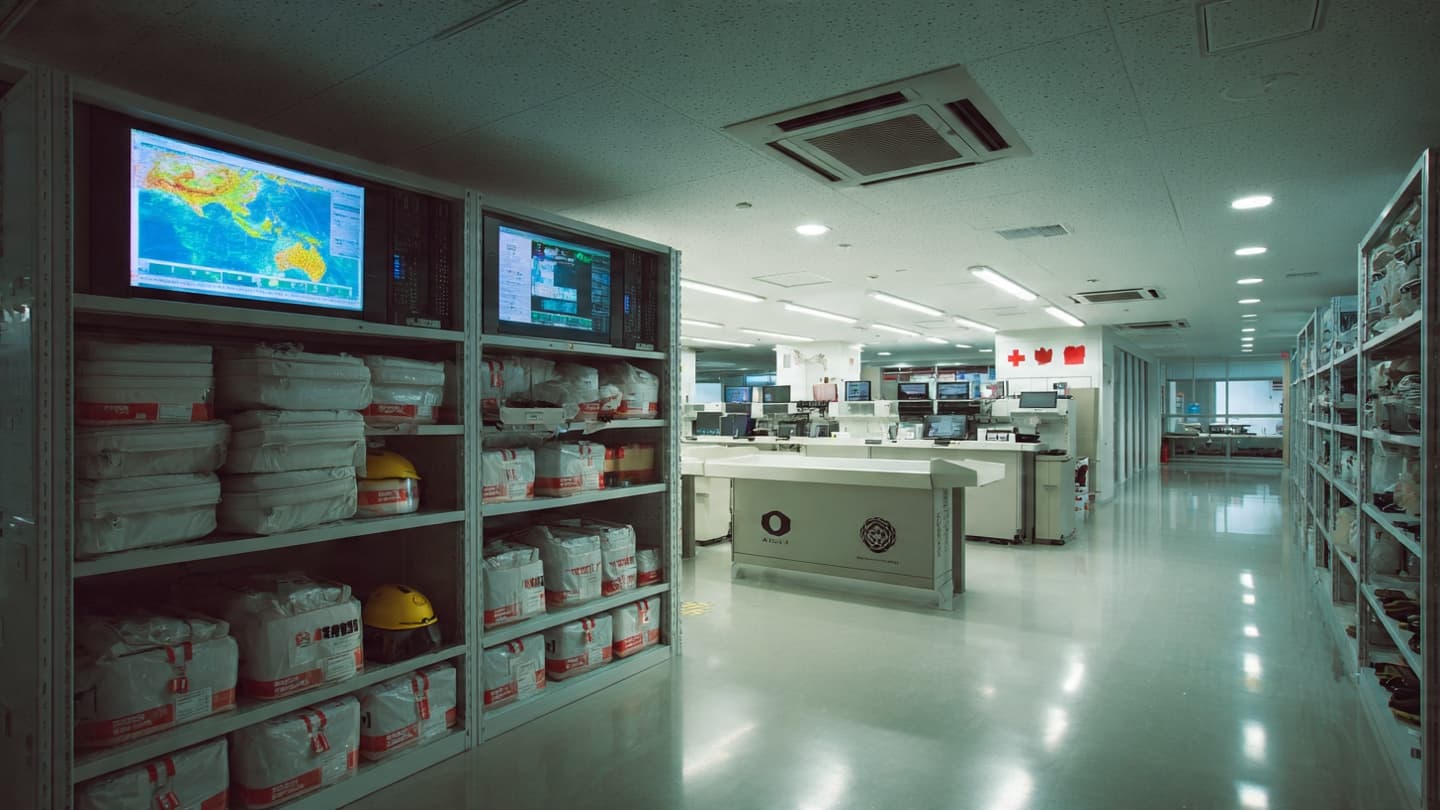
AI Image Disclaimer The accompanying illustrations are AI-generated representations created to visualize earthquake preparedness and urban environments; they are not actual photographs of the August 23 event.
Sources The Japan Times Japan Meteorological Agency Reuters NHK World-Japan
Published by Banx Network. This article is part of the Banx decentralized media programme, powered by the BXE token on the XRP Ledger.