Energy often moves through a country without being seen. It arrives in cylinders, travels through pipelines and enters kitchens as quietly as the flame that follows. Behind that everyday movement lies a complicated network of production, storage and distribution, and Indonesia is now exploring technology that could change one part of that system.
Researchers and Indonesian energy institutions are developing new gas-storage technology intended to improve the efficiency of LPG distribution and storage. The initiative has been presented as having the potential to reduce the financial burden associated with LPG subsidies while strengthening domestic energy capabilities.
The technology is particularly relevant because LPG remains an important household fuel in Indonesia. Millions of families rely on LPG cylinders for cooking, while the government continues to manage a substantial subsidy program to keep the fuel affordable.
Storage has an important role in that chain. Gas must be handled safely, efficiently and at the appropriate pressure before it reaches consumers. Improvements in storage technology can therefore affect not only how much fuel can be accommodated, but also how efficiently the broader distribution system operates.
The Indonesian development effort reflects a wider interest in reducing dependence on imported energy technology. Rather than treating storage as a purely logistical issue, researchers are examining how engineering innovations could create more efficient systems suited to the country's particular geography and energy requirements.
Indonesia's geography makes energy distribution especially complex. Thousands of islands create long supply routes between production centers, storage facilities and consumers. A technology that can improve storage efficiency could consequently have value beyond a single facility, particularly in regions where transportation costs are significant.
The potential economic implications are also substantial. Estimates associated with the technology have suggested that improved gas-storage systems could eventually contribute to savings worth billions of dollars in LPG subsidy costs. Such figures remain dependent on development, testing, deployment and the scale at which the technology can eventually be adopted.
The project also fits into Indonesia's broader push for domestic technological capacity. Energy security is increasingly connected not only to the availability of fuel but also to the ability to develop, operate and maintain the systems required to move that fuel efficiently.
For households, the technology remains far removed from the familiar blue LPG cylinder. Yet the systems behind that cylinder determine how reliably and affordably fuel reaches kitchens across the country.
Further research and development will be needed before the technology can be assessed at full commercial scale. Testing, safety certification, industrial production and integration into existing infrastructure will all influence whether the potential savings become practical results.
For now, Indonesia's work on gas-storage technology represents another step toward linking domestic engineering with the country's long-term energy needs. The development remains part of a larger effort to make the movement of fuel more efficient, while reducing the pressure placed on public resources.
Image Disclaimer
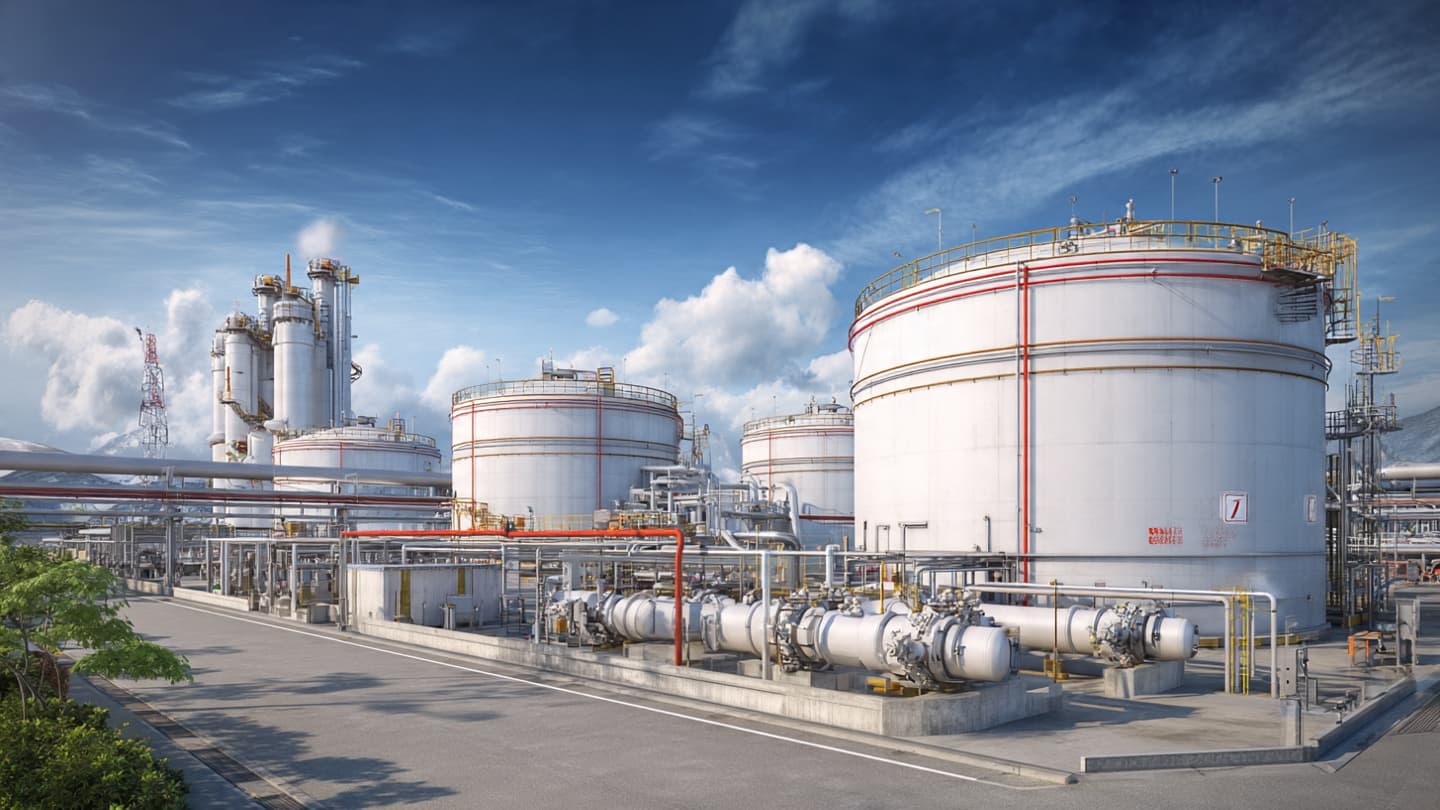
The visuals are AI-generated conceptual representations of gas-storage technology and do not depict actual facilities or equipment.
Sources
ANTARA Jakarta Globe Ministry of Energy and Mineral Resources BRIN
Published by Banx Network. This article is part of the Banx decentralized media programme, powered by the BXE token on the XRP Ledger.