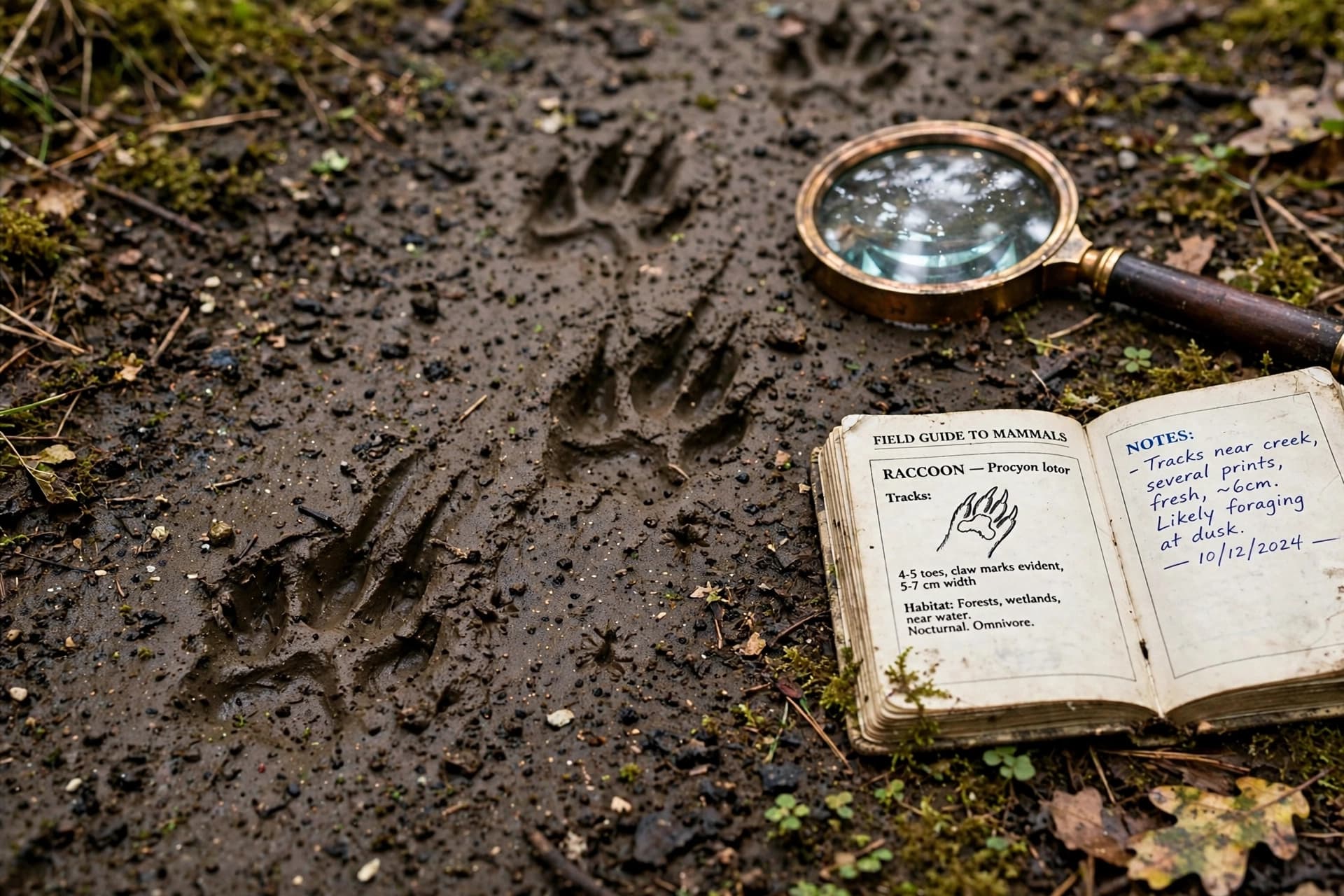
There is a particular pleasure in the idea that the natural world is full of mysteries waiting to be solved—mysteries that do not require a laboratory or a badge, only curiosity and a willingness to look closely at the evidence that animals leave behind. Dr Ann Jones, a wildlife scientist and broadcaster, has spent years teaching people how to read that evidence, to become what she calls "animal investigators"—amateur detectives who can identify the creatures in their midst by the traces they leave. Now, she has turned that expertise into a quiz, inviting the public to test their skills at nabbing "nature's most wanted" criminals.
The quiz is designed to be accessible to anyone, regardless of their prior knowledge. It presents a series of scenarios—scat, tracks, feathers, bones, nests, and other signs—and asks participants to identify which animal is responsible. The clues are drawn from Jones's extensive experience in the field, and from the kinds of evidence that are commonly encountered in gardens, parks, and bushland across Australia. The goal is not to be a formal test but to be an invitation—a way of opening the door to a deeper awareness of the animals that share our spaces.
Jones's approach reflects a broader movement in citizen science, in which ordinary people are invited to contribute to scientific knowledge by observing and recording the natural world. The benefits are multiple. For scientists, the data collected by citizen observers can be vast and valuable, covering geographic areas and time periods that no single researcher could hope to match. For participants, the practice of looking closely—of noticing the signs that animals leave—transforms the way they experience the world. A walk in the park becomes a detective story. A garden becomes a crime scene.
The quiz also serves a practical purpose. Many of the animals that appear in urban and suburban environments are misunderstood or misidentified, and the ability to recognize their signs can help people coexist with them more peacefully. Knowing whether a nest belongs to a native bird or an invasive species, whether a scat indicates a possum or a rat, whether a mark on a tree is the work of a beetle or a bird—these are not trivial distinctions. They inform decisions about pest control, conservation, and land management.
For Jones, the quiz is a way of sharing the joy of discovery that has defined her career. She has spent decades in the field, tracking animals, studying their behavior, and communicating her findings to the public. The quiz is a distillation of that work—a chance for anyone to step into the role of investigator, to look at a clue and ask: who did this, and why? The animals are not criminals, of course. They are simply living their lives, leaving behind the evidence of their passing. But the game of detection, the pleasure of solving a mystery, is real. And it is available to anyone who is willing to look.
AI Image Disclaimer: All images in this article are AI-generated and are intended for illustrative purposes only.
Sources: Australian Broadcasting Corporation, Dr Ann Jones, Citizen Science Association
Published by Banx Network. This article is part of the Banx decentralized media programme, powered by the BXE token on the XRP Ledger.