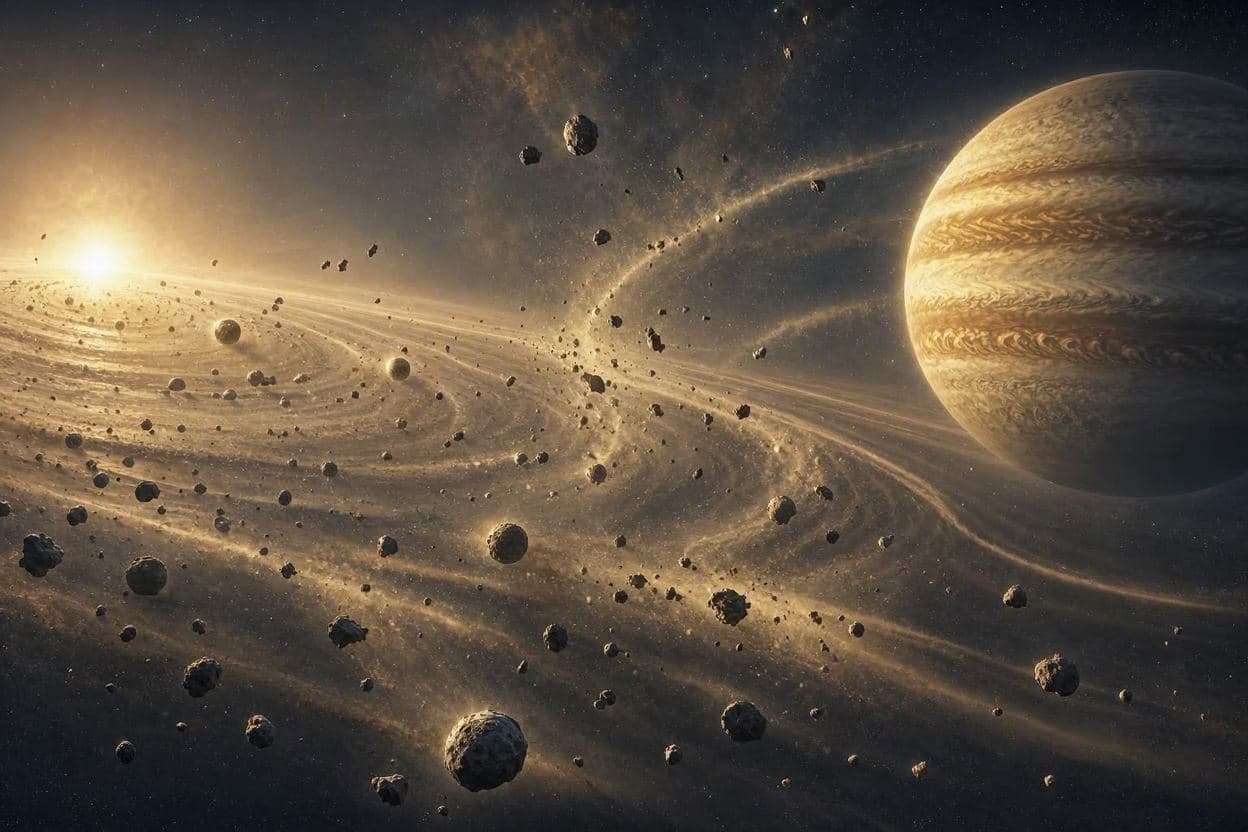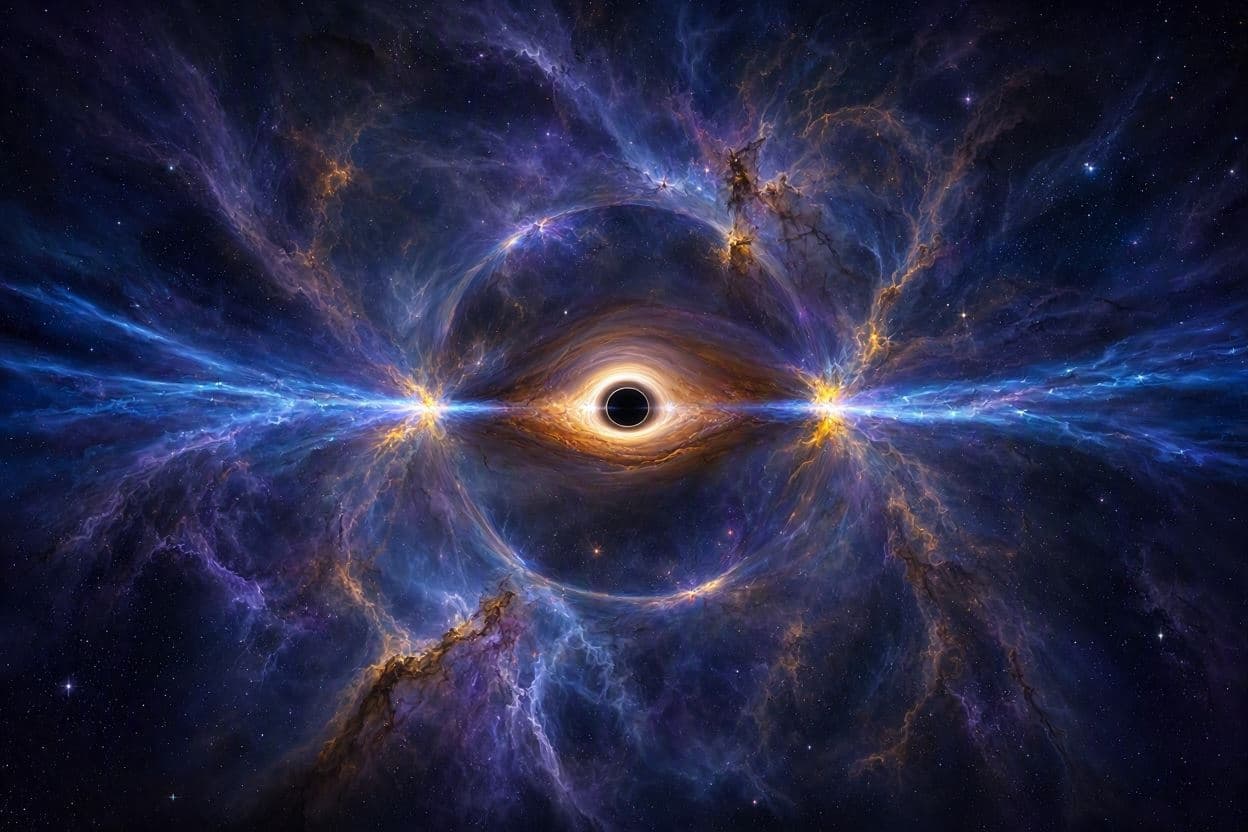
In the cosmic imagination, black holes are often depicted as voracious destroyers, entities that consume light and matter with insatiable hunger. Yet, new astronomical insights suggest a more creative role for these enigmatic objects. Rather than merely ending stellar lives, supermassive black holes at the centers of galaxies may actually fuel the formation of new stars and shape the evolution of galaxies themselves. This revelation transforms our understanding of these gravitational giants from agents of destruction to architects of creation.
Observations from advanced telescopes have shown that the energetic jets and winds emitted by active black holes can compress surrounding gas clouds. When these dense clouds collapse under their own gravity, they ignite nuclear fusion, giving birth to new stars. This process, known as positive feedback, contrasts with the previously understood negative feedback, where black hole activity heats gas and prevents star formation. It appears that black holes can play both roles, depending on the conditions of their environment.
The relationship between a black hole and its host galaxy is intimate and dynamic. As the black hole accretes matter, it releases immense amounts of energy in the form of radiation and particle jets. These outflows can sweep through the galaxy, triggering shockwaves that stir up the interstellar medium. In some regions, this stirring leads to cooling and condensation, creating the perfect nursery for stellar birth.
This discovery helps explain why some galaxies remain active in star formation despite having massive central black holes. It suggests a regulatory mechanism where the black hole acts as a thermostat, balancing growth and suppression. By influencing the distribution and density of gas, black holes help determine the size, shape, and stellar population of the galaxy they inhabit.
For astronomers, this dual nature of black holes offers a richer narrative of cosmic evolution. It implies that the most powerful forces in the universe are not just destructive but also generative. The same energy that can strip a galaxy of its fuel can also spark the ignition of new suns, illustrating the complex interplay of physics on a galactic scale.
Simulations of galaxy formation now incorporate these feedback loops, providing more accurate models of how the universe has evolved over billions of years. These models show that without the influence of black holes, galaxies might look very different today, potentially lacking the diverse structures we observe. The black hole is thus a central character in the story of cosmic architecture.
As technology improves, researchers hope to observe this process in greater detail, capturing the moment when a black hole’s jet triggers a starburst. Such observations would confirm the theoretical models and deepen our appreciation for the complexity of the cosmos. It is a reminder that even the darkest objects can bring light to the universe.
In the end, the black hole is not just a void but a catalyst. Its gravity binds galaxies together, and its energy sparks new life within them. By fueling star formation, these cosmic giants ensure that the universe remains a place of continuous renewal and wonder.
AI Image Disclaimer: The images used in this report are AI-generated visuals created to illustrate the themes of astrophysics and cosmic phenomena.
Sources: NASA, European Space Agency, Astrophysical Journal, Nature Astronomy
Published by Banx Network. This article is part of the Banx decentralized media programme, powered by the BXE token on the XRP Ledger.