Santiago, Chile—A sudden glacial torrent tore through a high-altitude mountain pass encampment early Tuesday morning, sweeping away tents, supply trucks, and sleeping workers. National emergency management offices reported that radio contact with the remote transit construction outpost went dead moments before a wall of icy mud struck. Military aviation units scrambled twin-engine transport helicopters as soon as low-hanging cloud decks broke over the Andean ridge.
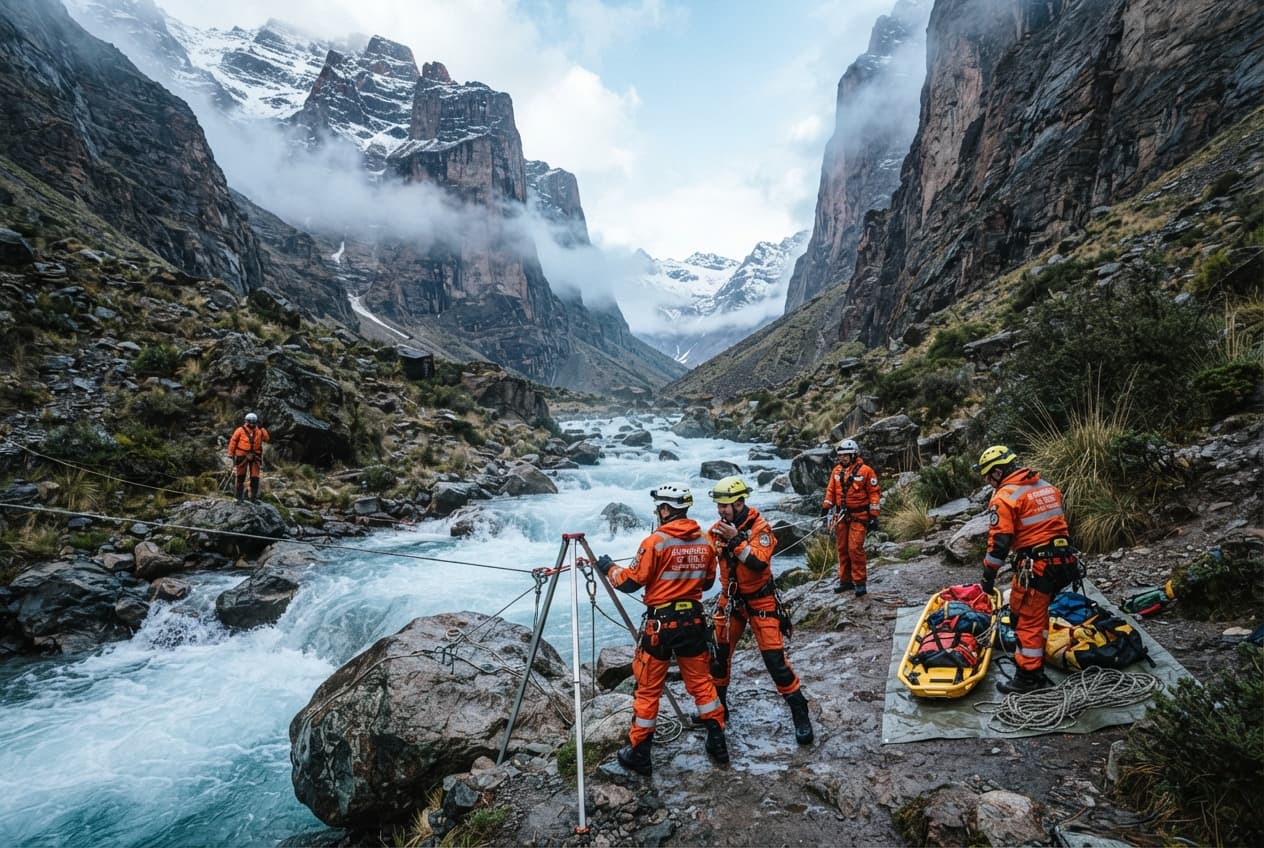
Paramedics and specialized mountain rescue squads established a forward command post at a lower altitude station to coordinate extraction efforts against severe weather. Survivors who managed to climb higher rock ledges reported that sleeping quarters and heavy maintenance sheds vanished into the churning ravine below. Ground crews utilized thermal imaging gear to scan debris fields stretching miles down the steep mountain canyon.
Transport ministry officials confirmed that seasonal warmth rapidly accelerated high-altitude snowmelt, triggering the catastrophic release of an unstable glacial pocket above the gorge. Freight traffic along the international mountain highway ground to a complete standstill as highway maintenance teams assessed structural damage to elevated viaducts. Regional hospitals prepared trauma units to receive injured workers suffering from severe hypothermia and blunt-force injuries.
Air force pilots battled fierce downdrafts to insert search-and-rescue technicians directly onto unstable gravel bars flanking the swollen mountain river. Rescue coordinators utilized acoustic listening devices to probe compressed piles of timber and mud where workers might be trapped. Family members gathered at regional transport terminals seeking information regarding contractors stationed at the vulnerable high-altitude site.
State authorities declared a localized state of emergency for the Andean province to expedite specialized equipment purchases and bypass bureaucratic procurement hurdles. Environmental regulators pointed out that shifting climate patterns significantly increased the frequency of glacial outburst floods across the central cordillera. Public safety officials warned travelers to avoid all secondary mountain routes while emergency clearing operations continued.
Medical teams established triage tents equipped with warming blankets and intravenous fluids to stabilize survivors airlifted from the upper canyon. Heavy excavators began cutting a temporary bypass road to allow fuel tankers and support vehicles access to stranded mountain checkpoints. Search commanders rotated extraction squads every three hours due to the extreme physical toll of working in freezing high-altitude winds.
Engineers monitoring the upper ridge identified secondary fracture lines threatening to release additional debris down the active drainage chute. Heavy afternoon snowfall forced rescue coordinators to temporarily suspend helicopter flights while ground teams continued manual probing operations.
Published by Banx Network. This article is part of the Banx decentralized media programme, powered by the BXE token on the XRP Ledger.