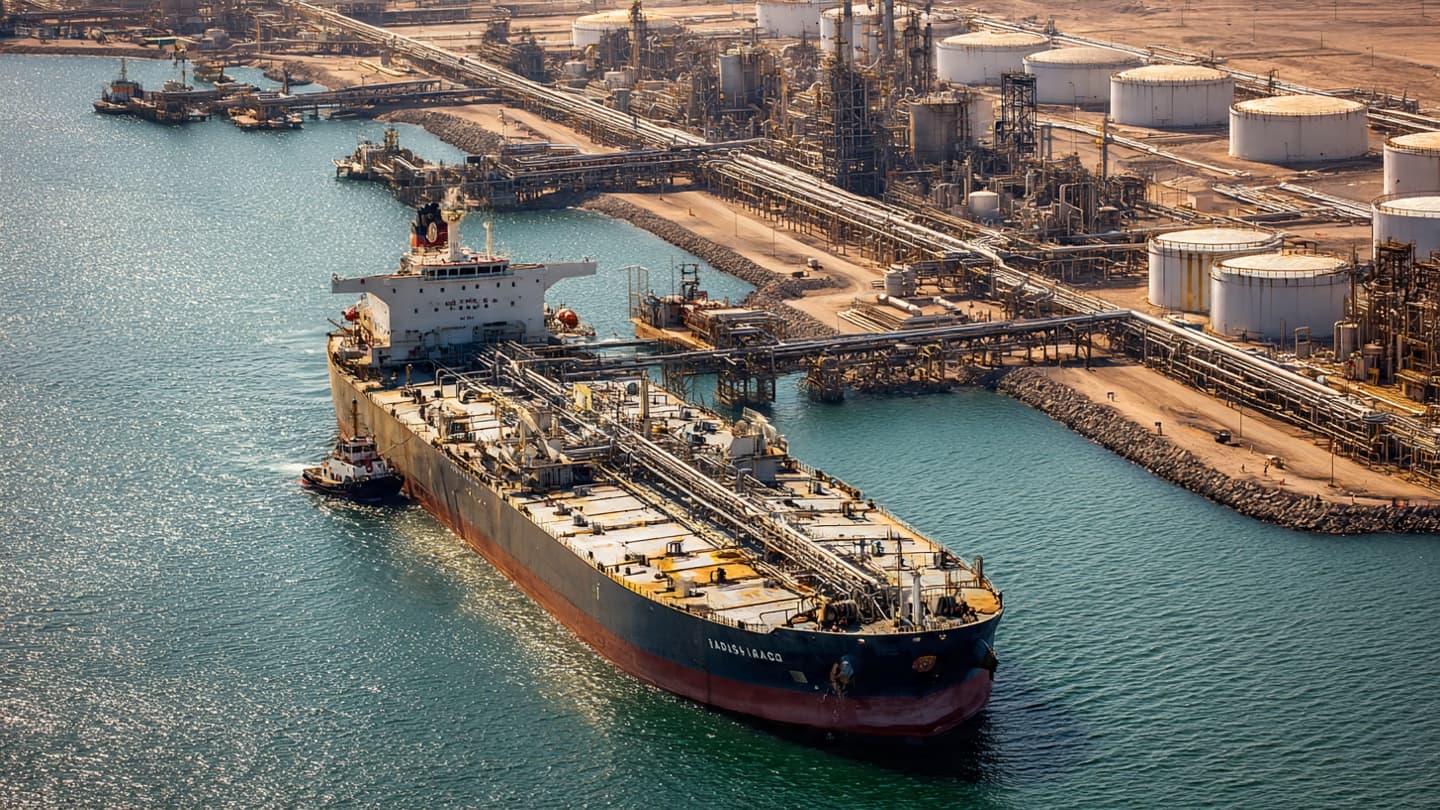
At the southern edge of Iraq, the oil trade follows a rhythm shaped by tankers, pipelines and distant demand. Crude moves from fields toward terminals before beginning another journey across the sea. Recently, that flow has become more significant, as Iraq increased exports and offered additional barrels to buyers in Asian markets.
Iraq’s oil exports rose to about 2.34 million barrels per day, according to Reuters. The increase came as discounted Iraqi crude attracted Asian buyers looking for available supplies amid continuing disruptions affecting regional energy markets.
For Iraq, oil remains central to the country’s economic structure. Production from its major fields feeds an export system that connects the country directly with international refiners. Changes in global demand, crude prices and shipping conditions can therefore quickly become important domestic economic developments.
Asian buyers occupy an especially important position in this trade. Refineries across China, India, South Korea, Japan and other markets require enormous quantities of crude oil. Their purchasing decisions are shaped by price, quality, transportation costs and the reliability of supply.
Discounted Iraqi crude can become attractive when buyers are attempting to manage higher costs elsewhere. Refiners compare the price of each cargo with transportation expenses and the expected value of the fuels and other products produced after processing. That calculation can encourage buyers to shift toward available Iraqi supplies.
Basra remains at the center of Iraq’s seaborne oil exports. From the southern region, crude travels through pipelines and terminals before being loaded onto large tankers. Once at sea, those shipments become part of the much larger international oil market.
Regional disruptions have made transportation an increasingly important consideration. Energy companies must watch shipping routes, insurance costs, vessel availability and maritime conditions. Even when crude is physically available, the ability to move it safely and economically can determine whether international buyers are willing to take additional cargoes.
The increase in exports also provides Iraq with another source of economic support. Higher volumes can generate additional oil revenue, although total earnings remain dependent on international crude prices. Production capacity, domestic consumption and infrastructure also influence how much oil can ultimately be exported.
For global buyers, Iraqi crude provides another option during a period when supply patterns are changing. The movement does not replace every disrupted barrel, but additional shipments can contribute to a more flexible market in which refiners have more alternatives.
The latest export increase therefore places Iraq in a more visible position within the evolving energy landscape. From Basra’s terminals to refineries across Asia, Iraqi crude is continuing its long journey outward, adding another stream of supply as international buyers adjust to changing regional conditions.
AI Image Disclaimer The illustrations accompanying this report are AI-generated visualizations created to represent Iraq’s oil industry and international crude trade. They are not photographs of actual facilities, tankers or shipments.
Sources Reuters OPEC Iraq Ministry of Oil Arab News
Published by Banx Network. This article is part of the Banx decentralized media programme, powered by the BXE token on the XRP Ledger.