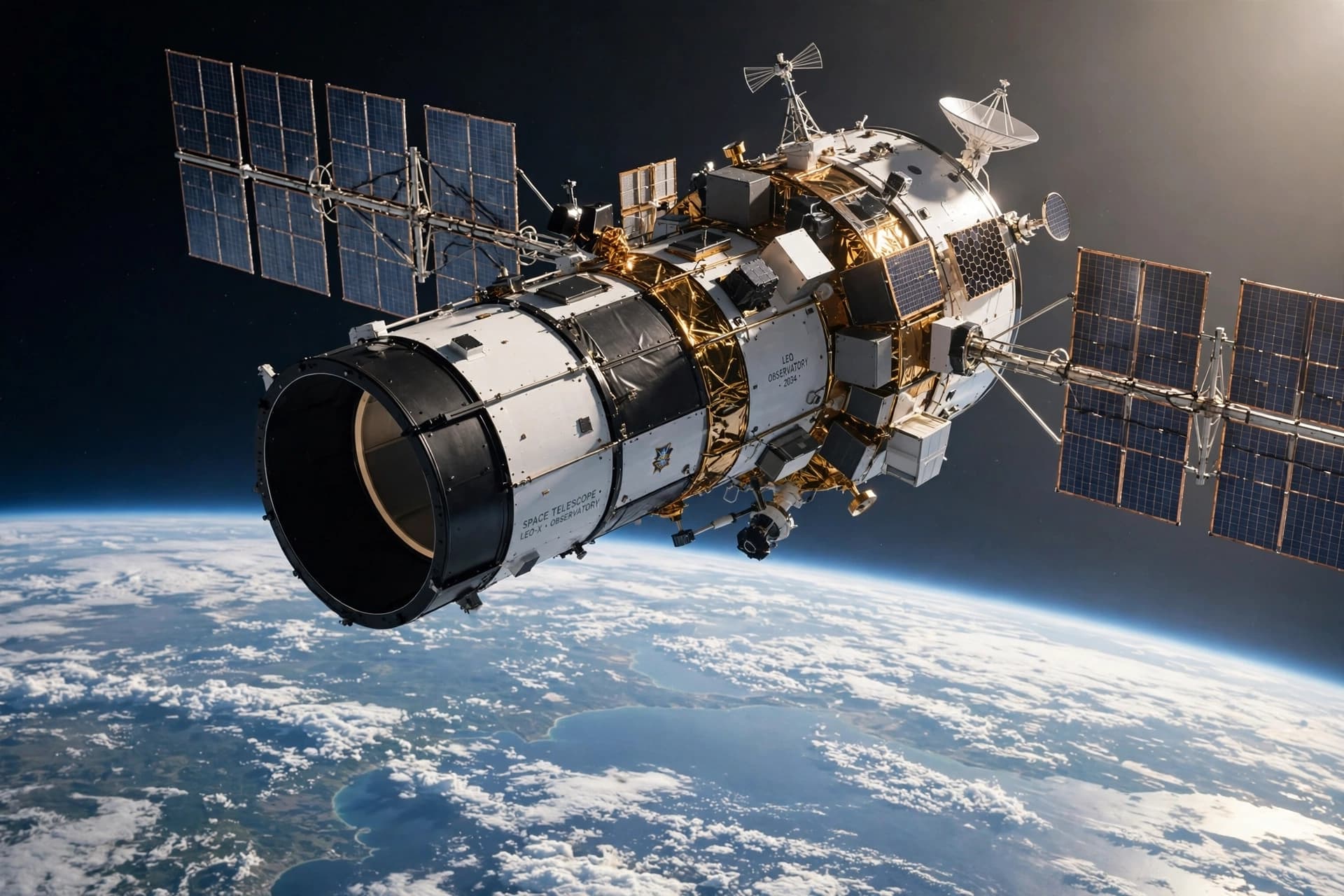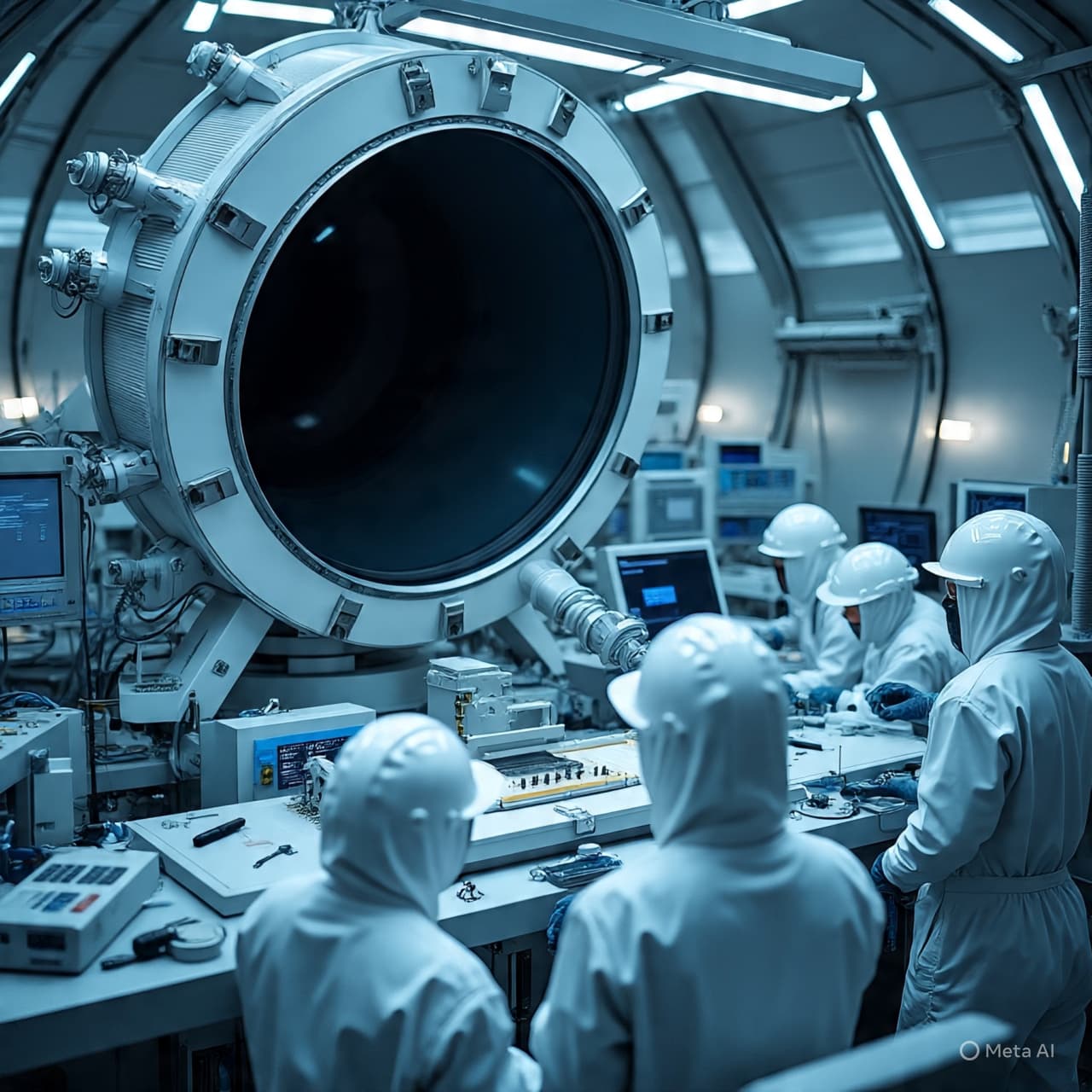
There are projects that move like comets, blazing briefly and vanishing, and others that travel more like planets, slow and stubborn, shaped by gravity and time. The space telescope now standing complete after years of uncertainty belongs firmly to the second kind. Once marked for cancellation, it has arrived at its moment not with spectacle, but with quiet resolve.
The telescope, costing an estimated 4.3 billion dollars, was nearly undone during Donald Trump’s presidency, when proposed federal budgets sought to end funding for the mission amid broader efforts to rein in science spending. At the time, its future seemed precarious, suspended between political priorities and scientific ambition. Yet Congress repeatedly intervened, restoring funds and keeping the project alive year after year.
Now, after more than a decade of development, the observatory is finished. Built to study dark energy and the expansion of the universe, the telescope is designed to map billions of galaxies and peer deep into cosmic history. Engineers and scientists describe its completion not as a single triumphant moment, but as the culmination of countless incremental decisions, technical hurdles, and patient persistence.
The mission’s path reflects the uneasy relationship between long‑term science and short‑term politics. While administrations change and priorities shift, space telescopes demand continuity, sometimes over generations of leadership. This one survived multiple budget cycles, technical revisions, and public debate over its cost and value.
NASA officials say the telescope has now passed final assembly and testing milestones, placing it on track for launch in the coming years. Once in space, it will join a fleet of observatories that together seek to answer questions about how the universe began, how it evolved, and where it may be headed.
For scientists who worked under the shadow of possible cancellation, the telescope’s completion carries a quiet emotional weight. It stands as evidence that scientific vision, when supported long enough, can outlast political headwinds.
As preparations turn from construction to launch planning, the telescope enters a new phase of its story. No longer a line item debated in budget documents, it becomes what it was always intended to be: an instrument for discovery, aimed steadily outward, beyond the turbulence that shaped its creation.
AI Image Disclaimer Illustrations were produced with AI and serve as conceptual depictions only.
Sources
Reuters Associated Press NASA The New York Times Scientific American
Published by Banx Network. This article is part of the Banx decentralized media programme, powered by the BXE token on the XRP Ledger.