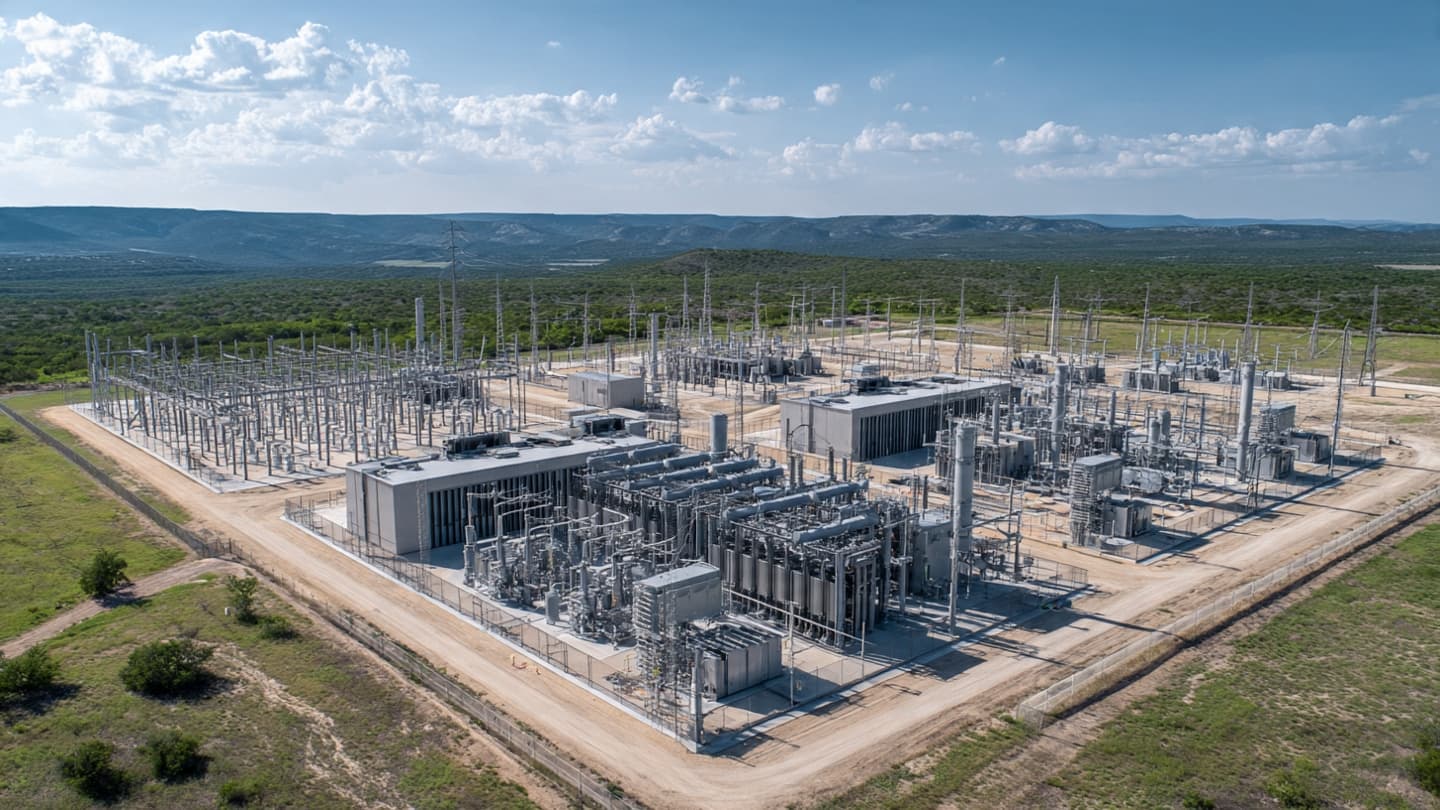
Across the wide landscapes of Texas, where the horizon often seems to stretch without interruption, a different kind of infrastructure is steadily changing the scenery. Large buildings filled with computers are becoming part of the physical foundation of an industry whose products are mostly experienced through screens. Artificial intelligence may appear weightless, but its expansion increasingly depends on very tangible places.
Anthropic has entered into a $35 billion cloud-computing agreement with Lambda, an Nvidia-backed cloud provider, to secure infrastructure at a data center under development in Nueces County, Texas. The facility is expected to have approximately 350 megawatts of capacity and is being developed by Hut 8, a company that has increasingly shifted its focus toward AI data-center infrastructure.
The agreement comes as Anthropic continues expanding the computing resources needed for its generative artificial intelligence products. Its Claude family of AI services, including Claude Code, requires substantial computing capacity, making access to advanced data centers increasingly important as usage grows.
The Texas project is part of a much larger investment cycle surrounding AI infrastructure. Anthropic recently committed another $45 billion to rent AI computing power from Nscale's data-center campus in West Virginia. The two agreements illustrate how the competition among AI companies is increasingly extending beyond software and models into the physical infrastructure needed to operate them.
Behind every AI conversation, image, coding assistant, or automated service is a network of processors, cooling systems, electricity supplies, buildings, and communications equipment. The technology may feel instantaneous to users, but the infrastructure supporting it is industrial in scale.
Texas has become an important location in this expanding landscape. The state offers large areas for industrial development and has attracted major investments in power and data-center infrastructure. Hut 8's Beacon Point campus, for example, has already been associated with multibillion-dollar AI infrastructure commitments, reflecting the growing economic importance of large computing facilities.
The broader market is also drawing investment from companies that supply the equipment required to operate these centers. Generac, for example, has been expanding manufacturing capacity for generators used by data centers, with its data-center generator order backlog reaching $1.6 billion. The shift shows how the AI boom is spreading through traditional industrial supply chains.
For Anthropic, the Texas agreement represents another major step toward securing the computing capacity needed for future growth. For the region, it adds another large technology facility to a landscape already becoming increasingly connected to the digital economy.
The story of artificial intelligence is therefore becoming a story about physical space as well. Behind the language models and software interfaces are enormous facilities where machines operate continuously, drawing power and processing information. In Texas, that transformation is becoming visible on the ground, where the next phase of the AI economy is being built one data center at a time.
AI IMAGE DISCLAIMER
Visuals are AI-generated and serve as conceptual representations.
SOURCES
Reuters
Published by Banx Network. This article is part of the Banx decentralized media programme, powered by the BXE token on the XRP Ledger.