Distance can become part of a medical problem. In a country spread across thousands of islands, reaching a doctor may require more than opening a clinic door; sometimes it requires crossing water, mountains or long stretches of road.
That geography is one reason telehealth and artificial intelligence are receiving greater attention in Indonesia. Health experts and technology specialists have argued that digital tools could help narrow gaps in access, particularly where healthcare workers and facilities are unevenly distributed.
The discussion was highlighted during a health forum titled “Healthier Futures, Sooner: How Technology Closes the Gap in Care,” where participants examined the role of telehealth and AI in responding to Indonesia’s geographic and healthcare-access challenges.
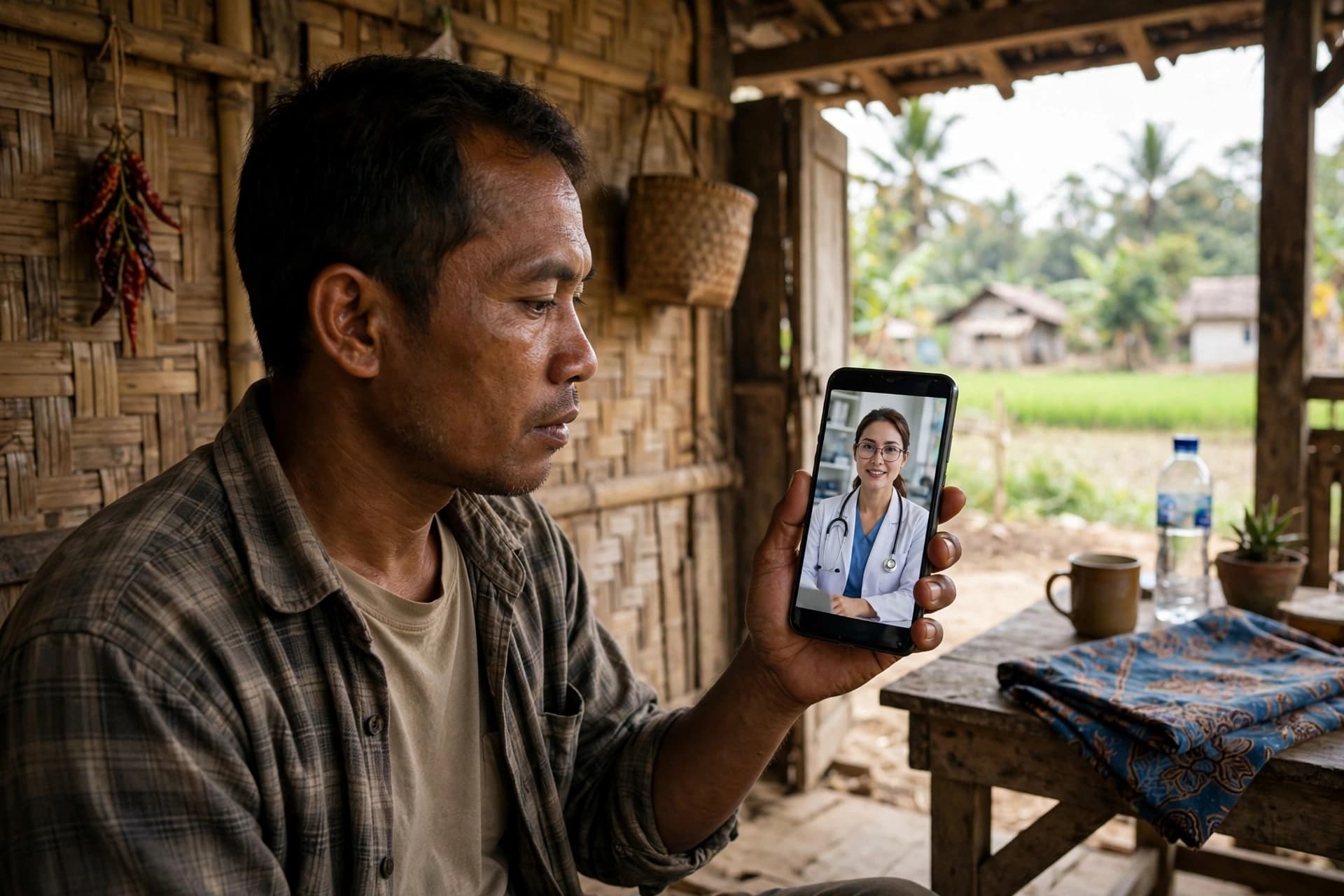
Telehealth can allow patients to communicate with healthcare professionals without making every consultation dependent on physical travel. For people living far from hospitals or specialist centers, that can create another route into the healthcare system when an in-person examination is not immediately necessary.
The potential is particularly relevant to Indonesia’s remote and underserved areas. The country’s geography makes it difficult to distribute doctors and medical specialists evenly, while some communities continue to face limitations in transportation and healthcare infrastructure.
Artificial intelligence adds another layer to that digital transformation. AI-based tools can help organize information, support administrative processes and assist healthcare professionals with certain analytical tasks. Their usefulness, however, depends on the quality of the underlying data and the ability of healthcare workers to interpret the results appropriately.
The technology does not remove the need for doctors. Instead, the model discussed by health experts places digital tools alongside medical professionals, allowing technology to support parts of the healthcare journey while clinical responsibility remains with qualified personnel.
Infrastructure remains one of the central questions. A telemedicine service cannot function reliably where internet connectivity is unstable, devices are unavailable or patients and healthcare workers lack sufficient digital literacy. Research and government initiatives have similarly identified connectivity and digital readiness as important conditions for successful telemedicine deployment.
Indonesia has already experimented with several forms of digital healthcare beyond conventional video consultations. These include remote administrative services, telemedicine platforms and technology-assisted approaches designed to reach communities that are difficult to serve through conventional facilities alone.
The Ministry of Health has also pursued home-based healthcare initiatives, while other government and research programs have examined how telemedicine could complement local healthcare capacity. These efforts reflect a broader movement toward bringing certain services closer to patients rather than requiring every patient to travel toward a centralized facility.
The challenge ahead is therefore not simply whether Indonesia can use AI or telemedicine. It is whether those technologies can be integrated into a healthcare system in which connectivity, clinical oversight, privacy and access develop together.
For patients living far from major medical centers, that distinction matters. A screen cannot replace every examination, procedure or emergency intervention, but it can sometimes shorten the distance between a person seeking help and the professional who can guide the next step.
Published by Banx Network. This article is part of the Banx decentralized media programme, powered by the BXE token on the XRP Ledger.