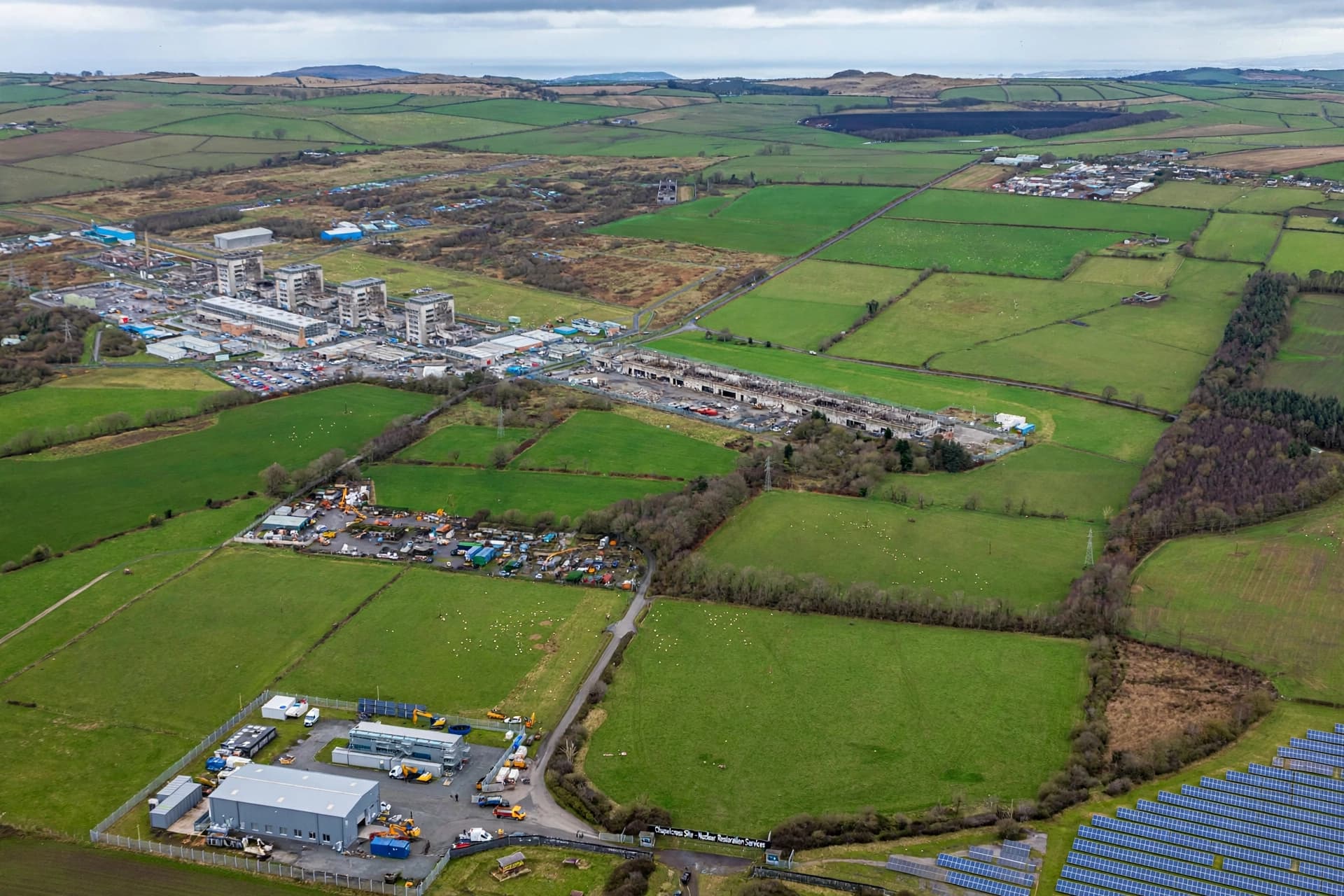
There is a certain poetry in the way landscapes change hands. A site that once hummed with the controlled energy of nuclear fission, its cooling towers rising like sentinels over the Scottish countryside, may soon host a different kind of power. The Chapelcross nuclear plant near Annan in Dumfries and Galloway produced electricity for forty-five years before its reactors were defuelled and its towers brought down. Now, a developer has submitted plans to build one of the world's largest data centres on the same ground—a £16.5 billion project that would transform a brownfield site into what its backers describe as a net-zero operational technology campus.
The application, lodged by CX Tech Ltd, proposes a facility with a floor area of 162,000 square meters, encompassing eight data centres, a dedicated training centre, and associated infrastructure . The company says the project would deliver around 500 full-time jobs once operational, with a further 750 created during construction and forty apprenticeships . Graeme Anderson, chief executive of CX Tech, framed the proposal as a once-in-a-generation opportunity for the region, one that would bring together renewable energy strengths, digital infrastructure, and high-value jobs in a way few other sites could match .
The site itself carries a long history. Chapelcross began operation in 1959, produced electricity until 2004, and completed defuelling in 2013 . Other buildings remain, and final site clearance is not expected until 2095 . For the developer, the proposal represents a chance to return a nationally significant site to productive economic use, delivering what a planning statement calls critical digital infrastructure .
Not everyone sees it that way. The Scottish Greens have urged the application's rejection, claiming the 1GW data centre would be the biggest in the world and would consume around seven million megawatt-hours of energy annually—the equivalent of the electricity used by more than two million homes . Laura Moodie, a South Scotland MSP, pointed to Ireland, where she said the average household now pays an extra £300 a year on energy because of data centres, and warned that hyperscale facilities would only make household bills worse in Scotland . A local campaign has gathered about 1,000 signatures on a petition opposing the scheme, citing concerns about strain on the energy grid, visual impact on the countryside, loss of agricultural land, and air pollution .
CX Tech has sought to address those concerns directly. A spokesperson said the company had undertaken a comprehensive environmental impact assessment and would use only locally and regionally generated renewable energy, adding that the facility would not compete with local homes and businesses for electricity . The proposals include closed-loop cooling technology designed to minimise water requirements, fossil-free fuel for emergency backup generation rather than diesel, energy-efficient buildings, sustainable drainage, and landscaping .
The decision now rests with Scottish government authorities, who said it would be inappropriate to comment on a live planning application . National guidance for local authorities on such projects is expected within the next three months . The timing of that guidance may prove significant. Data centres are arriving in Scotland with increasing frequency, drawn by renewable energy potential and available land. But each proposal raises questions that extend beyond the boundaries of its site—questions about energy distribution, rural landscapes, and what it means to host the physical infrastructure of a digital economy.
Chapelcross has already played a role in Scotland's energy story. Whether it plays another, in a different form, is now a matter for planners, politicians, and the communities that would live alongside it. The cooling towers are long gone. The ground, however, remains.
AI Image Disclaimer: The images accompanying this article were generated by artificial intelligence and are for illustrative purposes only.
Sources: BBC, Radio X, Action to Protect Rural Scotland
Published by Banx Network. This article is part of the Banx decentralized media programme, powered by the BXE token on the XRP Ledger.