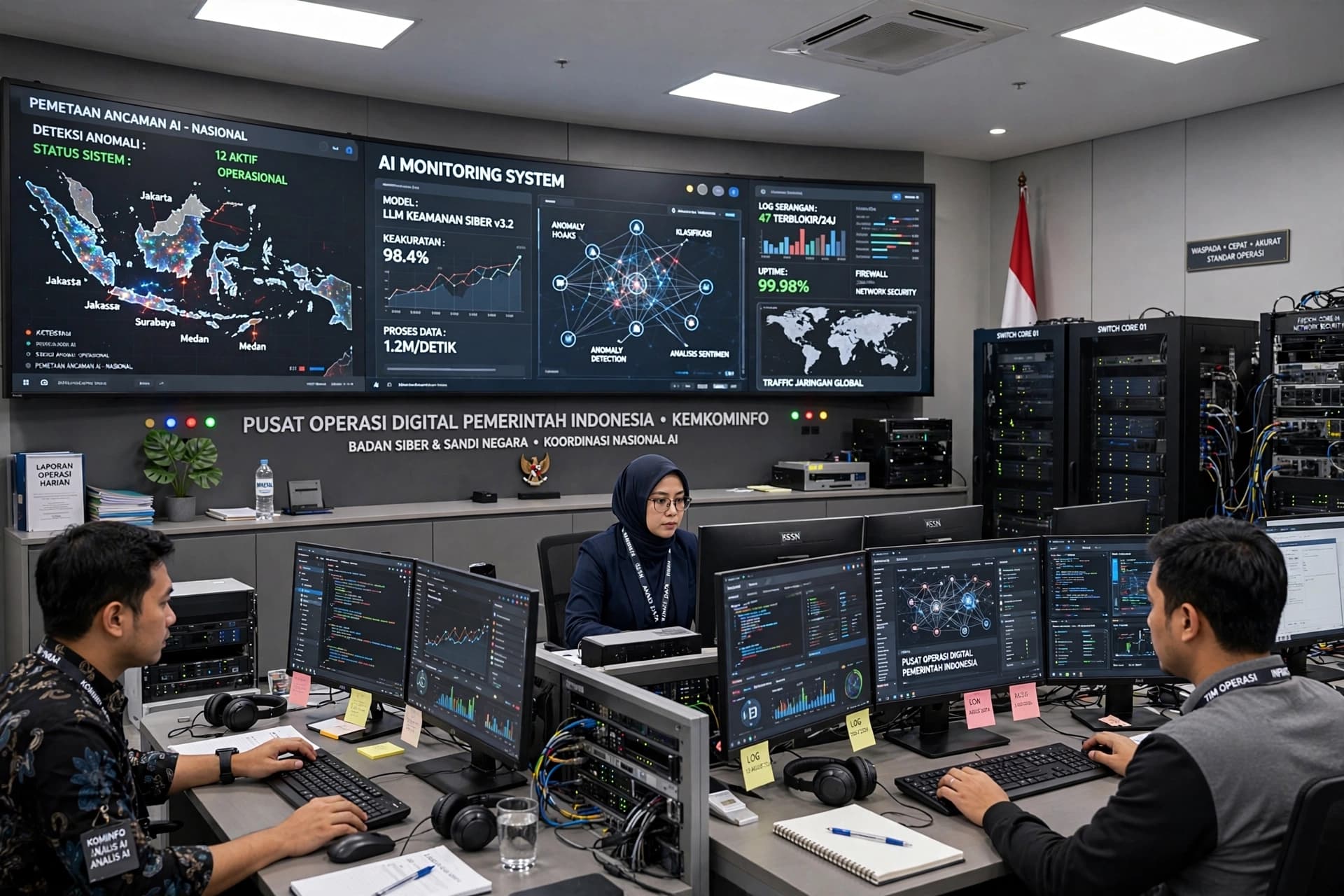
Technology often arrives quietly before its consequences become visible. A new system begins as lines of code, then gradually enters offices, hospitals, classrooms and public services. In Indonesia, artificial intelligence is beginning to follow that path toward everyday infrastructure.
Indonesia has been developing plans to integrate artificial intelligence into several major public programs as part of a wider strategy to expand digital capabilities. Reuters previously reported that the government was considering AI applications in programs including the national free-meals initiative. (reuters.com)
The proposal reflects a broader belief that AI could improve how large-scale programs are managed. Data analysis, logistics, monitoring and resource allocation are among the areas where automated systems could potentially assist government operations.
The scale of Indonesia's population makes efficient administration particularly important. Programs involving millions of people generate enormous amounts of information, creating opportunities for technology to identify patterns and help officials manage resources.
The free-meals program provides one example. A nationwide food-distribution system requires coordination between suppliers, kitchens, schools, transportation networks and recipients. Digital tools could help organize information across those different stages.
The proposed use of AI also illustrates how artificial intelligence is moving beyond technology companies. Governments, healthcare providers, manufacturers and financial institutions are increasingly exploring ways to use AI as part of ordinary organizational processes.
For Indonesia, the development comes alongside a broader expansion of digital infrastructure. Cloud computing, telecommunications networks and data centers provide the physical foundation required for increasingly sophisticated digital services.
The potential benefits, however, depend heavily on the quality of the data and systems involved. AI can process information quickly, but reliable results require accurate data, appropriate oversight and clear procedures for how automated recommendations are used.
The country's AI strategy therefore represents a long-term process rather than a single technological launch. Integrating AI into public services requires investment in infrastructure, software, cybersecurity and people capable of managing the systems.
Indonesia has projected that wider adoption of artificial intelligence could contribute significantly to economic growth by 2030. Reuters reported that a government strategy envisioned AI helping lift gross domestic product by as much as 12% by that year. (reuters.com)
The development places Indonesia within a much broader global movement toward AI-assisted public administration. From data centers to everyday services, artificial intelligence is gradually becoming less a distant technological concept and more a component of the infrastructure through which modern societies operate.
AI Image Disclaimer: The visuals were generated with AI as conceptual representations of Indonesia’s planned AI development and do not depict actual government systems or facilities.
Sources: Reuters ANTARA National Research and Innovation Agency (BRIN)
Published by Banx Network. This article is part of the Banx decentralized media programme, powered by the BXE token on the XRP Ledger.