Across southern Europe, summer has increasingly become a season measured not only by sunlight but also by smoke. Forests that once stood quietly beneath the heat can change within hours, while firefighting crews race across difficult terrain searching for a way to slow flames before they reach towns and villages. In France, that changing landscape has opened an unusual chapter in aviation, where engineers are once again looking toward the sky for answers.
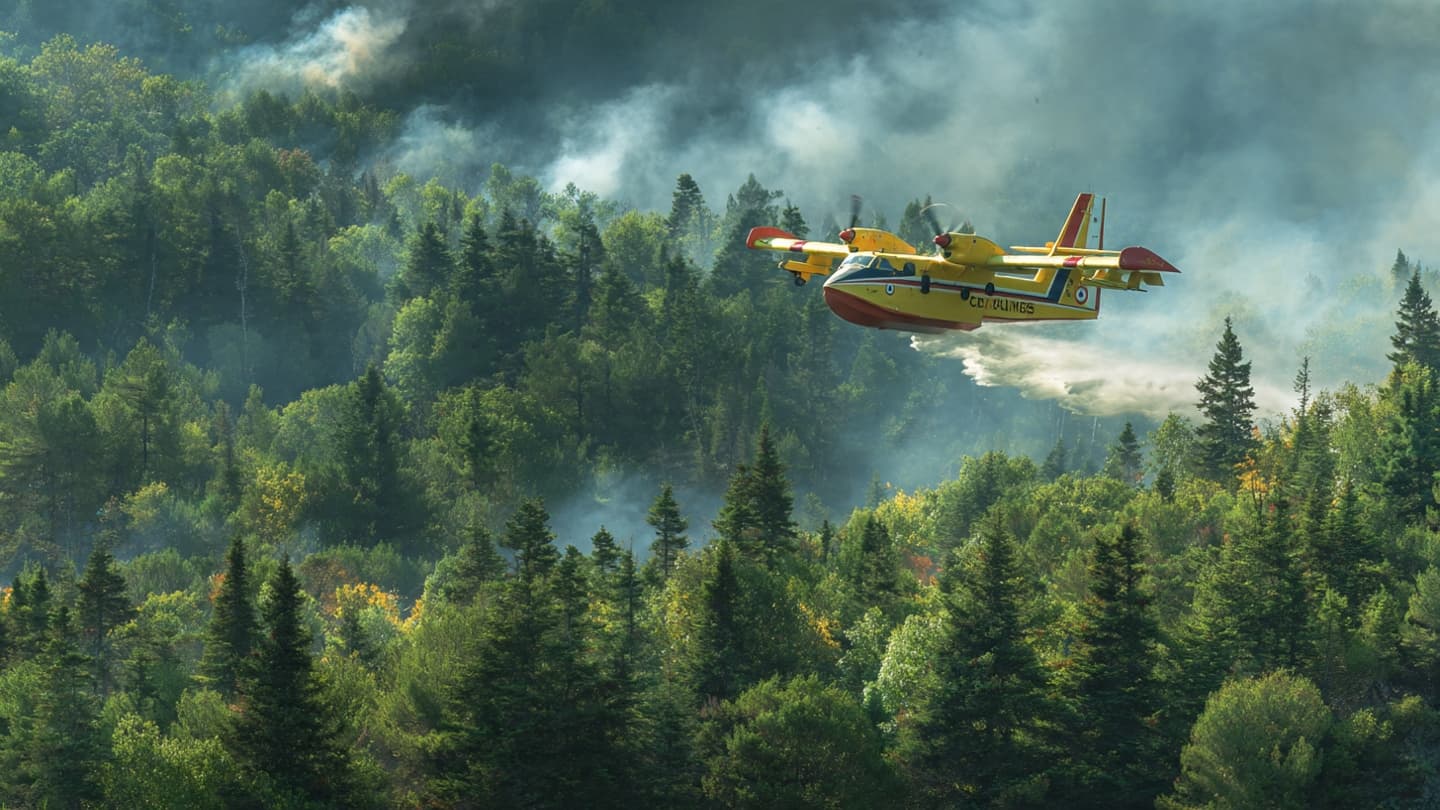
At a historic hangar in Toulouse, French startup Positive Aviation is working on a plan to transform an ATR-72 aircraft into a water bomber. The company is developing a system capable of carrying large quantities of water and drawing it from bodies of water, seeking to create an alternative to the aging Canadair aircraft that have long played a central role in Europe's aerial firefighting efforts.
The project comes at a time when Europe's wildfire problem has grown considerably. Reuters reported that almost 500,000 hectares had burned across Europe during 2026, increasing pressure on governments and private operators to find additional aircraft and technologies. The challenge is not simply to build another airplane, but to create machines capable of operating safely in difficult conditions while delivering enough water to make a meaningful difference on the ground.
Positive Aviation is not alone. Another French company, Kepplair, is also working with ATR aircraft, developing a tanker concept designed to reach fires during their earliest stages. The idea is built around a simple principle: an aircraft arriving quickly, before a small fire becomes a large one, could reduce the resources required later. Its developers are therefore looking at aviation not merely as a response tool, but as part of an early intervention system.
Elsewhere in France, HYNAERO is developing the Fregate-F100, a proposed amphibious aircraft designed specifically for firefighting. The company says the aircraft would carry 10 tons of water and aims for efficiency improvements compared with existing Canadair aircraft. The proposal remains at the development stage, meaning considerable engineering, financing and certification work would still be required before such an aircraft could enter operational service.
The timing gives these projects particular significance. France and other parts of Europe have experienced repeated periods of extreme heat and destructive wildfires, creating pressure for equipment that can remain available through longer fire seasons. Reuters reported that aerial emergency services companies are increasingly concerned that aircraft and pilots could be needed for much longer periods each year as wildfire conditions become more persistent.
Yet aviation development moves at a different speed from a wildfire. Designing a new aircraft can require years of research, testing, certification and investment. Positive Aviation is targeting 2028 for its converted aircraft, while the next generation of Canadair aircraft, the DHC-515, is also expected to begin deliveries around that period after production resumed following a lengthy gap. The European market is therefore entering a period in which established technology and new ideas will develop alongside one another.
The economic dimension is significant as well. Developers face costs that can range from tens of millions of dollars for aircraft conversions to much larger sums for entirely new designs. Investors must therefore consider not only the immediate demand created by wildfires but also the long-term need for aircraft capable of serving countries whose fire seasons may continue to change.
For France, the story is ultimately one of aviation meeting an environmental challenge. Toulouse, a city historically associated with aircraft manufacturing, is becoming part of another chapter in that tradition as engineers explore how existing aircraft can be adapted for a hotter and more fire-prone Europe. The projects remain works in progress, but their emergence reflects a growing market for specialized firefighting technology. As the continent continues to confront increasingly demanding wildfire seasons, French companies are positioning new aircraft concepts as potential additions to Europe's future firefighting fleet.
AI Image Disclaimer: Illustrations are AI-generated visual concepts and do not depict actual photographs of the aircraft or facilities described.
Sources: Reuters, European Commission, S&P Global.
Published by Banx Network. This article is part of the Banx decentralized media programme, powered by the BXE token on the XRP Ledger.