There is a certain choreography to the announcement of large investments, a rhythm of anticipation and unveiling that transforms numbers on a page into promises of steel and concrete. On Wednesday afternoon, President Donald Trump stood in the Oval Office and presented what he described as one of the largest energy infrastructure investments in American history—a $200 billion commitment from South Korea to build nuclear reactors, a gas-fired power complex, and a long-discussed natural gas pipeline in Alaska.
The investment is part of a broader $350 billion package South Korea pledged last year as part of a trade agreement with Washington. Under that deal, the United States lowered tariffs on most South Korean goods to 15 percent. Of the total, $150 billion is allocated to shipbuilding, while the $200 billion announced Wednesday falls under strategic investments.
The three projects unveiled span different corners of the American energy landscape. In Texas, a $22.3 billion combined-cycle gas power complex in Encinal will supply electricity directly to nearby artificial intelligence data centers, with a capacity of 6,472 megawatts. The first phase is expected to begin commercial operations in 2029. The nuclear component, a framework agreement potentially worth up to $120 billion, would allocate eight large reactors across the United States—two Korean-designed APR1400 units and six Westinghouse AP1000s. If realized, the APR1400s would be the first Korean-designed commercial reactors built on American soil. The Alaska LNG project, which has been discussed for years, would receive approximately $54 billion, funding an 807-mile pipeline and liquefaction facilities to transport natural gas from the North Slope to southern Alaska for export to Asian markets.
South Korean officials were careful to frame the commitments as contingent on commercial viability. Industry Minister Kim Jung-kwan said Seoul's central test was whether taxpayer money could be recovered, noting that "we approached the negotiations determined not to waste a single won". The Texas plant, the first formal project under the agreement, is expected to generate nominal proceeds of more than twice the original investment over the recovery period, according to Seoul's calculations. The nuclear and Alaska projects remain subject to further review.
Not everyone in South Korea greeted the announcement with enthusiasm. Opposition lawmakers expressed concerns about the economic rationale and fiscal risks. "Before political needs or diplomatic requirements were taken into account, there should have been a careful review of the commercial justification and viability of each investment that would impose a huge burden on the public," said Representative Kim Sung-whan, chair of the parliamentary trade committee.
For Trump, the announcement served multiple purposes. It showcased his ability to attract foreign investment ahead of November's midterm elections, reinforcing his economic message amid concerns about the war with Iran and elevated fuel prices. It also advanced Republican efforts to retain a Senate seat in Alaska, where the LNG project is a significant local issue. And it aligned with the administration's stated goal of expanding American energy exports and strengthening ties with allies in the Pacific.
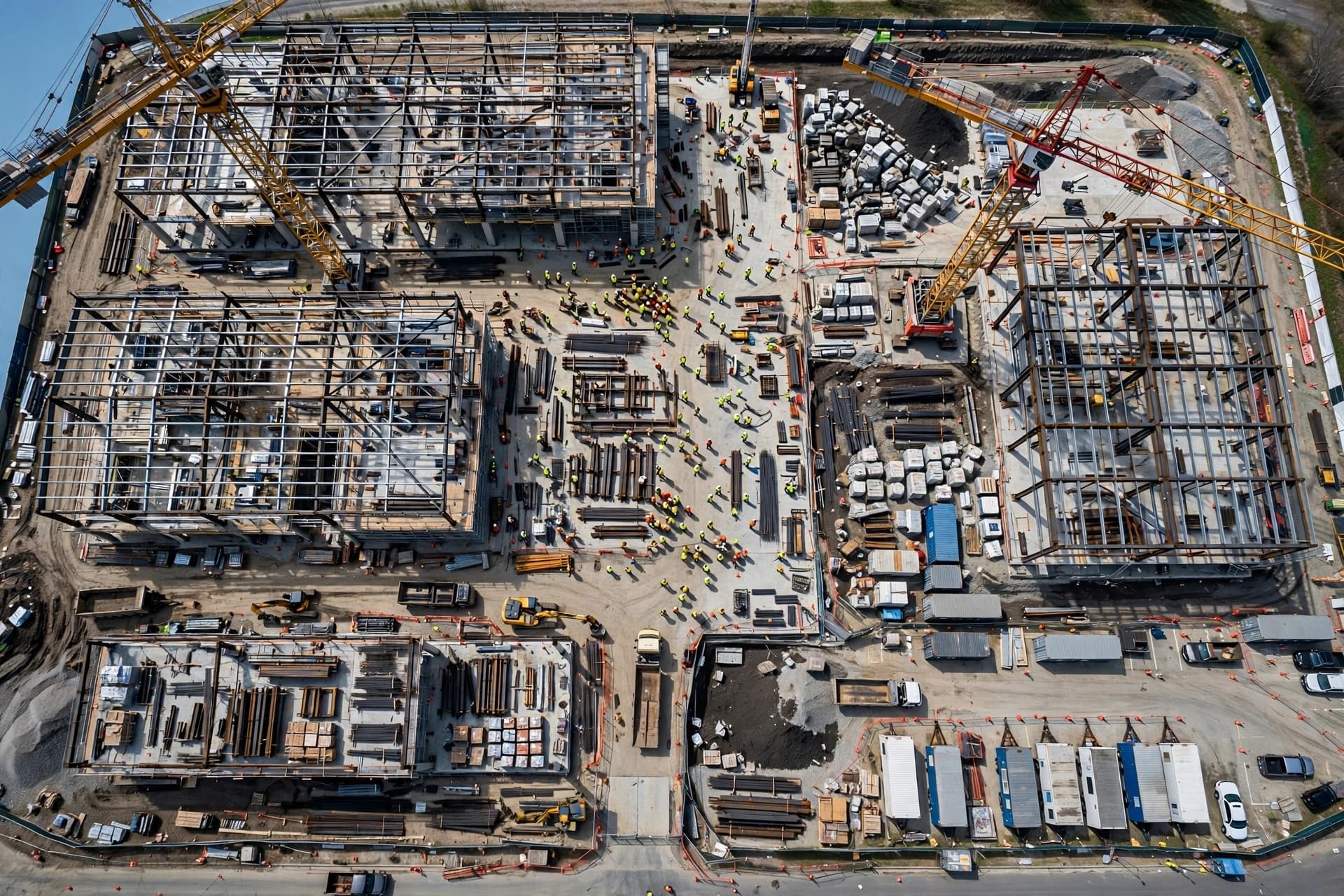
AI Image Disclaimer: The visual materials in this article were produced by artificial intelligence and are used solely for illustrative purposes.
Sources: The Korea Herald, Yonhap Infomax, Bloomberg, BTA, Financial News, The Korea Times
Published by Banx Network. This article is part of the Banx decentralized media programme, powered by the BXE token on the XRP Ledger.