Autumn arrived in Poland with a change visible at fuel stations and increasingly present in household budgets. Consumer prices rose 4% year over year in September, accelerating from 3.4% in August as fuel costs climbed sharply. The preliminary figures from Statistics Poland placed inflation at its highest level since June 2025.
Fuel became the clearest source of upward pressure. Prices for fuel used in private transport were 36.1% higher than a year earlier and increased another 9.2% from August. Electricity, gas, and other fuels also became more expensive, with energy prices rising 4.9% from a year earlier.
The monthly movement was visible beyond the annual comparison. Overall consumer prices increased 0.7% between August and September, marking another step upward as the summer ended and households entered the colder part of the year.
The change in fuel prices followed the end of temporary measures that had previously helped contain costs at petrol stations. Poland had introduced measures during earlier periods of energy-market pressure, including price limits and reductions in VAT and excise duties, with the latest measures ending after a short period in August.
Energy markets have remained closely connected to international developments. Higher oil prices and disruptions in global energy flows have affected the cost of fuel across countries, and Poland has been particularly sensitive to these movements because transportation and energy costs can spread through other parts of the economy.
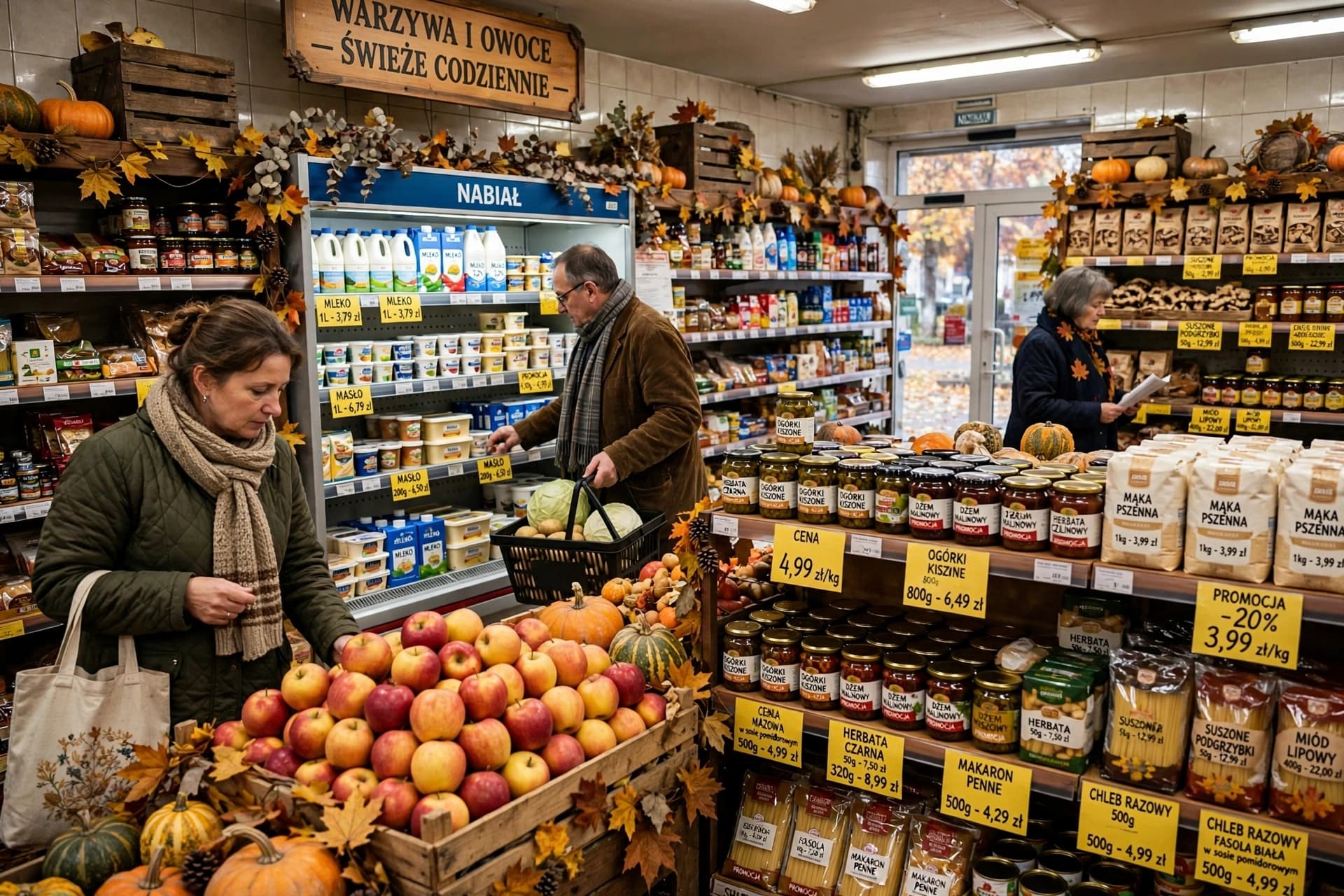
Food provided a contrasting movement in September. Prices for food and non-alcoholic beverages were 0.5% lower than a year earlier, although they edged upward by 0.1% compared with August. That decline offered some offset to the stronger increase in fuel and energy costs.
Agriculture may add another layer in the months ahead. Statistics Poland estimated that the country's grain harvest was around 5% lower than the previous season. Analysts cited by Notes from Poland said weaker agricultural output could contribute to higher food prices later in the year.
The September inflation figure also moved above the upper boundary of the National Bank of Poland's target range. The central bank aims for inflation of 2.5%, with a tolerance band of one percentage point in either direction. At 4%, the latest reading was therefore above the 3.5% upper limit.
Poland's benchmark interest rate currently stands at 3.75%, following a series of rate reductions between 2023 and March 2026. Analysts cited by Notes from Poland said the renewed rise in inflation could influence future discussions about monetary policy, although expectations for the timing of any change differ.
For households, the September figures are most tangible at fuel stations, utility bills, and eventually the prices of goods and services that depend on transportation and energy. For policymakers and economists, the number offers another indication of how international energy costs are moving through the Polish economy as the country enters the final months of 2026.
Published by Banx Network. This article is part of the Banx decentralized media programme, powered by the BXE token on the XRP Ledger.