There is a particular weight that descends upon a leader when the numbers turn against him—a weight made not of a single bad day but of an accumulation, a slow erosion of confidence that becomes visible only when the polling is released. For Prime Minister Anthony Albanese, that moment has arrived. New polling from the Australian Financial Review, RedBridge Group, and Accent Research shows his net favourability has fallen ten points to minus 27—a record low since he took office in 2022. Treasurer Jim Chalmers has fared little better, dropping nine points to minus 23 .
The timing of the poll is as significant as its findings. It was conducted last week, during a period when the Reserve Bank lifted interest rates to 4.6 percent—the highest level in fifteen years. Voter worries about economic management have jumped seven percentage points in a month, with the Coalition now rated higher than Labor on economic management, tax reform, and national security . For a government elected on a promise of economic stewardship, the shift is a warning.
What makes the numbers particularly troubling for Labor is the concentration of voter concern. On four of the top five issues identified by voters—cost of living, housing affordability, immigration, and crime—One Nation has pulled ahead of the major parties. Labor is rated best on only one issue: healthcare . The primary vote tells a similar story: One Nation leads with 29 percent, followed by Labor on 28 percent and the Coalition on 21 percent. Labor still leads in the two-party preferred count, 52 to 48, but the gap is narrowing .
The context of the poll includes a week in which the government faced scrutiny over taxpayer funding for the Prime Minister's local golf club and a staffer's social media posts. But the deeper current is economic. RedBridge director Tony Barry put it plainly: "Labor's vote share is back to its lowest recorded level. The current political challenge for Labor is that the cash register never lies and voters will rarely reward a government when they are feeling poorer" .
The government's response has been to tighten its belt further, with the finance minister signaling that struggling families should not expect help with rising costs in the next budget update . That decision may be fiscally prudent, but politically it carries risk. The voters who are abandoning Labor are not doing so because they believe the government is spending too little. They are doing so because they feel poorer, and they are looking for someone to blame.
For Albanese, the poll is not yet a verdict. It is a warning, delivered at a moment when the government still has time to respond. But the direction of travel is clear, and the issues that matter most to voters are the ones on which the government is weakest. The next budget update, and the government's handling of the economic pressures that prompted it, will determine whether the trend continues or reverses.
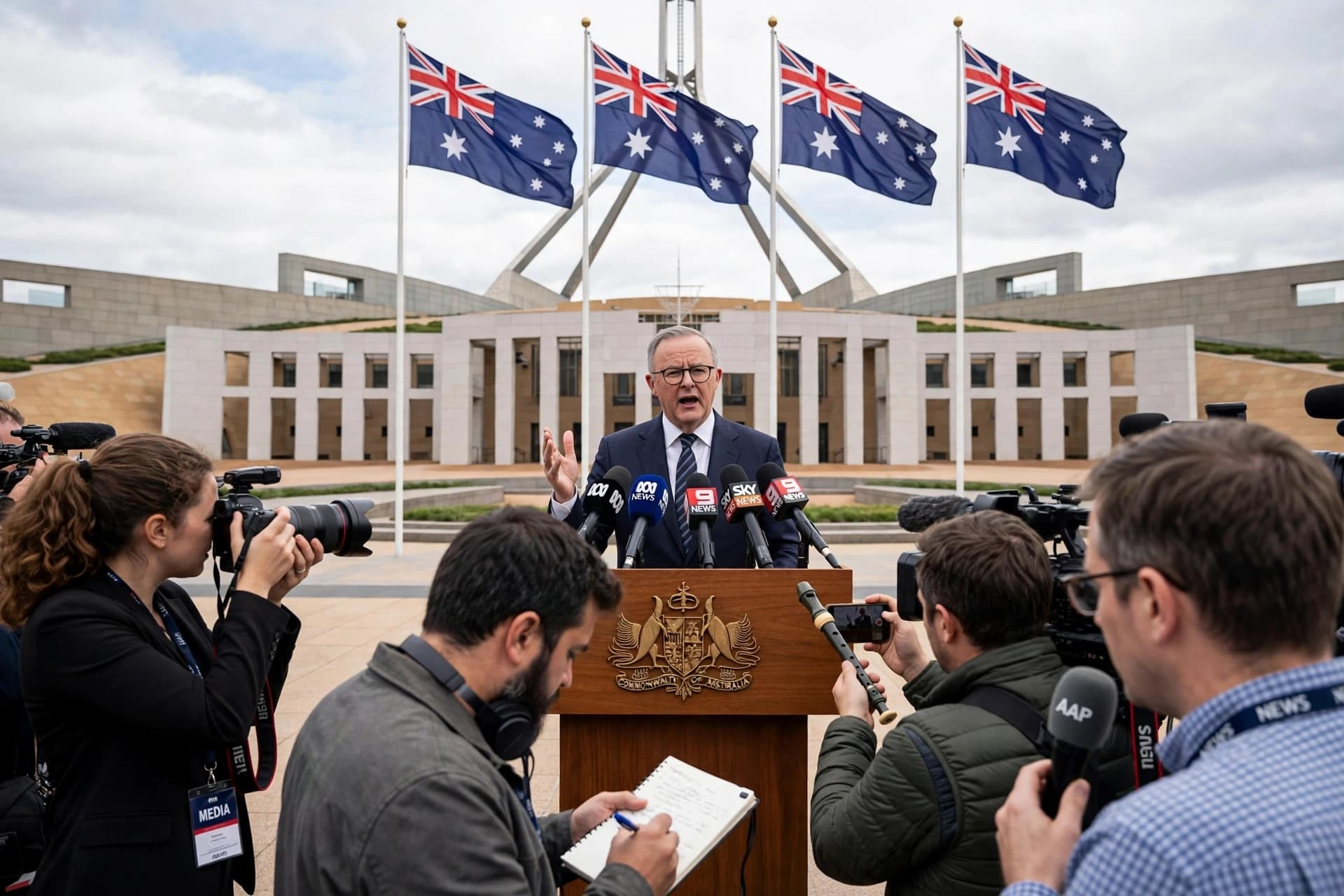
AI Image Disclaimer: The images accompanying this article were generated by artificial intelligence and are for illustrative purposes only.
Sources: Nine, Australian Financial Review, RedBridge Group, Accent Research
Published by Banx Network. This article is part of the Banx decentralized media programme, powered by the BXE token on the XRP Ledger.